


Audio By Carbonatix
The Christian Health Association of Ghana (CHAG) has engaged nearly 2,000 management members of its facilities to fully adopt, own, and institutionalise the SafeCare Quality Improvement program.
The Association is aiming for sustained and continuous enhancement across all CHAG health facilities.
This nationwide engagement marks a significant step in the program’s Phase II project, “Developing Viable Business and Operational Models for Sustainability and Increased Impact.”
Speaking at the forum, CHAG’s Executive Director, Dr Peter Yeboah, highlighted the transformative journey of SafeCare Quality Improvement, which has elevated the standard of healthcare delivery in Ghana over the past four years.
Dr Yeboah emphasised that CHAG facilities are now seen as leaders in quality-based healthcare delivery in Ghana.
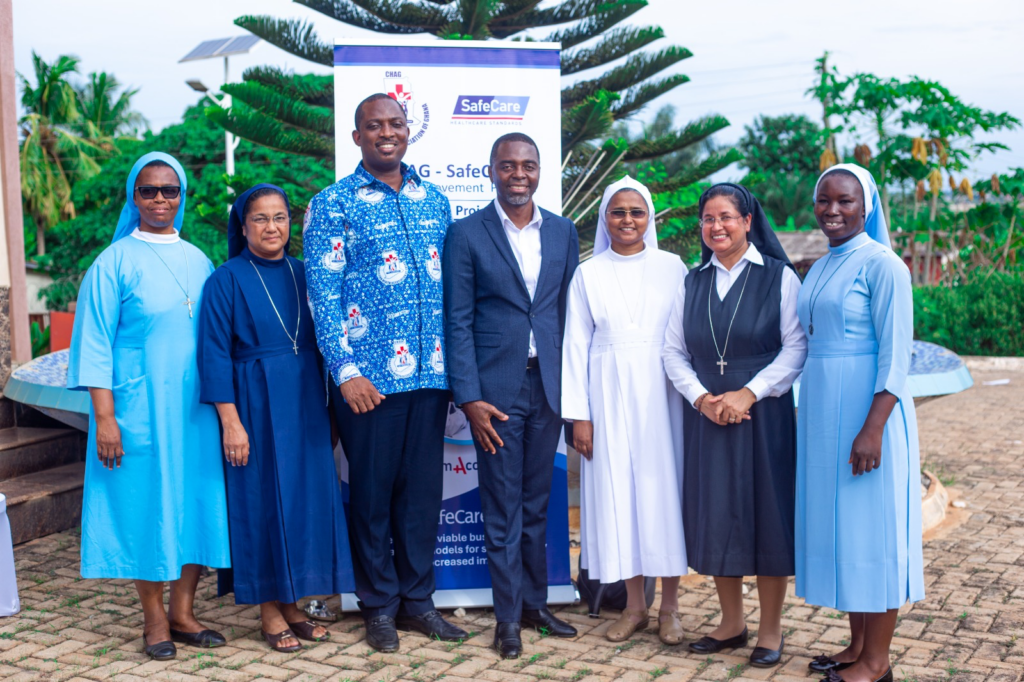
He noted, “Barely four years ago, we signed a social contract with PharmAccess. CHAG has long been a sanctuary of health, hope, and healing, but we’ve operated too long on perceived quality.
"In an era of evidence-based actions, we need to show that our service provision is backed by science. SafeCare offers a structured, stepwise scientific method for measuring, benchmarking, and addressing gaps in healthcare delivery.”
He further indicated that CHAG’s leadership has inspired the Ghana Health Service to adopt SafeCare quality standards as a path to achieving universal health coverage (UHC).
Dr Yeboah cited the success of the National Health Insurance Scheme (NHIS), initially pioneered by CHAG, as a precedent for the potential impact of SafeCare.

Dr. Yeboah, a health policy, planning, and financing expert, urged CHAG member facilities to uphold and enhance the quality standards attained through SafeCare.
He highlighted the alarming statistics from the World Health Organisation (WHO), noting that about three million people die annually from unsafe care, underscoring the critical need for quality healthcare to reduce preventable deaths.
PharmAccess Ghana, in collaboration with CHAG, has used SafeCare Standards to benchmark and improve the quality of care across its network of facilities.
Since 2020, trained ISQua-accredited SafeCare assessors have supported over 330 CHAG hospitals and clinics in enhancing quality service delivery.
The results have been impressive, with 91% of facilities showing improvement in their scores.
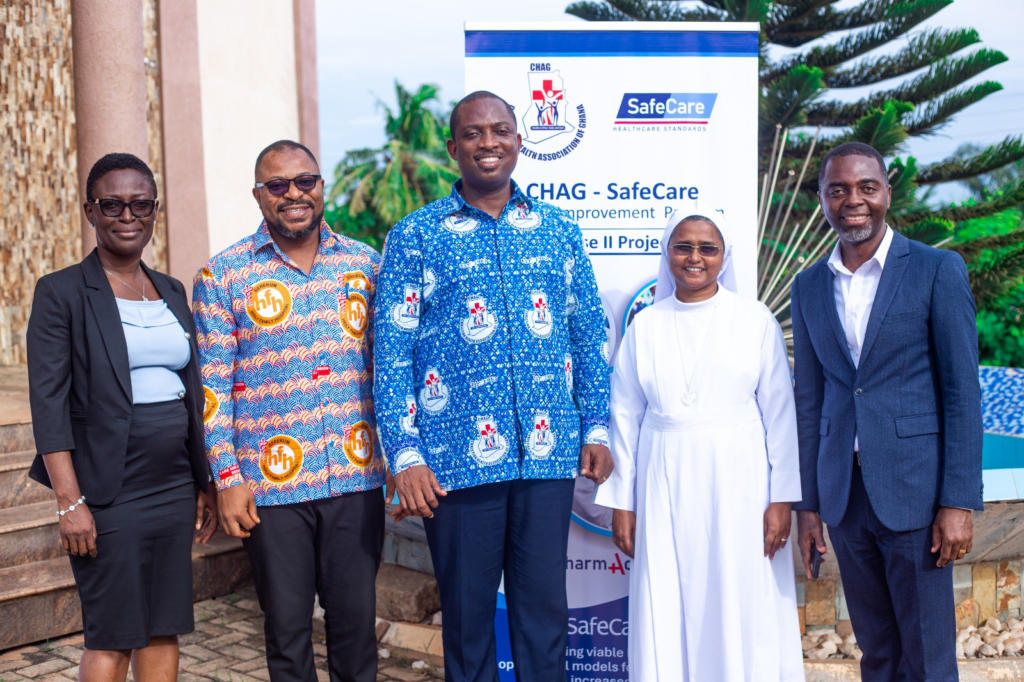
PharmAccess Ghana’s Country Director, Dr Maxwell Antwi, revealed that the Ghana Health Service is gradually adopting and scaling up SafeCare.
He expressed optimism for a future where quality healthcare is a fundamental aspect of the nation’s healthcare ethos.
Dr. Antwi noted that SafeCare improves health outcomes, reduces risks, and enhances operational efficiency in healthcare facilities.
Facility managers who have adopted SafeCare standards praised the program for its positive impact. One administrator stated, “SafeCare is very helpful; everyone in this facility is committed to quality. Quality care minimises complaints and even legal suits.”

Another administrator added, “We have bolstered our team with strategic expertise to fortify our quality assurance measures. These strategic additions were prompted by meticulous assessments that pinpointed crucial gaps in our operations."
The successful engagement of CHAG facility managers in the SafeCare Quality Improvement program represents a significant advancement in Ghana's healthcare sector.
Adhering to international quality standards will ultimately improve patient outcomes and reinforce Ghana's journey towards achieving UHC by 2030.
SafeCare Director for Ghana, Bonifacia Benefo Agyei, emphasised the importance of ownership and commitment to continuous improvement.
“Quality is the responsibility of those in authority. The full adoption of SafeCare standards by CHAG facilities marks a significant step towards achieving excellence in healthcare delivery.”
Deputy Executive Director of CHAG, Dr James Duah, further encouraged facility owners to ensure sustained implementation and institutionalization of SafeCare.
He advised all facilities to have quality managers integrated into their management structure to ensure adherence to the highest quality standards.
The commitment to continuous improvement and quality care will pave the way for a healthier and more resilient nation.
Latest Stories
-
Pastor William Gyimah remanded over threats against Vice President Prof Opoku-Agyemang
7 minutes -
Sunyani Technical University dismisses 3 students over examination malpractice
11 minutes -
NPRA prosecutes 11 employers, recovers GH¢27m in 2025
13 minutes -
NAIMOS cracks down on illegal mining activities along River Tano
15 minutes -
2026 World Cup: Officials selected are the world’s very best – FIFA defends referees list
22 minutes -
NAIMOS taskforce embarks on major anti-galamsey operations at GREL plantation and along Ankobra River
24 minutes -
Akufo-Addo arrives in Cotonou to lead ECOWAS mission to observe Benin presidential election
31 minutes -
AMA, Mexican Embassy renew commitment to strengthen bilateral cooperation, deepen sister-city ties
35 minutes -
Bolt pushes for expanded support for women-owned enterprises
55 minutes -
Today’s Front pages : Friday, April 10, 2026
2 hours -
‘We don’t have time’ – Fianoo calls for Schäfer to lead Black Stars temporarily
2 hours -
CAF will not favour any country – President Motsepe
2 hours -
Otto Addo was appointed through the backdoor – Kudjoe Fianoo slams GFA
2 hours -
UG Corporate Football League back from the Easter break
2 hours -
Qualcomm unveils startup selection for Qualcomm Make in Africa 2026
3 hours