

Audio By Carbonatix
Ghana entered 2025 under the weight of crisis, transition and unresolved tensions, as a devastating fire at Kantamanto Market, the return of John Mahama to the presidency, and renewed clashes over illegal mining shaped the national mood in the first three months of the year.
January: Smoke, Swearing-In, and Unfinished Business
The year began in flames.
At dawn on January 1, a massive fire tore through Kantamanto Market, reducing decades of work to ash within hours. Thousands of traders watched their livelihoods vanish, once again exposing the fragility of Ghana’s informal economy and the high cost of congestion, neglect, and weak enforcement.
Read: Traders count losses as fire destroys over 100 shops at Kantamanto market
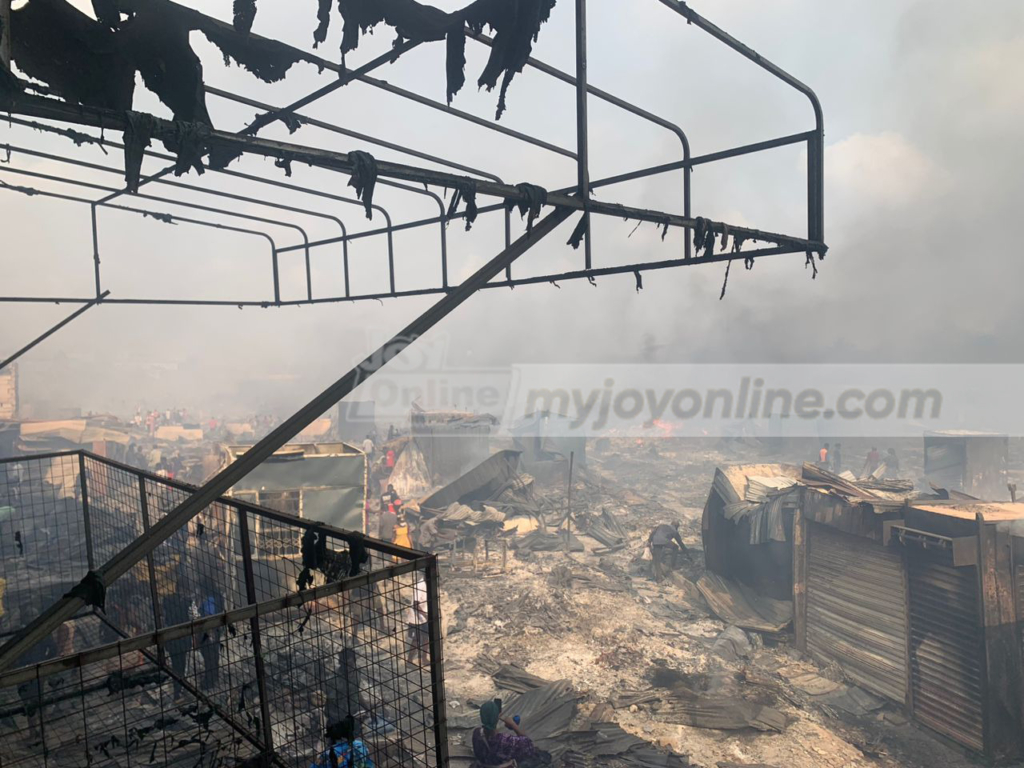
The disaster was more than a fire. It was a reminder that for many Ghanaians, survival remains provisional, rebuilt after every setback but rarely protected by policy.
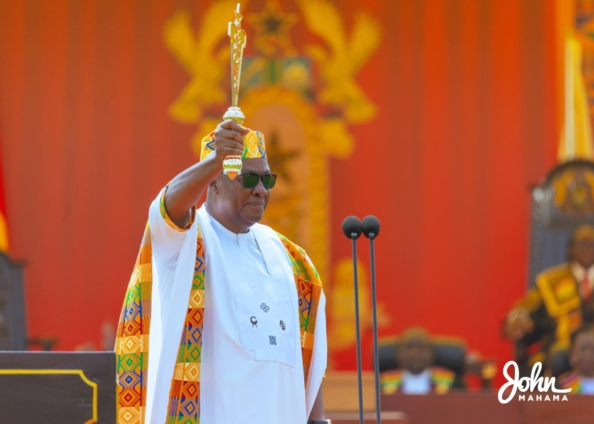
Just days later, the country turned from smoke to ceremony. On January 7, John Dramani Mahama was sworn in for a second term as President, returning to office amid economic fatigue and public scepticism.

His comeback carried the weight of familiarity rather than novelty — a leader returning not to introduce himself, but to confront unfinished business.
The promise of a reset, however, was quickly unsettled.
In Obuasi, the fatal shooting of suspected illegal miners by military personnel at the AngloGold Ashanti concession reignited national anger over the state’s handling of galamsey.
The incident reopened long-standing questions about force, accountability, and the livelihoods tied to mining, reminding the nation that natural resource governance remains one of Ghana’s most combustible fault lines.
The highlight of January was President Mahama announcing his ministerial nominees in batches starting January 9, 2025, submitting the first set to Parliament, with subsequent lists following, including regional ministers around January 16 and a near-complete list submitted by January 20-21, 2025, fulfilling his pledge to name a full cabinet within 14 days of his January 7, 2025, swearing-in.
Read: Mahama to announce final ministerial list on January 20
The vetting process for the first set of ministerial nominees presented by the president began on January 13. Of course, this was not without drama.
Read: Vetting of ministerial nominees begins today
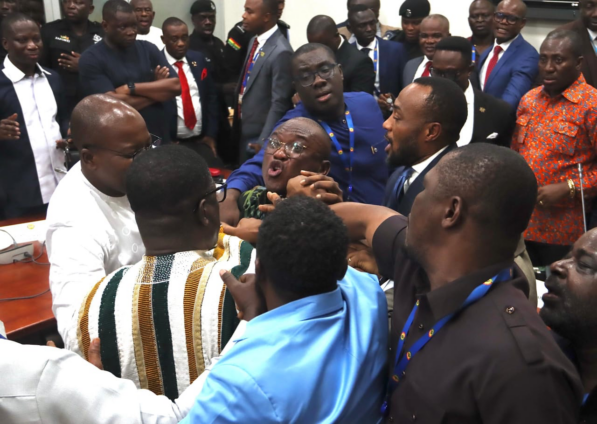
The Appointments Committee descended into chaos on January 30, as tensions flared between the Minority and Majority members, culminating in a heated confrontation.
Read: Chaos erupts at Appointments Committee as Minority and Majority clash
The clash escalated to the point where tables and microphones were destroyed, prompting the intervention of the police to restore order and prevent further destruction.
Read: Speaker sets up Special Committee to probe vetting chaos
Speaker of Parliament, Alban Bagbin, established a special committee to investigate the chaos that erupted in Parliament during the vetting of ministerial nominees.
The seven-member committee, chaired by Ho West MP Emmanuel Bedzrah, was tasked with identifying those responsible for the disruptions and recommending appropriate actions.
February: Power, Pressure and Public Trust
As the political dust settled, attention shifted to the state's authority and the limits of its power.
Public debate intensified around security operations, environmental protection, and whether enforcement without economic alternatives could ever deliver lasting solutions.
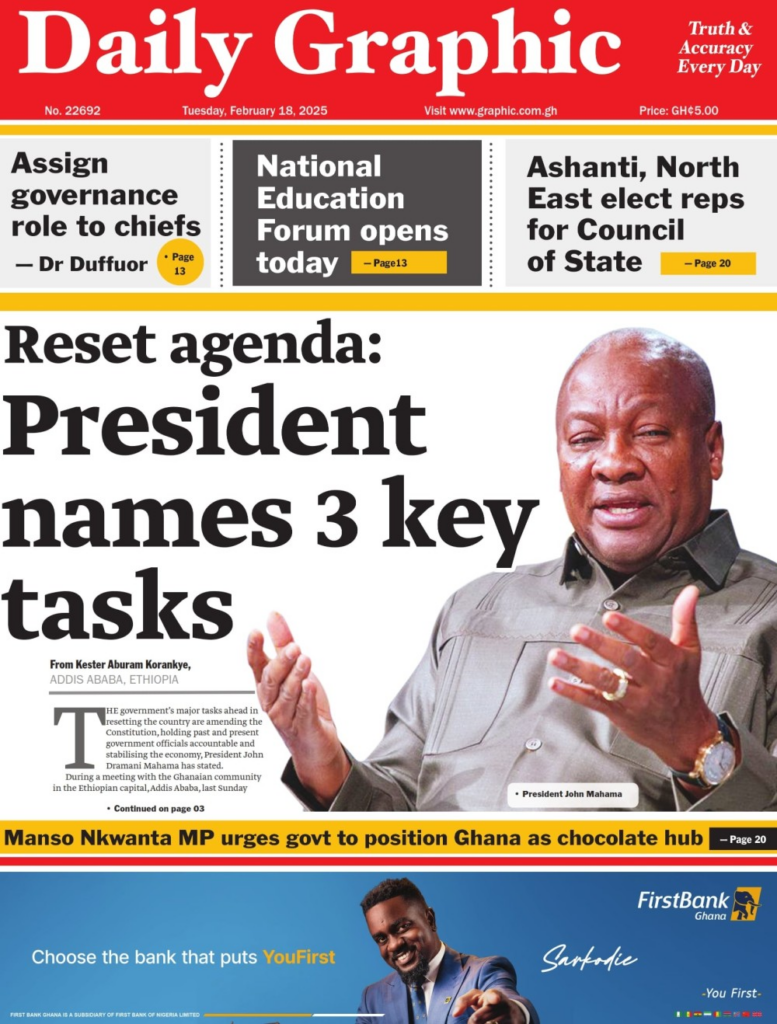
Trust remained thin. For many citizens, the early weeks of the new administration felt less like a break from the past and more like a continuation of unresolved tensions — between law and livelihood, control and compassion.
President John Mahama directed the Ministry of Finance to settle outstanding Domestic Debt Exchange Programme (DDEP) coupons and build a financial buffer through the Sinking Fund.
Read: DDEP: Finance Ministry pays GH₵6bn to bondholders
The president delivered his first State of the Nation Address (SONA) for his second term to Parliament, outlining the nation's challenges, his administration's achievements, and policy directions, including economic recovery plans and measures to tackle debt.
Read: Full text: Mahama’s first SONA in second term delivered to Parliament on Feb. 27
March: Gold, Control and Economic Nerve
By March, government signalled a firmer economic stance. Parliament passed the GoldBod Bill, a move aimed at centralising gold trading and clamping down on illicit exports that have long drained state revenue.
Read: Parliament passes Ghana Gold Board Bill 2025
The legislation reframed gold from mere mineral wealth into an instrument of state authority. It was a declaration that economic recovery would require tighter control, even at the risk of resistance.
In the first quarter of 2025, fire exposed vulnerability, power tested legitimacy, and gold became a battleground for control. The tone was set early: this would be a year defined not by ease, but by hard choices.
Latest Stories
-
Alhassan Tampuli appeals for urgent support for storm victims in Gushegu
3 minutes -
The hypocrisy must stop; pass Anti-LGBTQ+ Bill now – Alhassan Tampuli to Mahama
6 minutes -
Imprisonment should be rehabilitative, not punitive – Ghana Prisons boss at UNGA
28 minutes -
Ga Adangbe traditional priests petition Mahama over McDan aviation licence revocation
40 minutes -
Anti-LGBTQ Bill: NDC’s arrogance is worrying – Hassan Tampuli
50 minutes -
Let’s give OSP time to mature, not to scrap it – Hassan Tampuli
54 minutes -
Nigeria convicts 386 Islamist militants in mass trials
59 minutes -
Djibouti president wins election with 97.8% of vote, state media says
1 hour -
We don’t have mandate to deduct tax from rent allowance of security services personnel – Interior Ministry clarifies
1 hour -
Ablakwa receives Presidential Special Envoy on Reparations to advance global agenda
2 hours -
Christina Koch becomes first woman to travel around the moon on Artemis II
2 hours -
Epstein survivors’ calls to meet King Charles and Queen harder to ignore as US visit approaches
2 hours -
UN Secretary-General names Ghana’s Anita Kiki Gbeho as South Sudan envoy
2 hours -
Mali withdraws recognition of Sahrawi Republic, backs Morocco’s autonomy plan
2 hours -
Gov’t distributes over 8,500 laptops to One Million Coders project
2 hours