

Audio By Carbonatix
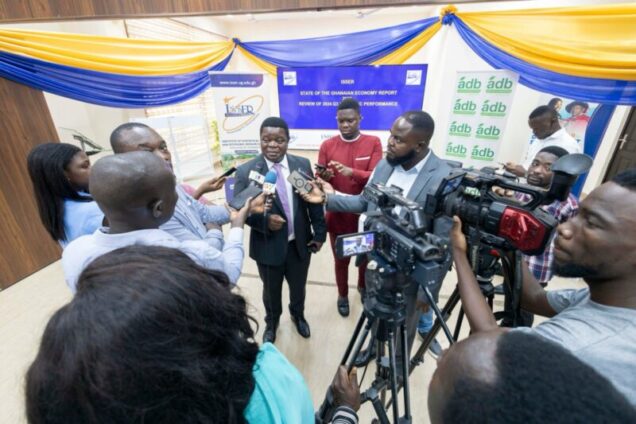
The prospect of a 24-hour economy has sparked debate in Ghana, with the head of the Institute of Statistical, Social, and Economic Research (ISSER), Professor Peter Quartey, cautioning that the country may not yet be ready to operate round the clock.
Speaking on the proposal, he questioned whether a 24-hour economy could genuinely drive higher GDP and job creation, or if it would be better pursued as a long-term development goal.
“Will a 24-hour economy serve as the solution or is it premature? What about incorporating it into a long-term development plan?” asked Professor Quartey, highlighting the complex issues surrounding the proposal.
According to Professor Quartey, several structural and logistical hurdles may impede the immediate feasibility of a 24-hour economy.
“The argument is, will a 24-hour economy bring higher GDP and jobs, or is it rather a goal we should aim for in the long term?” he remarked. ISSER’s stance suggests that the discussion needs to be rooted in a realistic assessment of Ghana’s current infrastructure and workforce readiness, rather than being driven solely by manifesto promises.
Professor Quartey laid out several key challenges that could undermine the success of a 24-hour economy in Ghana:
1.  Energy Supply: “Limited energy supply to power all sectors in 24 hours, especially manufacturing,” Prof noted, could hinder industries’ ability to operate continuously, especially at competitive levels within the sub-region.
2.  Security: With extended hours, ensuring the safety of night workers would require “adequate security personnel to protect those working late into the night,” he pointed out. This would need significant investment in security infrastructure.
3.  Market Demand and Competitiveness: Quartey questioned whether sufficient demand exists to sustain 24-hour operations, especially in sectors like manufacturing. “Will there be demand if factories operate 24 hours?” he asked, adding that Ghana’s industries must also be competitive regionally.
4.  Infrastructure: The professor raised doubts about the availability of essential infrastructure, including water and road networks, to support continuous operations. “Do we have adequate infrastructure?” he asked, pointing out that without necessary improvements, a 24-hour economy could strain existing systems.
Aligning manifesto promises with a pragmatic, long-term development strategy is essential, Quartey concluded. He urged policymakers to carefully evaluate the nation’s infrastructure and security readiness, energy capacity, and market demands before committing to a 24-hour economy. “This approach needs to be grounded in a robust, long-term plan if we are to realize sustainable economic growth,” he said.
The ISSER report underscores the importance of strategic planning, suggesting that while a 24-hour economy might hold promise for the future, Ghana’s current challenges must be addressed to avoid overburdening its developing systems.
Latest Stories
-
Calls for royal meeting with Epstein survivors grow ahead of US visit
3 minutes -
Ibn Chambas advocates blend of technology and human values in education
4 minutes -
UMA improves healthcare access in Asutifi North with GH₵700k ‘Kim Taylor Legacy’ Walkway
9 minutes -
Scholarships Authority and Fanaka University offer sponsorship for procurement and supply chain studies
12 minutes -
Bisa Kdei drops new single ‘Go N Look’ featuring Medikal
19 minutes -
Benin facing rising terrorism in north as French military presence faces growing criticism
20 minutes -
UEW Public Lecture Series 2026: Education debate ‘about the soul of Ghana’s future’ — Dr Ibn Chambas
21 minutes -
EU fingerprint and photo travel rules come into force from today
48 minutes -
Anti-LGBTQ+ Bill: Ghanaians demand expedited passage, not dialogue – Ntim Fordjour to Mahama
56 minutes -
EU airline industry warns of fuel shortages if Strait of Hormuz stays closed
59 minutes -
White House staff told not to place bets on prediction markets
1 hour -
Auctioneers petition Prez Mahama over ‘interference’ in public auctions
1 hour -
GEA, Mastercard Foundation drive market access for MSMEs at Kwahu Business Forum
1 hour -
Education Ministry begins review of Ghana Library Authority law
1 hour -
Ghana U-15 girls clinch back-to-back CAF Schools titles
1 hour