

Audio By Carbonatix
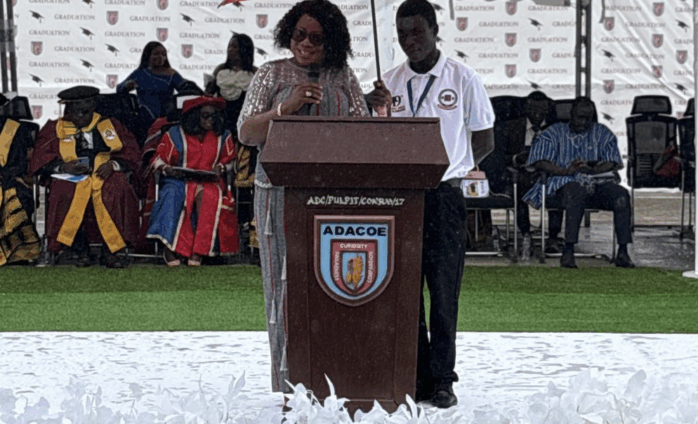
The Ghana Education Service (GES) Deputy Director-General, Prof. Smile Dzisi, says teachers need to adopt new approaches to teaching in line with the government’s 24-Hour Economy Policy and the demands of the digital age.
Speaking at the graduation ceremony for 316 graduates of the Ada College of Education in the Greater Accra Region, she said government’s call for a 24-hour economy and the rapid pace of digital transformation have redefined the teaching profession.
“Government’s ambitious call for a 24-hour economy and the relentless march of the digital age have fundamentally redefined your calling,” she told the graduates.
Prof. Dzisi urged teachers to see themselves not as transmitters of old knowledge but as innovators shaping a dynamic future.
“You are not graduating to be custodians of a static past; you are graduating to be architects of a dynamic future. The world needs teachers who are curators of curiosity, facilitators of critical thinking, and coaches of creativity,” she said.
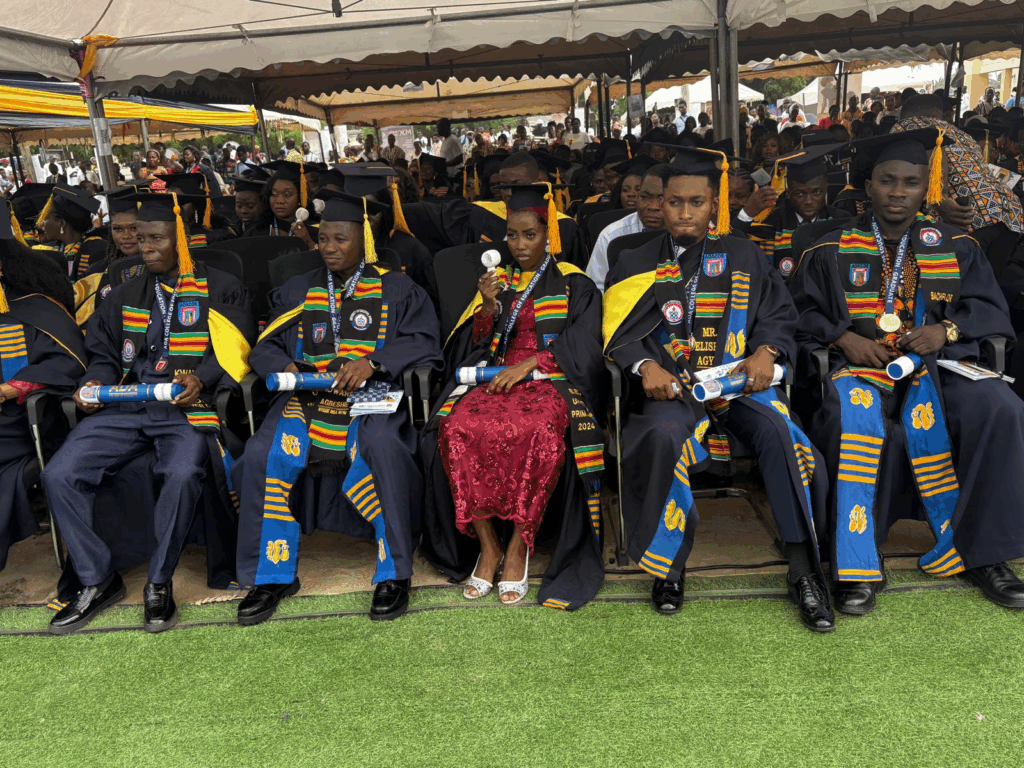
She challenged the newly trained teachers to lead the transformation of Ghana’s education system.
“Graduates of Ada College of Education must be the shining example of the modern-day teacher equipped for the digital age,” she added.
The government’s 24-Hour Economy Policy (24H+) seeks to encourage all sectors to operate continuously by leveraging digitalisation.
A key pillar of the programme, the Aspire24 Workforce Development and Cultural re-orientation initiative, aims to align education with the employment ecosystem by equipping citizens with digital fluency, ethical grounding, and industry-relevant skills.
Highlighting both the opportunities and challenges within today’s educational landscape, Prof. Dzisi noted that artificial intelligence, digital literacy, and global connectivity are transforming how people learn and teach.
She urged the graduates to use technology to enhance learning, not replace the human element.
“Use digital tools not as a distraction, but to make lessons more engaging, to connect your students in the remotest parts of Ghana to classrooms across the globe, and to personalise learning,” she said.
At the same time, she cautioned teachers not to lose the personal touch that defines the profession. “Remember that technology is merely a tool – the heart of education remains fundamentally human.
"No algorithm can replace the warmth of an encouraging word, the patience of a dedicated teacher, or the transformative power of believing in a child’s potential,” she added.
The event, themed “Empowering Educators: Enriching Communities,” also highlighted the broader role of teachers in society. Prof. Dzisi reminded the graduates that their responsibilities go beyond academics.
“I call upon you to be problem-solvers, innovators, and advocates. When you encounter challenges in your schools and communities, see them not as roadblocks but as opportunities to demonstrate the transformative power of education,” she urged.
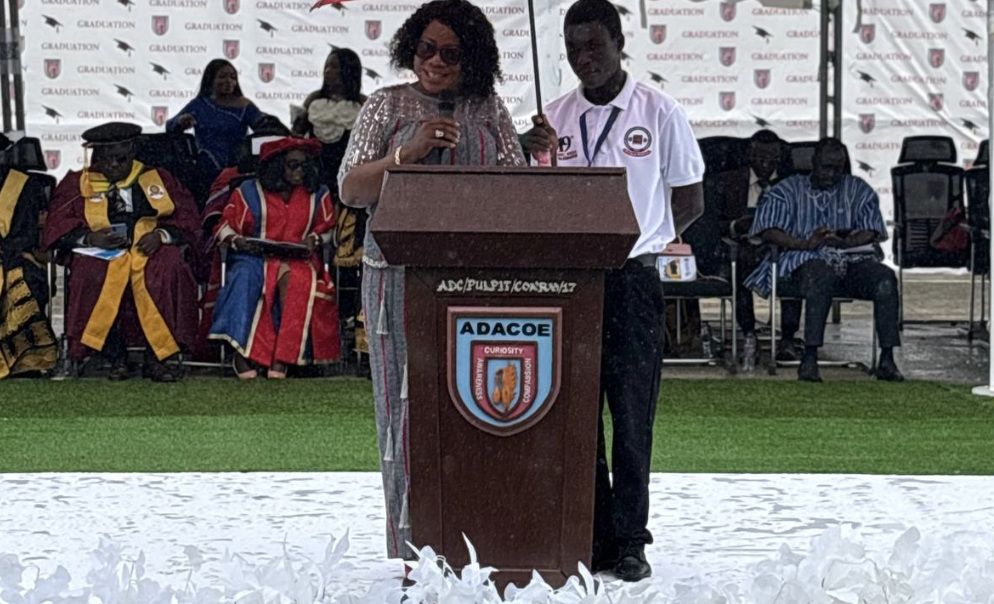
Prof. Dzisi assured the new teachers of government’s commitment to provide resources, professional development, and reforms to support their work.
“We are committed to working tirelessly so that, upon completion of your National Service, you can swiftly join the prestigious GES. We are also working on improving teacher training, enhancing educational infrastructure, and developing policies that support effective teaching and learning,” she said.
Out of the 316 graduates, 91 earned first-class honours.
The Principal of the College, Prof. Prince Boateng, congratulated them and reminded them that “your certificate is not an end; it is a key. How you use it will determine the doors that open for you.”
Prof. Boateng, however, expressed concern about the limited preparation of teachers for the Technical and Vocational Education and Training (TVET) sector.
He urged the Ghana Tertiary Education Council (GTEC), the Ministry of Education, and Colleges of Education leadership to designate certain colleges as specialised TVET teacher training centres.
“This strategic designation would not only address our immediate teacher shortage but also position these Colleges of Education as centres of excellence in technical education, attracting industry partnerships and enhancing their relevance in Ghana’s development agenda,” he said.
Latest Stories
-
MTN Ghana gears up to lead Africa’s AI revolution
40 seconds -
Philanthropist Alhaji FuZak donates Da’wah bus to Ambariya Sunni community
8 minutes -
GUTA calls for suspension of Publican AI system over trade disruptions, demands temporary halt in import activities
11 minutes -
TTAG raises alarm over proposed recruitment of 7,000 teachers, demands national posting roadmap
44 minutes -
Civilians feared killed after reports of air strike on Nigerian market
54 minutes -
Bishop Simon Kofi Appiah installed as new Jasikan Diocese Bishop
55 minutes -
Trump’s Strait of Hormuz blockade threat raises risks and leaves predicaments unchanged
57 minutes -
US Court backs extradiction of former MASLOC CEO Sedina Tamakloe-Attionu’s to Ghana
1 hour -
Seven arrested as NAIMOS dismantles illegal mining camp, seizes firearms at Boin River
1 hour -
Fire erupts at Madina Ritz Junction, destroys multiple wooden structures and containers
2 hours -
Daniel-Kofi Kyereh returns from long-term injury, registers assist for Freiburg U23
2 hours -
Knifeman calling himself ‘Lucifer’ slashes three at NYC’s Grand Central
2 hours -
Brands are built from within to without
2 hours -
Matriculants urged to pursue excellence as gov’t reaffirms support for Maritime education
2 hours -
See the areas that will be affected by ECG’s planned maintenance on Monday, April 13, 2026
2 hours