

Audio By Carbonatix
A total of 33 cities, including Los Angeles, Amsterdam, and Edinburgh, have backed a call for a global Plant-Based Treaty, aiming to align the food system with the Paris Agreement and encourage the adoption of plant-based food policies at the local level.
Additional cities supporting the initiative include Tavira (Portugal), Didim (Turkey), Rainbow Lake (Canada), and several in the United Kingdom, such as Belfast, Exmouth, Haywards Heath, Lambeth, and Norwich.
In India, 16 cities have joined the movement, including Ahmedabad, Mundra, Rajkot, and Cadodara. In Africa, two cities are featured: Manduar in The Gambia and Kyotera in Uganda.
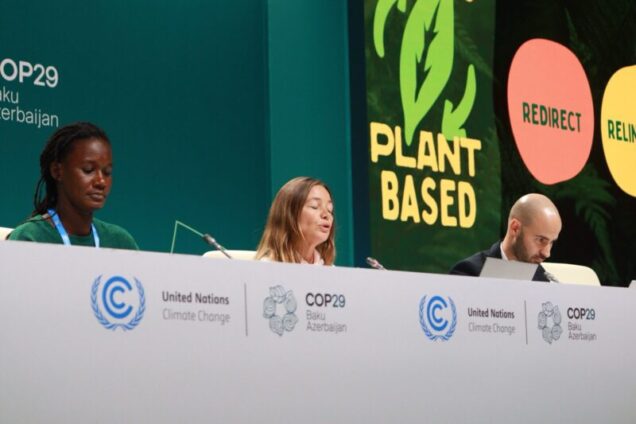
Plant-Based Treaty advocates Enric Noguera and Cindy Veltens introduced “Plant-Based Treaty in Action” to showcase how cities worldwide have begun implementing the 40 recommended proposals from the treaty.
“We need a global treaty and international cooperation to scale up plant-based solutions,” says Cindy Veltens, Plant-Based Treaty campaigner for Belgium and The Gambia.
During a press conference marking the opening of COP29, case studies from Edinburgh and Amsterdam were highlighted.
Edinburgh, which endorsed the Plant-Based Treaty in 2023, is implementing carbon labelling in schools and universities.
Meanwhile, Amsterdam, which signed the treaty in 2024, plans to partner with major employers and public institutions—including hospitals, community centres, and care facilities—to introduce Vegan Fridays and work toward a 60/40 plant-based-to-animal protein ratio by 2030.
“We urge world leaders to start negotiating a Plant-Based Treaty at COP29, and we need cities and countries to act on it and work on implementation,” says Enric Noguera, Plant-Based Treaty Europe cities campaigner.
Dr. Anita Krajnc, Global Campaign Director of the Plant-Based Treaty, emphasized that the demand at COP29 is clear: food policy is 30 years behind energy policy, and it’s time for the world to begin negotiations for a global Plant-Based Treaty.
According to Dr Krajnc, the treaty would complement the UN Paris Climate Agreement and help tackle one-third of global greenhouse gas emissions stemming from food systems.
“It will further protect our planetary boundaries by guiding the human community back to plant-based food systems,” says Dr Anita Krajnc, Global Campaign Director of the Plant-Based Treaty.
Latest Stories
-
The Ghanaian prophet and the mysterious death of his scottish wife Charmain Speirs
38 minutes -
Nearly 400 sentenced in Nigeria for links to militant Islamists
1 hour -
Ghana’s recovery supported by gold strength despite global oil price pressures – Standard Bank Research
1 hour -
Kwaku Azar writes: A-G vs OSP
2 hours -
Mfantsipim–Adisadel rivalry built excellence, not division – Sam Jonah
2 hours -
Vice President launches Mfantsipim’s 150 years of shaping Ghana’s greatest mind
2 hours -
I assure Otumfuo, Mahama will join him to commission KNUST Teaching Hospital by end of this year – Haruna Iddrisu
3 hours -
Barcelona dominate derby to extend La Liga lead
3 hours -
Gov’t to roll out free special education for persons with disabilities from July 1 – Education Minister
3 hours -
Importers and Exporters Association declares full support for Publican AI port system
4 hours -
“We used it to test our officiating officials’ readiness” – Bawah Fuseini after CAA Athletics event
4 hours -
Volleyball emerges as Ghana’s fastest rising sport
4 hours -
National Sports Fund needs strong leadership from the top – Administrator David Wuaku
4 hours -
JoySports Exclusive: Steve McLaren in talks with GFA after expressing interest in Black Stars job
4 hours -
Fire guts auto parts warehouse at Bubuashie, one fire officer injured
4 hours