


Audio By Carbonatix
A groundbreaking study has unveiled an alarming mental health crisis among teen mothers in Ghana, revealing that over two-fifths of teenage clients seeking primary care are experiencing significant psychological distress.
These urgent findings, presented at a national policy dialogue on Tuesday, November 27, underscore the critical need to integrate mental health support into routine maternal care services.
The findings, disseminated at the Ghana College of Physicians and Surgeons (GCPS), come from the four-year RESPONSE research project, which examined the mental health burden on both mothers and the healthcare workers who treat them.
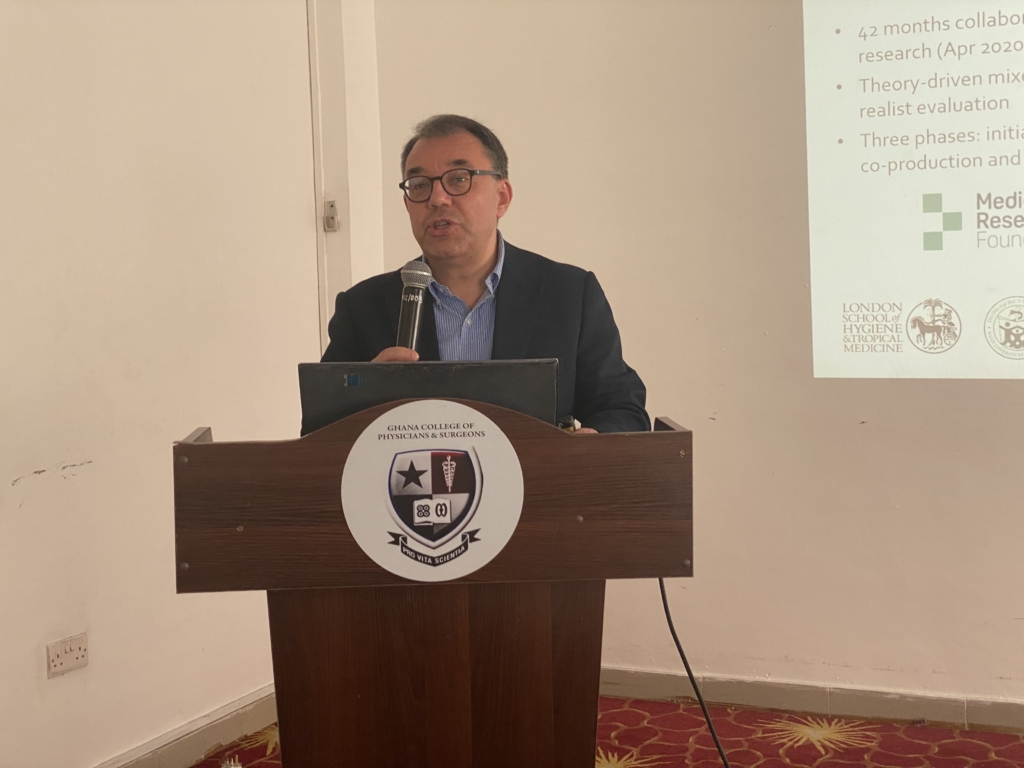
The researchers emphasised that the high rates of anxiety and stress are not just individual problems but indicators of systemic failure. Prof. Tolib Mirzoev, Principal Investigator of the project, stressed the need for a cultural shift in the health sector.
“Health systems’ responsiveness is a critical aspect of performance. Prioritising responsiveness to both patients and staff, particularly in mental health, is essential,” he remarked, noting the pervasive stigma that often impedes both patient and provider from seeking mental health support.
The Vulnerable: Adolescent Mothers at Double the Risk
The study, conducted by the London School of Hygiene & Tropical Medicine (LSHTM) and the GHS Research and Development Division (RDD), focused on scalable mental health solutions across six primary health facilities in the Prampram-Ningo and Shai-Osudoku districts of the Greater Accra Region.
Using the World Health Organization’s Self-Reporting Questionnaire (SRQ-20) to screen over 2,000 women, the research provided a clear statistical measure of the psychological distress endured by young mothers:
- 43% of the 172 teenage clients (aged 14–19) screened scored $\ge 6$ on the SRQ-20, the clinical threshold for mental distress.
- This rate is significantly higher than the 27% distress rate observed in adult women aged 20 and above, meaning adolescent mothers are nearly 1.6 times more likely to be in distress.
- Overall, 28% of the total women screened showed signs of mental distress. Furthermore, 5% of all women admitted to experiencing suicidal thoughts in the month prior to screening.
Professor Irene Agyepong, Co-Principal Investigator and Ghana Team Lead, emphasised that the distress often begins before birth: “Traditionally, we focus only on postpartum depression, but our data shows the problem often starts during pregnancy.”

The data showed 36% of pregnant women were in distress, compared to 25% of postnatal clients.
Dr. Bertha Garshong, a researcher on the project, stressed that women who had suffered pregnancy loss were also highly vulnerable, with 50% showing signs of distress. She urged policymakers to ensure these vulnerable groups receive targeted attention in any national scale-up.
The Dual Crisis: Strained Caregivers
The mental health burden is not confined to the patients. The study also revealed that the frontline health workers who screen these vulnerable mothers are themselves under intense psychological strain, creating a dual crisis in the primary healthcare system.
- Researchers screened 172 health workers using the Depression, Anxiety, and Stress Scale (DASS-21) via a mobile app.
- 51% experienced moderate to extremely severe anxiety.
- 40% reported moderate to extremely severe stress.
- 37% struggled with moderate to extremely severe depression.
Prof. Agyepong highlighted the crucial connection between provider and patient wellbeing:
“Health workers told us clearly: ‘If you want us to care for patients’ mental health, you must first care for ours,’” she stated, noting that the health of the caregiver is foundational to achieving good maternal health outcomes.
Policy Demands and Sustainable Solutions
The findings spurred stakeholders, including the GHS, the Mental Health Authority, and civil society, to commit to developing new policies.
Prof. Tolib Mirzoev, Principal Investigator, stressed that addressing mental health is central to healthcare performance: “Health systems’ responsiveness is a critical aspect of performance. Prioritising responsiveness to both patients and staff, particularly in mental health, is essential.”
Dr. Frank Atuguba, Director of the Dodowa Health Research Centre, delivered the chairperson’s remarks, urging the Ministry of Health to:
- Revise the National Reproductive Health Guidelines to formally include mental health screening.
- Allocate dedicated budgetary support for frontline health worker mental health programmes.
The dialogue concluded with the commitment to forming a Technical Working Group to explore the sustainable financing of these services, including the crucial step of integrating the RESPONSE project's pilot-tested tools—which include SRQ-20 screening and referral to WHO mhGAP-trained mental health nurses—into the National Health Insurance Scheme (NHIS).
Prof. Agyepong wrapped up the session with a strong mandate for action:
“Maternal and health worker mental health is not a luxury—it is foundational to achieving universal health coverage and the Sustainable Development Goals... The question is no longer ‘if’ but how quickly and how well we act.”
The RESPONSE project, spearheaded by the London School of Hygiene & Tropical Medicine (LSHTM) in partnership with the Ghana Health Service - Research and Development Division (GHS RDD) and other institutions, was funded by the UK Medical Research Council, the Foreign Commonwealth and Development Office (FCDO), and the Wellcome Trust.
Latest Stories
-
A source of excellence across generations – Vice President Opoku-Agyemang lauds Mfantsipim
1 hour -
(Photos) Mfantsipim School launches historic 150th anniversary
2 hours -
Knights and Ladies of Marshall group backs Catholic Bishops’ stance on anti-LGBTQ+
3 hours -
Bright Simons writes: All the Filla in the Ibrahim Mahama/E&P – Gold Fields Saga
3 hours -
Monetise Idiocy In Ghana
3 hours -
ECG kicks off Phase Two of transformer upgrades at Lashibi; brief outages expected
4 hours -
The Ghanaian prophet and the mysterious death of his scottish wife Charmain Speirs
4 hours -
Nearly 400 sentenced in Nigeria for links to militant Islamists
4 hours -
Ghana’s recovery supported by gold strength despite global oil price pressures – Standard Bank Research
4 hours -
Methodist Church hails Mfantsipim@150; calls for “fresh consecration” to excellence
5 hours -
‘Excellence is our inheritance’ – Nana Sam Brew-Butler hails Mfantsipim’s 150-year reign in leadership
5 hours -
Kwaku Azar writes: A-G vs OSP
5 hours -
Mfantsipim–Adisadel rivalry built excellence, not division – Sam Jonah
5 hours -
Vice President launches Mfantsipim’s 150 years of shaping Ghana’s greatest mind
6 hours -
I assure Otumfuo, Mahama will join him to commission KNUST Teaching Hospital by end of this year – Haruna Iddrisu
6 hours