

Audio By Carbonatix
A man in Egypt who allegedly had female genital mutilation (FGM) carried out on his three daughters after tricking them, has been charged along with the doctor who performed the procedure.
The doctor went to the girls' house after their father told them they would receive a coronavirus "vaccination", Egypt's prosecutor-general said.
The girls, aged under 18, were drugged and the doctor cut their genitals.
FGM was made illegal in 2008 in Egypt but remains prevalent.
A coronavirus vaccine currently does not exist although global trials to develop one are underway.
The girls told their mother, who is divorced from their father, about the procedure and she notified authorities.
"They lost consciousness and when they woke up they were shocked to find their legs bound together and a sensation of pain in their genitals," the prosecutor said in a statement.
Performing FGM was made a criminal act in Egypt in 2016, and doctors can be jailed for up to seven years if found guilty of carrying out the procedure. Anyone who requests it can face up to three years in prison.
But so far no-one has been successfully prosecuted under the law. Women's rights groups say judges and police do not take the legislation seriously enough.
"It's really shocking that authorities such as judges and the police continue to treat FGM cases with extreme leniency here," Reda el-Danbouki, executive director of the Cairo-based Women's Centre for Guidance and Legal Awareness, told AFP news agency.
In January, 14-year-old Nada Abdel Maqsood bled to death after forcibly undergoing FGM, sparking fury online.
Her parents and the doctor were referred to a criminal court, but Mr Danbouki says it is now unclear whether a trial will go ahead.
What is female genital mutilation?
Despite being outlawed in many parts of the world, the ritual is still practised globally.
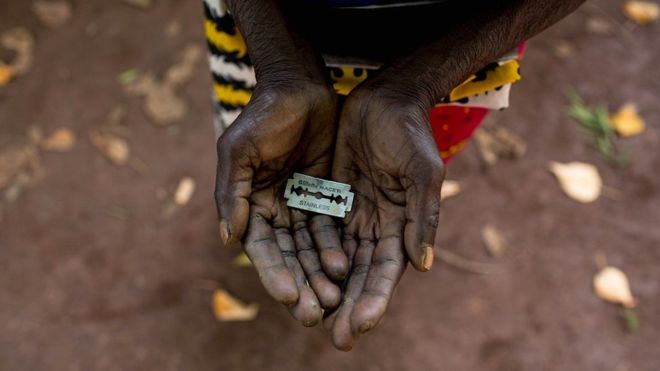
The procedures alter or injure female genital organs for non-medical reasons, and often involve the removal or cutting of the labia and clitoris.
The UN estimates that 200 million women and girls alive today have undergone some form of genital mutilation.
In Egypt, it is widespread in both Christian and Muslim communities, and is often justified for cultural or religious reasons but is rooted in the desire to control a woman's sexuality.
As much as 87% of Egyptian women and girls aged 15-49 have undergone FGM, according to a 2016 survey by the UN Children's Fund.
It can cause lasting physical and mental trauma, including chronic infections, menstrual problems, infertility, pregnancy and childbirth complications.
Latest Stories
-
Ecobank calls for wider access and stronger collaboration on agricultural finance
14 minutes -
Agribusinesses need more than loans to reach their full potential – Ecobank
15 minutes -
Green finance must deliver measurable benefits to Ghanaian farmers – Ecobank
20 minutes -
Today’s front pages: Wednesday, September 23, 2026
59 minutes -
Ghanaian pastor, Rev Emmanuel Boakye-Danquah on the run over alleged counterfeit currency syndicate
1 hour -
Give Teshie Desalination to Kasapreko or Accra Brewery
1 hour -
Absa Bank Ghana and IFC announce $50m facility to expand cocoa financing
1 hour -
Ghana’s economic revival: Turning financial stability into economic prosperity
2 hours -
AFCON 2027Q: Black Stars to depart Accra for Bouaké ahead of Ivory Coast clash
2 hours -
Who to allow into your home, who should come into your cyberspace? Trust is becoming unbecoming
2 hours -
At least 11 dead in mass shooting at house party in South Africa
2 hours -
MoMo Fintech Lab attracts close to 1K entries from innovators across, applications end on Sept 30
2 hours -
Black Stars face Ivorian test as injuries force major squad changes
3 hours -
Save Nations Foundation donates learning materials to Nooria Islamic Basic School, calls for more support
3 hours -
From selling food to solving problems: How Esther Owusu Nkwantabisah rethought entrepreneurship
3 hours