

Audio By Carbonatix
The Council of Indigenous Business Associations (CIBA), has called on government to ensure that the new Rent Bill is passed before the current Parliament is dissolved.
In a statement, CIBA said the new Bill, if passed into law, will reduce the burden of exorbitant rent advance on the working class especially businesses in the Micro, Small and Medium Enterprises (MSMEs) in the country.
“We envisage a new rent regime that is very friendly to the circumstances of MSMEs across the country being strictly enforced by the relevant state institutions in eliminating all the illegalities currently being perpetrated in the housing sector against tenants and releasing significant pressure on the working capital of MSMEs in the country to thrive,” the group said.
The group further said rent advance payment which is a feature of the moribund Rent Act of Ghana (Act 220), has been one of the biggest challenges SMSEs face in the country.
CIBA said companies are forced to pay exorbitant amounts to secure buildings ahead of time while these monies could be injected into other things that can boost their businesses.
The group is hopeful that the new bill will deal with the issue.
“Imagine a business starter having to mobilise funds to hire a property for years be it shop or residential accommodation. That will mean more than half the amount will go into the rent,” CIBA stated in a media release issued in Accra," they said.
Dr Bawumia earlier, in July, announced that government is designing a policy framework which will address rental issues in the country.
He stated that government is working towards replacing the the existing, moribund Rent Act of Ghana (Act 220), which was passed in 1963 with a new Rent Control Bill which will be submitted to Cabinet and subsequently Parliament, for approval.
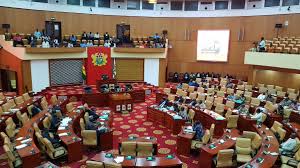
CIBA is also calling for the new Bill to be passed and made law before the current Parliament is dissolved.
The group further noted that the Rent Control Department is operating under an old law when so much has changed since the law was passed in 1963.
“The department should be resourced to be able to bite. It must be well positioned so they can adjudicate and take their own decisions and not always refer cases to court or else passing the law will be one of those fine ones and not bite,” they said.
Latest Stories
-
Illegal mining concessions easier to obtain than lawful ones in Ghana – Prof Frimpong-Boateng
2 minutes -
Frimpong-Boateng proposes Environmental Restoration Fund funded by mineral royalties
10 minutes -
Corrupt individuals are worse than pathogens; their actions cause premature deaths – Prof Frimpong-Boateng
16 minutes -
No illegal mining operation will find refuge on Akyem Essase lands — Chief declares
20 minutes -
Flight price rises due to ‘foolish leaders’ starting wars, Virgin’s Branson says
27 minutes -
Consult traditional authorities before granting mining concessions on stool lands — Baffour Sikabede to gov’t
37 minutes -
Why are European countries moving their gold out of North America?
43 minutes -
Galamsey: Chiefs must not trade rivers for mining royalties – Baffour Sikabede
47 minutes -
Jamaica to bring slavery reparations petition to King Charles
59 minutes -
UEW holds Fourth Annual Colloquium on politics and Ghana’s environmental future
1 hour -
2026 U-20 WWC: Black Princesses fall to Ecuador in opening game
3 hours -
GPL 2026/27: Hearts of Oak start new season with emphatic win over Berekum Chelsea
4 hours -
GPL 2026/27: Asante Kotoko held by debutants Debibi United in four-goal thriller
4 hours -
CAF CL: Medeama suffer home defeat in first leg against TP Mazembe
4 hours -
GPL 2026/27: Samartex secure 3-1 victory over Karela in season opener
5 hours