

Audio By Carbonatix
The end of Brazil's monthly emergency payments introduced during the Covid-19 pandemic could send 15 million people back into poverty, a study says.
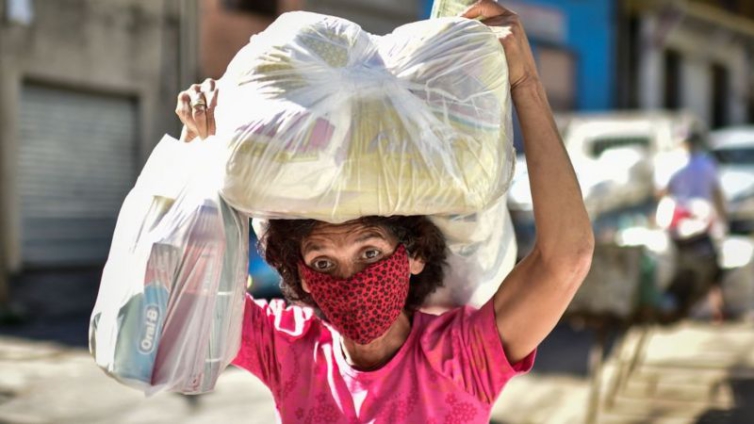
More than 67 million people have received the handouts, helping alleviate the impact of the crisis.
As a result poverty fell to a historic low of 50 million people, said Fundação Getulio Vargas (FGV), a think tank.
The government wants to keep parts of the scheme but there are concerns about its cost.
President Jair Bolsonaro's efforts are stalled in Congress. There are disagreements, even among his supporters, over how to fund the programme without breaking a constitutional spending cap amid worries about the country's budget deficit.
The president - who came to office last year with an agenda of austerity and reforms - saw his popularity rise because of the handouts, introduced in April and due to end in December.
They started at 600 reais (£83; $107) before being cut by half in August, with an estimated cost to the Treasury of $57.6bn.
Pandemic poses extra threat in fire-ravaged Amazon
Tracking the global pandemic
Official estimates suggest 44% of Brazil's households have received the payments. Most of them are in the northern and north-eastern regions, which have the highest levels of poverty in the country.
Anyone living on less than half of the minimum wage - or $93 - is considered to be in poverty.
"The return to poverty of those 15 million people is even a conservative estimate," said economist Marcelo Neri, head of social policies at the FGV, a leading higher education institute.
"Brazil was the country in Latin America that had the most generous handout programme but it wasn't the one with the best [fiscal] conditions... We'll see [whether it worked] in a year's time."
Levels of poverty, as well as extreme poverty - when someone lives on less than $1.90 a day - are expected to rise in other Latin American countries where economies have been badly hit by the pandemic.
Meanwhile, the pandemic in Brazil has shown signs of easing in recent weeks. Shops and other businesses have started to reopen but there are fears unemployment will rise sharply as the country is likely to face a deep recession.
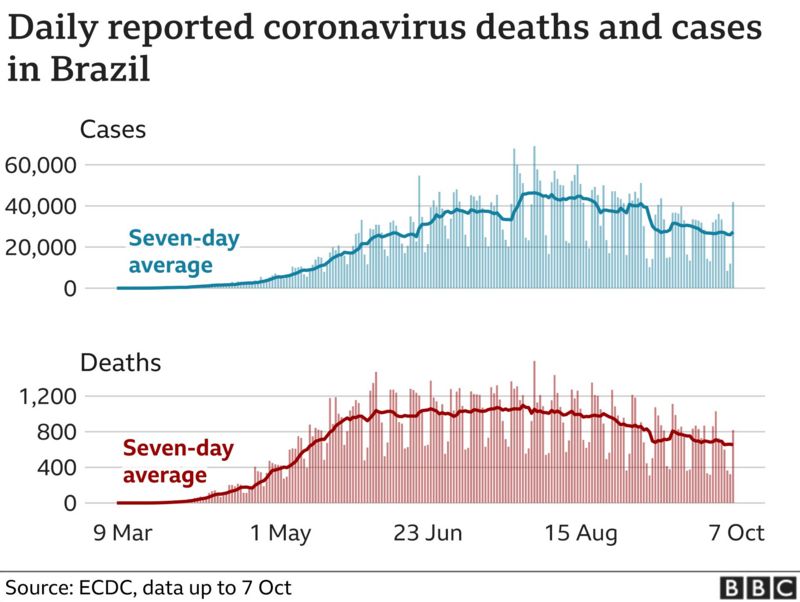
Brazil - which has a population of 212 million - is one of the world's hardest-hit countries by Covid-19. Around five million cases have been confirmed with nearly 149,000 deaths, the health ministry says. Official numbers suggest women and black people are the worst affected.
President Bolsonaro - who caught Covid-19 himself and recovered - has been widely criticised for his handling of the pandemic. He downplayed the virus at the beginning, saying it was just a "little flu", and opposed measures suggested by health experts, such as social distancing.
Latest Stories
-
Today’s front pages: Tuesday, September 8, 2026
19 minutes -
FIFA, CAF halt Nigeria football elections over governance crisis
45 minutes -
13-year-old Prince George set for first day at Eton College
50 minutes -
NPP national election: ‘Something shocking is about to happen in Kumasi’ – Sylvester Tetteh
58 minutes -
‘Judge me on my commitment, not whom I supported during presidential primary’ – Sylvester Tetteh to NPP
1 hour -
Family demands answers after dialysis patient dies at TTH during power outage
1 hour -
Foreign Ministry repatriates nearly 7,000 distressed Ghanaians since 2025 – Ablakwa
2 hours -
Gender Ministry steps up community campaign against social vices
2 hours -
Police bust armed robbery gang targeting gold dealers, mining sites in Ashanti and Western regions
2 hours -
Galamsey causes 1 in 4 fibre cuts in Ghana – Sam George
3 hours -
Police link Labone bank robbery suspects to earlier attacks on customers
3 hours -
Accra-Kumasi Expressway will be Mahama’s major road legacy – Agbodza
3 hours -
Ghana spends over US$20m repairing fibre cuts – Sam George
3 hours -
GACL wins two awards at ACI World Airport Experience Summit
3 hours -
Tomato prices to drop sharply in coming weeks – John Dumelo
3 hours