

Audio By Carbonatix
Agricultural ministers from the member states of the EU have reached an agreement on reforming the Common Agricultural Policy. The deal, several years in the making, will place a bigger focus on environmental protection.
The EU member states announced on Wednesday morning in Luxembourg that they had come to an agreement over reforms to the Common Agricultural Policy (CAP).
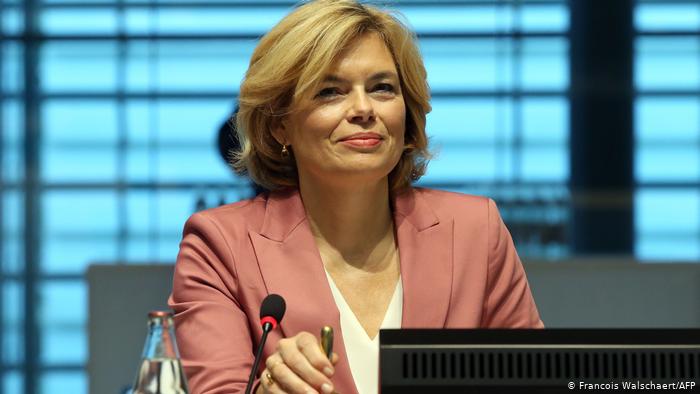
The talks lasted almost two days before agricultural ministers from the EU member states were able to reach an agreement following a proposal by the German agricultural minister, Julia Klöckner.
The CAP allocates billions of euros and as such constitutes the biggest share of the EU's budget. Many farmers are dependent on money from Brussels in order to stay in business.
A long time in the works
"After a long and hard struggle, we've reached a milestone," Klöckner said in a live press conference following the finalization of the agreement.
She welcomed the new agreement on environmental protections while also ensuring that people in the EU would still be able to "put food on the table."
The German politician celebrated the deal with an announcement on Twitter, saying "we made it. A milestone for a reorientation of EU agriculture, with green architecture at its core.
For Germany, this means €1 billion of our budget will be used for ecological rules/biomeasures, while at the same time maintaining a balance with income and food security."
The EU Commissioner for Agriculture and Fisheries Janusz Wojciechowski also announced the agreement on Twitter and thanked the "German Presidency for its efforts to take forward the work of the former Presidencies and for tabling compromise proposals."
Under the new proposal, member states will have a greater level of freedom over how they achieve the agreed upon goals regarding the conservation of nature, environmental protection and ensuring food quality.
States will have to send their policy plans to be approved by the EU Commission. States must also offer further "eco-measures" which go beyond the obligatory environmental protections — any farmer who follows these voluntary rules will be given extra funds.
The new reform will come into effect in 2023 and includes a two-year "learning period."
Latest Stories
-
Asutifi South Assembly forms taskforce to stamp out illegal NHIS fees
4 minutes -
GBA not politically aligned, we criticise all governments – Deputy Secretary
10 minutes -
Environmental groups demand National Park status for Atewa Forest over illegal mining
11 minutes -
Three players in line to replace Partey in Queiroz’s next Ghana squad
15 minutes -
GBA leadership’s independence and consistency leave much to be desired – Deputy AG
21 minutes -
Deputy AG accuses GBA of selective criticism over Chief Justice’s comments
33 minutes -
Africa must remove visa restrictions to unlock jobs, opportunities – Gabby Otchere-Darko
36 minutes -
87-year-old man remanded over alleged defilement of 9-year-old girl at Ofankor
55 minutes -
Visa restrictions costing African businesses opportunities – Gabby Otchere-Darko
55 minutes -
Body of missing runner found in South Africa
55 minutes -
CANAL+ and LaLiga sign landmark anti-piracy agreement
1 hour -
AshantiGold’s David Gyamfi Junior shines as 8 outstanding performers win GPL Matchweek 2 NASCO awards
1 hour -
The small lessons changing how Ghana’s restoration champions plant trees
2 hours -
Government must not perpetrate galamsey, it campaigned against – GBA President
2 hours -
PRIMER must ensure women return home safely with their babies – Vice President
2 hours