

Audio By Carbonatix
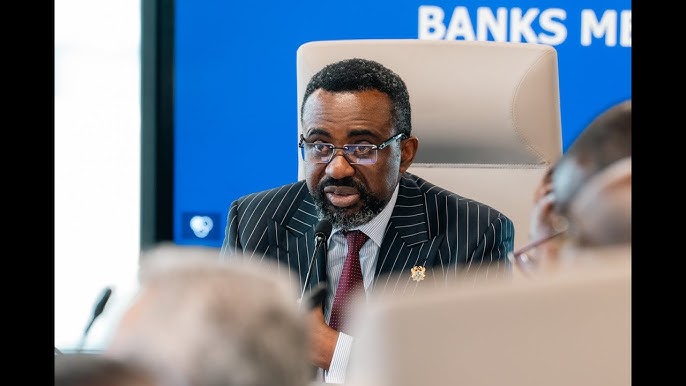
The Governor of the Bank of Ghana (BoG), Dr Johnson Asiama, has delivered a strong defence of the central bank's strategic shift in mineral resource management, calling for the protection of the Gold-for-Reserves initiative while acknowledging that critical reforms are needed to eliminate operational bottlenecks.
Appearing before Parliament’s Public Accounts Committee (PAC) on Monday, January 12, 2026, the Governor provided a comprehensive update on the termination of the controversial Gold-for-Oil (G4O) programme and the subsequent pivot toward aggressive reserve building using the Gold-for-Reserves (G4R) policy.
With the G4O programme now defunct, the central bank’s focus has shifted entirely to the Gold-for-Reserves (G4R) framework.
Dr Asiama emphasised that while the programme is fundamentally sound and vital for national stability, it is currently being streamlined to remove "inefficiencies".
The Governor explained that the creation and empowerment of GoldBod (the Ghana Gold Board) was a direct response to these systemic gaps.
By centralising the intermediation of gold flows, the BoG aims to eliminate middleman costs and ensure that every ounce of gold purchased contributes directly to the nation's external buffers.
“The objective of Gold-for-Reserves, as the name suggests, is for us to increase reserves,” Dr. Asiama explained. “Based on the data available so far, the evidence is clear that it is not a case of shutting it down but a question of enhancing its efficiency, looking at inefficiencies that we have to take out. That is why we went after GoldBod."
The push for increased reserves comes at a time when Ghana’s foreign exchange position has shown remarkable resilience. By late 2025, gross international reserves had climbed significantly, providing the Cedi with a much-needed shield against global market volatility.
Dr Asiama confirmed that the decision to cancel the Gold-for-Oil programme in March 2025 was a calculated move that, so far, has not negatively impacted the domestic fuel market. He noted that the primary fear—a return to the fuel shortages and long pump queues seen in 2022—has not materialised.
“The first reference is to observe that since we cancelled the Gold-for-Oil in March 2025, we have not seen a build-up of queues at the pumps. One of the objectives of the policy was for that. So, we believe that the cancellation was worth it,” the Governor stated.
However, the programme did not exit without scrutiny. Dr. Asiama revealed that a "thorough review" was necessitated by a multitude of operational hurdles. An external audit, approved by the Public Procurement Authority (PPA) two months ago, is currently underway to investigate the programme's legacy.
"There were too many issues under the Gold-for-Oil that we needed to unearth. Therefore, the board authorised an external audit into the policy. We got a PPA approval for the audit two months ago. That exercise is underway."
Latest Stories
-
La Beach demolition: Senyo Hosi condemns lack of consultation
7 minutes -
Russian glide bomb attack on Zaporizhzhia kills at least 15 people
22 minutes -
Jinapor warns underperforming energy sector CEOs of consequences, says no protection for failure
24 minutes -
Fire destroys head of tipper truck on Lower Volta Bridge
28 minutes -
Palmer signs new Chelsea contract until 2034
29 minutes -
World Cup visa scandal: Mahama will act on corruption allegations – Abass Nurudeen
31 minutes -
Abass Nurudeen accuses Minority of ‘scandal scavenging’ over World Cup visa controversy
33 minutes -
US Embassy recognised NSA, GFA and GTA as separate entities for visa applications – Sports Minister’s aide
39 minutes -
Only 30% of Ghanaian teachers satisfied with their jobs – CAPCOE data reveals
50 minutes -
Communities affected by construction of Akosombo Dam urge government to speed up compensation process
1 hour -
World Cup visa scandal: Sports Ministry not shielding anyone – Sports Minister’s special aide
2 hours -
World Cup visa scandal: Over 30 people misrepresented as GTA board members to US Embassy – Vincent Assafuah alleges
2 hours -
Fire destroys wooden structure near Yesu Mo Villa at Bush Road
2 hours -
NDC threatens sanctions over oversized campaign posters, gives aspirants 5 days to comply
2 hours -
Star Oil paid GH¢2.7bn in taxes, levies in nine months of 2026
3 hours