

Audio By Carbonatix
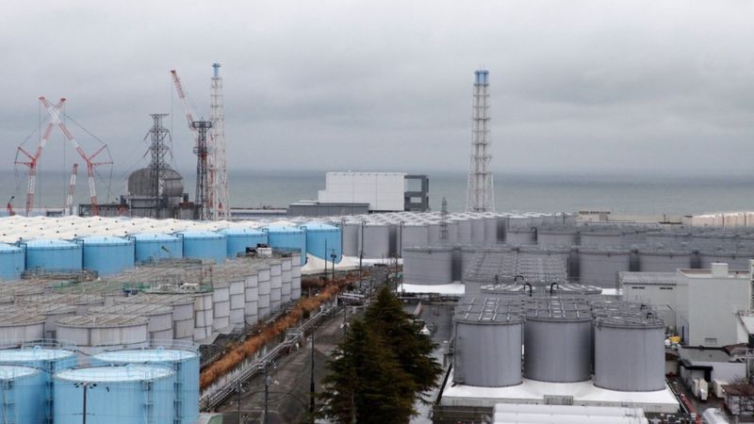
Contaminated water from Japan's Fukushima nuclear plant contains a radioactive substance that has the potential to damage human DNA, a report by Greenpeace says.
The claim from the environmental campaign group follows media reports suggesting the government plans to release the water into the ocean.
Many scientists say the risk is low but some environmentalists oppose the idea.
Contaminated water from Japan's Fukushima nuclear plant could damage human DNA, Greenpeace says https://t.co/1Cwu0TYHXR
— BBC News (World) (@BBCWorld) October 23, 2020
The government has not yet responded to the Greenpeace report.
For years Japan has debated over what to do with the more than a million tonnes of water used to cool the power station, which went into meltdown in 2011 after being hit by a massive tsunami.
Space to store the liquid - which includes groundwater and rain that seeps daily into the plant - will fill up by 2022.
The government says most of the radioactive isotopes have been removed using a complex filtration process but one isotope, tritium, cannot be removed.
Last week Japanese media reported that the government had decided to start releasing the water into the sea from 2022. Under the reported plans, the water would be diluted inside the plant first in a process that would take several decades.
In its report Stemming the tide 2020: The reality of the Fukushima radioactive water crisis released on Friday, Greenpeace claimed the contaminated water contained "dangerous levels of carbon-14", a radioactive substance that it says has the "potential to damage human DNA".
The group accused the government of suggesting the water was "treated" giving the impression it "only contains tritium".
The government said no decision had been made, but observers think one could be announced by the end of the month.
Environmental groups have long expressed their opposition to releasing the water into the ocean. And fishing groups have argued against it, saying consumers will refuse to buy produce from the region.
However some scientists say the water would quickly be diluted in the vastness of the Pacific Ocean, and that tritium poses a low risk to human and animal health.
Latest Stories
-
We need to pray for GoldBod – Duncan-Williams
11 minutes -
Strong favourites or tougher task – will Arsenal defend their title?
45 minutes -
Passengers escape death as VIP travelling from Kumasi to Sunyani catches fire
48 minutes -
Ariana Grande leaves problems at home as her tour hits the UK
1 hour -
Multiple suspects at large after five shot at Virginia State University, police say
1 hour -
Three killed as Russia launches fresh aerial attacks across Ukraine
1 hour -
Boxing: John Laryea disqualified in WBA Featherweight title eliminator
1 hour -
Hawaii battles strong winds and rain as Hurricane Lala threat looms
2 hours -
Twelve killed as Polish bus veers off Hungarian motorway
3 hours -
Building Ghana better: Why architects must be at the heart of national development
5 hours -
GMet warns of severe rainstorm across northern Ghana
6 hours -
Semenyo eyes bigger targets after breaking Yeboah’s Ghanaian Premier League record
6 hours -
Health Ministry reviews NDC manifesto commitments
7 hours -
Mfantsipim School @ 150 and Creech’s Mfantsipim Diaries: My First Shock
8 hours -
Labour backs proposed IPEC but demands full involvement in pay reforms
8 hours