

Audio By Carbonatix
Introduction:
Breast cancer is the 2nd most common cancer worldwide and the most common cancer in women. In 2022, there were 2,296,840 new cases of breast cancer diagnosed globally, and 670,000 associated deaths were recorded. Breast cancer usually occurs in women at any age after puberty but commonly later in life. About 13% of women in the general population will develop breast cancer by the year 2035. Fifty-five (55) to 72% of women with a mutation in Breast Cancer gene 1 (BRCA 1) - a gene responsible for DNA repair as well as a tumour suppressor - have a likelihood of 45-85% of developing breast cancer in their lifetime and are often linked with triple negative breast cancer. About 45-69% of women with BRCA 2 will develop breast cancer by 70-80yrs. BRCA gene mutations are inherited, are passed on from parents to their children and can run in families.
History of Breast Cancer Treatment:
Breast cancer treatment has gradually evolved over the years. In recent times, newer developments have significantly improved the overall outcome of most patients who present early. Even for patients who present with advanced disease, options for treatment and control of disease continue to improve. History dates back to the 19th century when major landmarks in the treatment of breast cancer begun to unfold. Treatment of breast cancer however dates back to ancient times.
Evolution of newer cancer treatments (Systemic therapy):
Some major landmarks include performing of the first radical mastectomy, mammography, use of radioactive substances and later in the twentieth century, development of various forms of treatments which enter the blood stream and travel to every part of the body. This includes chemotherapy and hormonal therapeutic drugs which when combined with surgery, effectively treat and manage breast cancer. With time, more recent drugs have been developed, which target the proteins that breast cancer cells use to grow, spread and live longer.
These drugs work to destroy cancer cells or slow their growth by entering theblood stream and traveling to every part of the body. Some targeted drugs work even when chemotherapy drugs do not, and they can boost the effect of other drugs. Significant advances in oncology in recent years has demonstrated impressive durable clinical benefit. The advent of immunotherapy has revolutionized the treatment of breast cancer. Immunotherapy utilizes the patient's own immune system to fight and eradicate cancer.
Clinical evidence shows significant variability in the treatment response to immunotherapy agents versus standard chemotherapy agents. These newer agents coupled with the already known chemotherapy drugs, have shown great promise in the management of cancer and resulted in improved life span of patients.
Evolution of Radiotherapy:
Radiotherapy involving the use of radiation to kill and shrink cancer cells has evolved dramatically over the past century and made great progress in treatment success. It has traveled a long path through different milestones resulting in fine tuning of clinical understanding, skill and technological advancement.
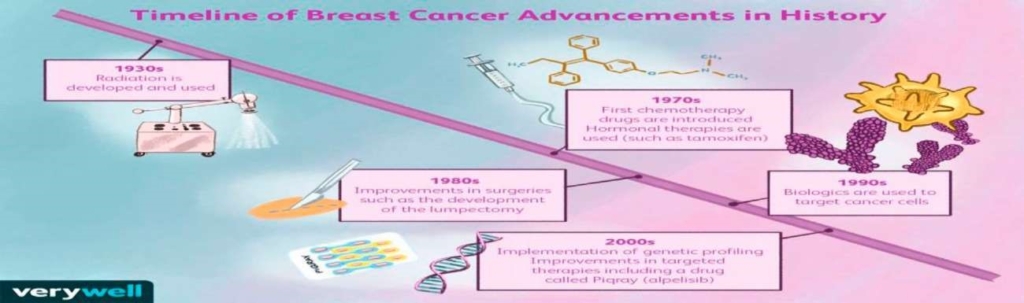
The overall result has been better treatment planning with improved survival and reduced side effects. Initially, superficial X- rays were developed for the treatment of cancers. With time, higher energy X-rays like Cobalt 60 were developed for successful treatment of cancers. Cobalt 60 teletherapy machines are very resilient and still in use in some African countries.
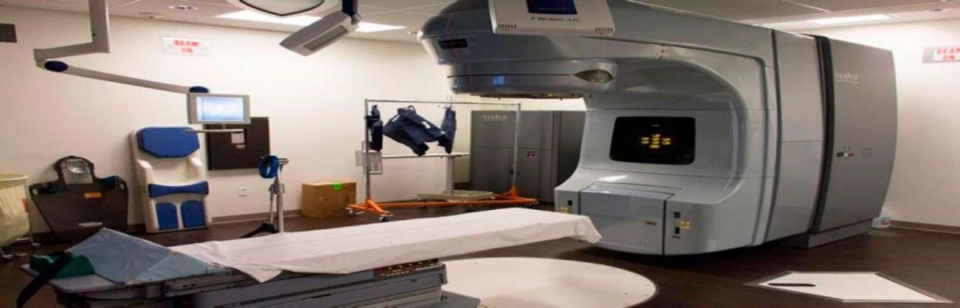
The linear accelerator was invented in the 1950's with marked improvement in radiotherapy improving on the precision of delivery. The following are various techniques by which targeted radiation therapy is employed. These include:
3-Dimensional Conformal radiotherapy (3D CRT)- A type of radiation therapy that uses multiple beams shaped to conform to the three-dimensional outline of the tumour. This treatment targets tumours and minimizes radiation exposure to surrounding healthy tissue.
Intensity modulated radiation therapy (IMRT)- A more precise form of radiation therapy administration to precisely shape radiation beam delivery to the tumour while minimizing damage to surrounding healthy tissues.
Image-guided radiation therapy (IGRT)- A type of radiation therapy that uses imaging techniques during treatment to precisely target tumours and minimize radiation exposure to surrounding healthy tissues.
Volumetric modulated arc therapy (VMAT)-A type of radiation therapy that delivers radiation in a continuous arc as the treatment machine rotates around the patient. This allows for precise targeting of tumours.
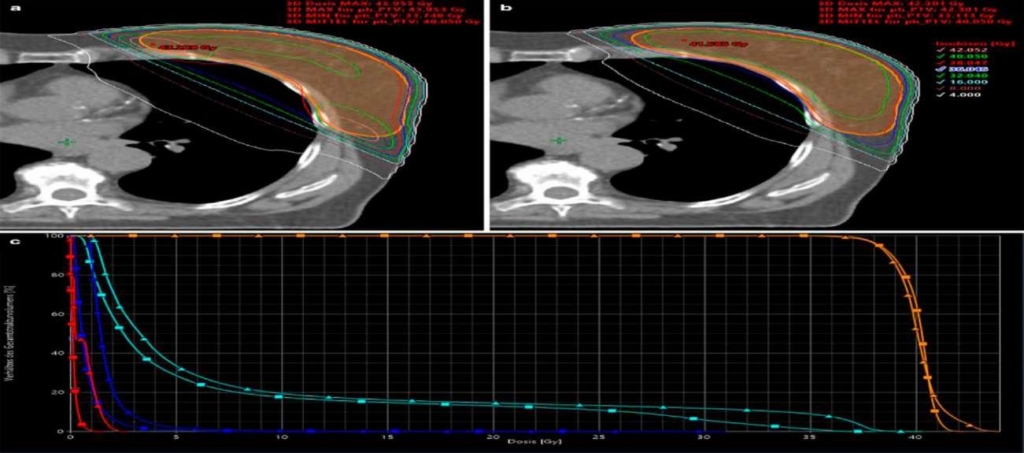
Stereotactic radiotherapy- A type of radiation therapy that uses highly focused beams to precisely target tumours, minimizing the damage to surrounding tissues. Delivers higher doses in fewer treatments. (Not available in Ghana presently)
Brachytherapy- A type of radiation therapy where a sealed radiation source is placed directly or near a tumour.
Intra-operative radiotherapy- Delivery of a high dose of radiation directly to the tumour or tumour bed during surgery (Not available in Ghana presently)
Radioimmunotherapy-Cancer treatment that combines radiation therapy and immunotherapy to target tumours
As cancer treatment has continued to evolve over the decades, there has been remarkable improvement in the treatment outcomes and overall survival of patients.
Latest Stories
-
It still surprises me GAUA is on strike after signing MoU – Fair Wages CEO
17 minutes -
Kumasi Hospital removes 880-gram bladder stone in rare surgical case
23 minutes -
Ghana lacks sufficient power generation redundancy – Energy Minister
42 minutes -
CPA assures consumers of safety of registered sanitary towels on the Ghanaian market after complaints
54 minutes -
‘They all point decisively to guilt’ – AG urges court to reject Adu Boahene’s no-case submission
1 hour -
Documents falsified to evade tax on Abramovich’s wealth, BBC finds
1 hour -
Today’s front pages: Monday, October 12, 2026
1 hour -
BoG proposes new rules to ensure banks can always pay customers when they need their Money
3 hours -
Hotline Documentary: ‘Silent Football’ to air on JoyPrime and JoyNews today
3 hours -
NDPC examines how evidence shapes Ghana’s development planning and policy decisions
3 hours -
Education Ministry calls urgent talks to break GAUA strike deadlock
3 hours -
NCCE engages women in North East Gonja on rule of law, anti-corruption
3 hours -
NDPC reviews 2004 planning guidelines to reflect changes in decentralised system
3 hours -
Trade Ministry commends Prisons Service for using art to drive inmate rehabilitation
4 hours -
Books, brushes and second chances: Dr Abena Asomaning launches three titles to support prison outreach
4 hours