

Audio By Carbonatix
The air in India's capital region becomes very polluted every winter. Vehicular and industrial pollutants, crop burning, and weather conditions cause the problem. Despite numerous initiatives, the problem has persisted.
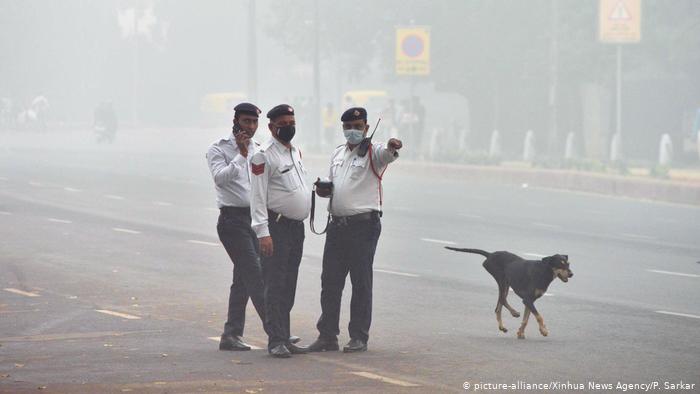
Every year, the residents of India's capital region and surrounding areas experience hazardous levels of air pollution at the beginning of winter.
Smoke from stubble burning in the adjoining farmland areas of the states of Haryana and Punjab, as well as fumes from vehicles and industry, enshroud the city as lower temperatures and slower moving winds trap pollutants in the air.
On Monday, the air pollution in New Delhi was classed as severe for the fifth consecutive day.
The Central Pollution Control Board's air quality index recorded severe levels of pollution between 450 and 499 at monitoring centers in the city, with 500 the highest pollution level on the scale.
That score is more than 20 times the limit deemed safe by the World Health Organization (WHO) — it roughly equals smoking 25 cigarettes a day.
"A disadvantaged geographic location and regional meteorology with windy and dusty conditions during summer contributes greatly to Delhi's air pollution. This is particularly worsened by low relative humidity that increases particle resuspension," Prarthana Borah, India director for Clean Air Asia, told DW.
"In addition, there are episodic dust transport events from surrounding areas. As a land-locked megacity, there are limited avenues for the polluted air to be flushed out of Delhi. Nor is Delhi in the advantageous position of enjoying replacement of air from relatively unpolluted marine regions," she said.
COVID-19 worries
"Look at India, it's filthy. The air is filthy," said Donald Trump in the final US presidential debate, while justifying his stance on pulling the US out of the Paris climate deal. While his comments received a lot of backlash, experts warn that Delhi's air quality is bound to get worse as the festival season arrives in India.
Firecrackers during the Hindu festival of lights, Diwali, are expected to worsen air quality in mid-November.
A surge in COVID-19 cases, coupled with the rise in pollution, has made experts concerned about Delhi residents.
On Monday, Delhi recorded 7,745 new coronavirus cases, the highest daily number of infections in India.
Latest Stories
-
Nigeria’s economy expands by 4.4% in Q2, lifted by oil and non-oil sectors
25 minutes -
UN committee says countries must consider reparations for slave trade
37 minutes -
Oil prices rise as latest fighting resurrects Middle East supply disruption risks
46 minutes -
Kenya airport staff strike delays thousands of passengers
55 minutes -
OSP Act lacked checks to rein in Special Prosecutor, Kpebu says
1 hour -
Public trust crisis around Special Prosecutor is fueling attacks on OSP – Kpebu
1 hour -
South African airline defends low-altitude aerial stunt over packed stadium
2 hours -
Special Prosecutor needs adult supervision – Martin Kpebu
2 hours -
Africa’s food systems must be judged by what farmers earn – AGRA
2 hours -
Raphinha & Lamine Yamal score twice as Barcelona beat Rayo Vallecano
3 hours -
Everton agree £40m fee for Monaco striker Balogun
3 hours -
Mudryk to Spurs as Chelsea’s Sanchez heads to Como
4 hours -
Saka scores agaian as Arsenal beat Aston Villa
4 hours -
Man City open talks with Chelsea over Enzo Fernandez move
4 hours -
Man City agree £65m deal for Everton’s Ndiaye
4 hours