

Audio By Carbonatix
Pakistan's president has signed a new anti-rape measure aiming to speed up convictions and toughen sentences.
The ordinance will create a national sex offenders register, protect the identity of victims and allow the chemical castration of some offenders.
Special fast-track courts will hear rape cases and will be expected to reach a verdict within four months.
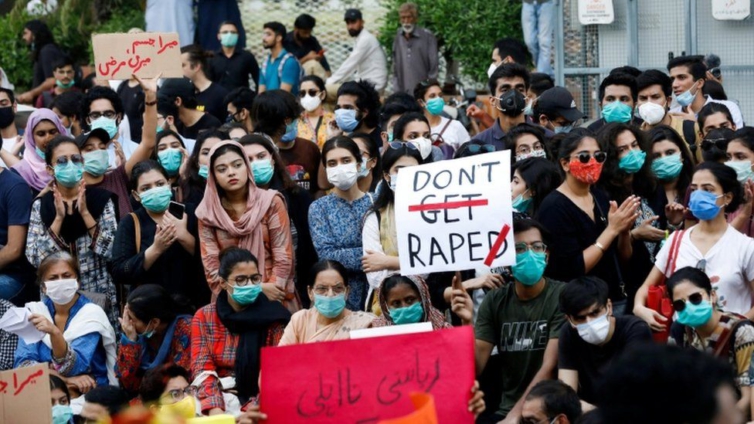
It comes after a public outcry against sexual violence following the gang-rape of a woman outside the city of Lahore.
Pakistan anti-rape ordinance signed into law by president https://t.co/IlZvtEf1xC
— BBC Asia (@BBCNewsAsia) December 15, 2020
The woman was assaulted on the side of a motorway leading into the city in front of her two children. Lahore's most senior police official implied the following day that the victim had been partially at fault for the assault.
His comments and the brutal assault appalled Pakistanis, spurring a wave of demonstrations nationwide and forcing the government to promise action.
Prime Minister Imran Khan and his cabinet approved the legal measure last month, and President Arif Alvi signed it into law on Tuesday.
The government now has 120 days to take the measure to parliament and have it permanently passed into law. Until then the law will remain in force.
Some however have criticised the ordinance, saying the punishments are too harsh and arguing that officials did not follow the necessary consultation process before approving it.
Other countries already use chemical castration - medication to reduce testosterone - as part of their sentencing for sexual offenders: Indonesia passed a chemical castration law for paedophiles in 2016, while Poland made it compulsory for adults who rape children in 2009.
There has been growing awareness of sexual violence in Pakistan over the last few years.
In 2015, one woman was gang-raped in a remote village and footage of the attack appeared on social media. The country did not have laws to stop the footage from being shared online.
Latest Stories
-
Finland orders halt to work on two Google data centres
20 minutes -
Substitute Merino scores twice as Spain win in Croatia
29 minutes -
Ronaldo wants Portugal ‘punishment’ but not retiring
37 minutes -
White House defends Trump comment to let Iran ‘take out’ LA and San Diego
46 minutes -
Asos confirms hackers sent ‘unauthorised’ notification to app users
47 minutes -
US televangelist Jim Bakker, disgraced from sex scandal and fraud, dies at 86
55 minutes -
Congolese-born golfer to represent Ghana at Turkish Airlines World Cup grand final
1 hour -
Amazon wins global rights to stream Emmys in six-year deal
1 hour -
European Film Festival returns to Ghana after a 5-year break
1 hour -
PTA backs teachers’ strike, threatens street protest if gov’t misses October 30 deadline
1 hour -
Paramount takes over Warner Bros in $110bn Hollywood merger
1 hour -
Suspend offshore gold exploration licence – NAFAG urges gov’t
1 hour -
Investigators meet family, community over deaths of 3 children found in car trunk
1 hour -
Teacher strike: FWSC blames new allowance demand for deadlock with teacher unions
2 hours -
Aboboyaa Company Ltd CEO donates 5 tricycles to Ghana Prisons Service
2 hours