

Audio By Carbonatix
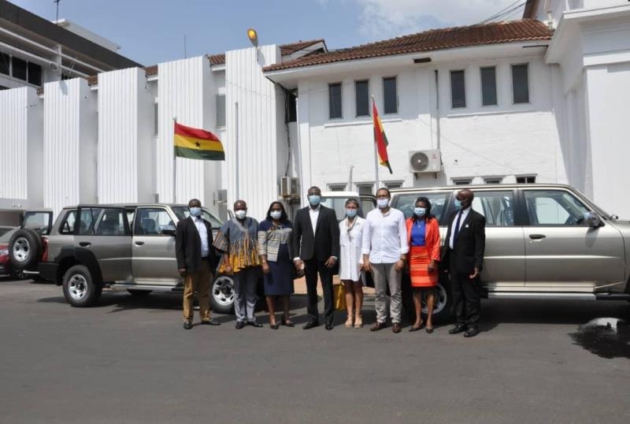
The Accountability, Rule of Law and Anti-corruption Programme (ARAP) has handed over two vehicles to Commission on Human Rights and Administrative Justice (CHRAJ).
ARAP, an EU funded programme, implemented by the Spanish public foundation FIIAPP has been supporting the Commission during the last four years.
These vehicles will improve the capacity of CHRAJ to conduct monitoring activities related to the implementation of the National Anti-Corruption Action Plan (NACAP) on the ground.
A statement issued in Accra by Mrs Ana Sánchez, the ARAP Team Leader, said corruption continued to be a problem that had permeated every sector of global economies.
It said with its devastating effects, it undermined sustainable development and was an affront to human rights.
“It further distorts markets, competition, institutions as well as entire governance structures,” it said.
The statement said arguably, corruption was identified as a major root cause of poverty, deprivation and underdevelopment.
It said in the particular case of Ghana, the high prevalence of corruption has resulted in poor service delivery and a lack of access to necessities of life.
“Corruption is equally a threat to Ghana’s democratic ideals (particularly the rule of law, justice for all and equality before the law,” it said.
Ghana’s anti-corruption policy, the National Anti-Corruption Action Plan (NACAP) is coordinated and monitored by the Commission in collaboration with the National Development Planning Commission (NDPC).
Through the Monitoring Committee (MONICOM), composed of the above institutions, the vehicles will strengthen the committee's work in monitoring and evaluating the implementation of the NACAP by the Implementing Partners in the regions.
The ARAP supports the efforts of the government in its fight against corruption.
The objective of the programme is to contribute to current reform processes to reduce corruption and improve accountability, and compliance with the rule of law, particularly when it comes to accountability, anti-corruption and environmental governance.
It does so through support key institutions, while at the same time increasing the ability of the public, civil society organisations and the media to hold the government to account.
Latest Stories
-
‘It has been an honour’ – Boehly speaks out as Clearlake Capital takes over Chelsea
4 minutes -
Wa West Hospital gets health equipment, GH¢340k support as Chief offers land for expansion
8 minutes -
NPP urges delegates to verify eligibility ahead of October 3 national officers elections
14 minutes -
Deputy Health Minister urges nursing leaders to turn research into practical solutions
17 minutes -
Mahama Ayariga urges MMDCEs to strengthen local security early warning systems
19 minutes -
Wa East MP, Assembly hand over three equipped health facilities
21 minutes -
Loyalty is currency of development — Rev. Wengam charges Assemblies of God leaders
24 minutes -
Palace in war of words with Earl Spencer over claims in Diana book
25 minutes -
AMA opens recruitment for revenue collectors, town council officers, city guards and public health workers
27 minutes -
Ninth woman’s body found as South African police investigate string of deaths
28 minutes -
Here’s a 25-point breakdown of NPP’s case against NDC’s constitution review
31 minutes -
AFCON 2027: ‘There is no Plan B’ – Motsepe says CAF has no plans to replace Tanzania as co-hosts
45 minutes -
Police arrest 7 suspects over robbery activities in Zebilla, Garu and Binduri
52 minutes -
IFC Investment in new Accra hotel to support nearly 1,000 jobs and expand midscale tourism in Ghana
54 minutes -
Akwasi Oppong-Fosu joins NDC national chairmanship race ahead of December congress
1 hour