

Audio By Carbonatix
A World Health Organization (WHO) team has arrived in the Chinese city of Wuhan to start its investigation into the origins of the Covid-19 pandemic.
The long-awaited probe comes after months of negotiations between the WHO and Beijing.
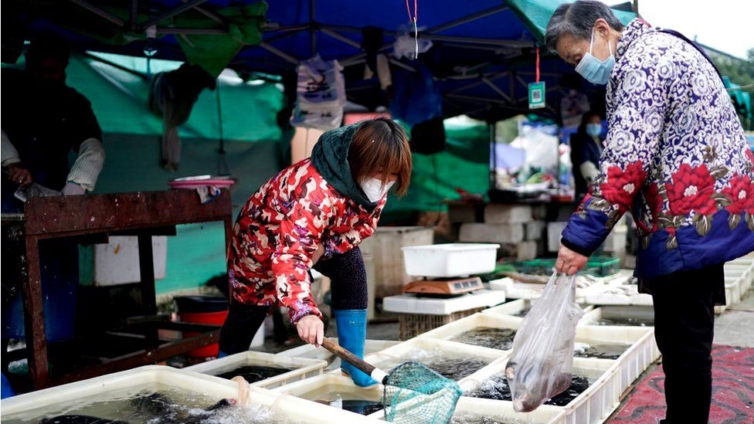
A group of 10 scientists is set to interview people from research institutes, hospitals and the seafood market linked to the initial outbreak.
Covid-19 was first detected in Wuhan in central China in late 2019.
The team's arrival on Thursday morning coincides with a resurgence of new coronavirus cases in the north of the country, while life in Wuhan is relatively back to normal.
They will undergo two weeks of quarantine before beginning their research, which will rely upon samples and evidence provided by Chinese officials.
Team leader Peter Ben Embarek told AFP news agency just before the trip that it "could be a very long journey before we get a full understanding of what happened".
"I don't think we will have clear answers after this initial mission, but we will be on the way," he said.
The probe, which aims to investigate the animal origin of the pandemic, looks set to begin after some initial hiccups.
Earlier this month the WHO said its investigators were denied entry into China after one member of the team was turned back and another got stuck in transit. But Beijing said it was a misunderstanding and that arrangements for the investigation were still in discussion.
China has been saying for months that the although Wuhan is where the first cluster of cases was detected, it is not necessarily where the virus originated.
Professor Dale Fisher, chair of the global outbreak and response unit at the WHO, told the BBC that he hoped the world would consider this a scientific visit. "It's not about politics or blame but getting to the bottom of a scientific question," he said.
Prof Fisher added that most scientists believed that the virus was a "natural event".
The visit comes as China reports its first fatality from Covid-19 in eight months.
News of the woman's death in northern Hebei province prompted anxious chatter online and the hashtag "new virus death in Hebei" trended briefly on social media platform Weibo.
The country has largely brought the virus under control through quick mass testing, stringent lockdowns and tight travel restrictions.
But new cases have been resurfacing in recent weeks, mainly in Hebei province surrounding Beijing and Heilongjiang province in the northeast.
Latest Stories
-
Domelevo backs OSP probe into GH¢70k allegation
23 minutes -
CAF Confederation Cup: Dennis Korsah confident Nations FC can overturn Mali defeat
38 minutes -
‘Avoid political comments’ – Domelevo advises Chief Justice
1 hour -
‘I don’t trust OSP’ to probe GH¢70k ‘bribe’ allegation – Kwasi Kwarteng
2 hours -
Road inspections not to witch-hunt contractors – Kwame Agbodza
2 hours -
Inter Milan mount stunning comeback to beat Napoli
2 hours -
Modric plans to play for Croatia past 41st birthday
2 hours -
Bayern fail to score for first time in 59 games
2 hours -
Bawumia preparing new cocoa policy package for farmers – Annoh-Dompreh
2 hours -
Wa-Tumu-Bolga road upgrade will unlock agriculture, trade – Agbodza
2 hours -
Ghana Maritime Authority readies oil-spill response vessel for deployment
3 hours -
Ayariga turns to drones, AI to tackle Agbogbloshie waste mountain
3 hours -
Agbogbloshie waste heap must go – Mahama Ayariga declares
3 hours -
Government to upgrade all rural telephony sites to 4G – Communications Minister
3 hours -
Rural calls, data to become cheaper by Q1 2027 – Sam George
3 hours