

Audio By Carbonatix
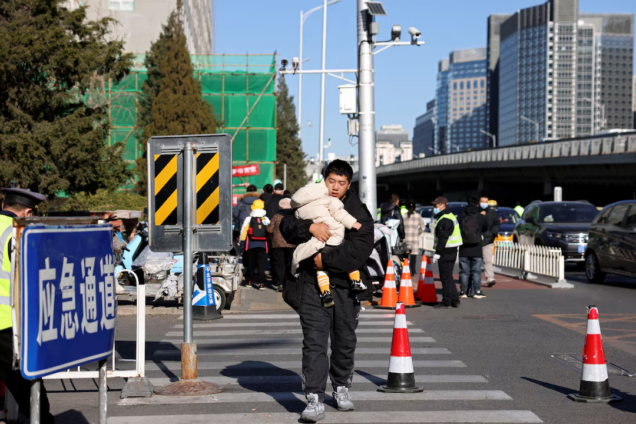
China said on Thursday that it would build a "childbirth-friendly society" in the next five years as it pledged to address concerns over employment, education, medical care, health and income, according to an official government report.
Authorities will improve population services and respond proactively to population ageing, including "promoting high-quality, full employment, improving the income distribution system, and refining the social security system."
The announcement comes after China's population fell for a fourth consecutive year in 2025, as the birth rate plunged to a record low, according to official data released in January, with experts warning of further decline.
China's population has been shrinking since 2022 and is ageing rapidly, complicating Beijing's plan to boost domestic consumption and rein in debt.
New policies will be introduced to promote "high quality development of silver economy", targeted at those aged 60 and older, with elderly care services to be increased, particularly in rural areas, the report said.
Authorities will also draw up measures to hone supportive policies designed for seniors including pension finance, wellness and care, it said.
By 2035, the number of people aged over 60 is set to hit 400 million - roughly equal to the populations of the United States and Italy combined - meaning hundreds of millions of people are set to leave the workforce at a time when pension budgets are already stretched.
China has already increased retirement ages, with men now expected to work until they are 63 rather than 60, and women until they are 58 rather than 55.
China will foster "positive attitudes toward marriage and childbearing," the report said, adding that it would boost housing support for families with children.
Services for women in early stages of pregnancy as well as reproductive health would be improved while authorities aimed to better prevent and treat birth defects.
Authorities will also refine policies on free preschool education and increase the supply of regular senior secondary school places, with government spending on education mandated to be higher than 4% of GDP, the report said.
Latest Stories
-
Ghana’s BRICS move requires clear strategy to manage risks – Godfred Bokpin
54 minutes -
Pay teachers realistic income – Duncan Amoah to gov’t
1 hour -
Bechem to become chicken capital of Ghana – Mahama projects
1 hour -
Gov’t targets recruitment of 16,500 health professionals in 2026
2 hours -
Two-week strike will not derail academic calendar – GNAT President
2 hours -
Headmaster detained after BBC investigation into alleged sexual abuse of students
2 hours -
GNAT pushes for clear implementation procedures of teachers’ conditions of service
2 hours -
Recurrent strikes threaten quality of education and academic calendars – Prof Bokpin
2 hours -
‘Cockroach’ group leaders among hundreds detained in Delhi protest
2 hours -
Don’t let speed of information become your judgement – CJ tells new lawyers
3 hours -
World Cup visa scandal: People have leveraged public office to facilitate fraud – Senyo Hosi
3 hours -
Glut! Farmers count losses as prices crash, customers happy
4 hours -
GSA postpones auction of unserviceable vehicles
4 hours -
Man charged with attempted murder after stabbing
4 hours -
World Cup visa scandal: Senyo Hosi says issue goes beyond calls for Sports Minister’s resignation
4 hours