

Audio By Carbonatix
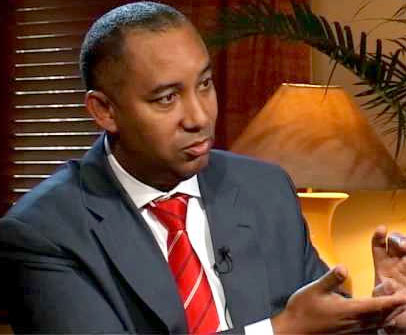
The World Bank provided a credit guarantee to the Government of Ghana which was subsequently used to back the Independent Power Producers (IPPs) to raise funds from the banks to construct the power plants in the country during the power fluctuation or ‘dumsor’ era, a former Chief Executive Officer of the Ghana National Petroleum Corporation, Alex Mould has told Joy Business.
“The World Bank increased Ghana’s ‘implicit guarantee’ so we could use as a credit derivative and lessen the risk of default by the counterparties [IPPs]. The World Bank was involved in the selection of the IPPs and also lent support to the Ghana government as ‘Partial Risk Guarantee’”. A partial risk guarantee protects private lenders against debt service defaults on loans, normally for a private sector project, when the defaults are caused by a government’s failure to meet specific obligations under project contracts to which it is a party.
“So, they [World Bank] provided support in the form of additional guarantees so that the Government of Ghana could provide a credit-backed ‘Government Consent and Support agreement’ [GCSA} or ‘Partial Risk Guarantee’ to enable these IPPs raise the financing”, he emphasized.
The World Bank in a statement said “it wishes to clarify that it has not provided any financing or guarantees to the Independent Power Producers (IPPs) that signed Power Purchase Agreements with the Government of Ghana or the Electricity Company of Ghana during the (Dumsor) energy crisis in 2014-2016”.
It however said it supports the Energy Sector Recovery Plan (ESRP) of the Government of Ghana for affordable and reliable electricity supply and enhance the accountability in the energy sector.
Again, it said it rather provided financing and a guarantee to the Sankofa Gas Project, which since 2019 has increased the availability of natural gas for power generation by leveraging private capital investment and promoting a cleaner energy mix.
But Mr. Mould said the World Bank was involved in discussions of the Partial Risk Guarantees to the IPPs and that it was in the context of its overall support to Ghana that the IPPs established their presence here.
He is therefore surprised that the World Bank wants to take a ‘back seat’ on this matter.
“The World Bank was aware and involved in the discussion of the selection criteria to be used since we had more than eight IPPs that qualified for the Partial Risk Guarantee”, he emphasised.
Latest Stories
-
Afenyo-Markin’s lawsuit against Sammy Gyamfi takes focus away from development – Kpebu
5 minutes -
FWSC urges media to guard against misinformation in proposed IPEC transition
5 minutes -
MoMo Fest 2026: Shatta Wale to Rock Accra Stadium on October 17
7 minutes -
GTEC’s letter directing public universities to reopen by October 16 is unprofessional – GAUA
28 minutes -
Suspect in viral video assaulting wife jailed for 3 months
28 minutes -
GAUA insists strike will end only after Fair Wages addresses market premium issue
28 minutes -
Kpemka seeks compensation as he sues BOST over alleged unlawful termination
32 minutes -
GES asks applicants to check status of 2026 promotion applications on October 15
56 minutes -
Kobe Boujee joins Olympics.com team for Dakar 2026 Youth Olympic Games
1 hour -
Slaty egret’s shifting nesting sites offer clues to changing ecosystems
1 hour -
First phase of arrears for promoted teachers to be paid on Friday – Haruna Iddrisu announces
1 hour -
Caveman Watches partners with Mfantsipim School for 150th anniversary
2 hours -
We’ll pursue GH¢15m defamation suit against Sammy Gyamfi to its logical conclusion – Afenyo-Markin’s lawyers
2 hours -
Martin Kpebu urges Afenyo-Markin not to return to court over Sammy Gyamfi lawsuit
2 hours -
GRA submits preliminary report on drug shipment case to Mahama – Commissioner-General
2 hours