

Audio By Carbonatix
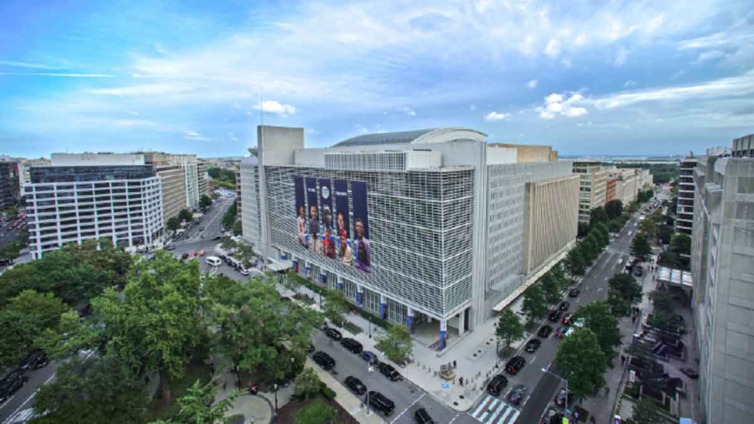
The World Bank is expressing worry that Ghana’s economy has begun to deindustrialize prematurely, according to its latest Ghana Economic Outlook Report.
Traditionally, manufacturing is a marker of industrialization, but economic indicators show that the country’s economy may have begun to de-industrialize prematurely.
“There are indications that Ghana has begun to deindustrialize prematurely. Traditionally, manufacturing is a marker of industrialization. But economic indicators show that Ghana’s economy may have begun to deindustrialize prematurely, with the manufacturing sector’s share of employment peaking at a time when the national income in Ghana is lower than it was in other countries, such as the Republic of Korea, Malaysia, and Brazil, when they began transitioning to a services economy.”
The World Bank also pointed out that the economy lacks diversification, as indicated by its exports, which are dominated by primary products, such as oil, cocoa, and gold.
According to the Ghana Statistical Service, the manufacturing sector recorded a growth rate of 4.0% in the third quarter of last year, despite covid-19 pandemic.
Nevertheless, the country’s manufacturing sector is still small, compared with its middle income peers in Sub-Saharan Africa.
Large labour market gains from progress made in increasing educational attainment
An analysis of the contribution of human capital to productivity indicates that Ghanaians born today will as adults only be 45% as productive as they would have been under a benchmark of complete education and full health.
The shortfall appears to be driven by low student academic achievement, which in turn can be linked to a poor environment for child development and learning.
Nevertheless, the World Bank Economic Outlook report said average educational attainment among the working-age population increased from 8.9 years of education in 2005/06 to 9.4 years of education in 2016/17.
Earnings returns to education for wage-employed workers also indicate markedly higher payoffs for completing secondary education (12 years of education) and participating in tertiary education than completing lower levels of education.
However, only 26% of the working-age population had completed secondary education in 2016/17.
Latest Stories
-
3 suspects shot dead, 2 officers injured in Tilly Forest robbery follow-up operation
33 seconds -
Nkrumah’s unfinished Pan-African project must be completed – P.L.O. Lumumba
3 minutes -
Mysterious illness leaves children struggling to walk, hear as Mafi Kope community appeals for urgent medical help
39 minutes -
Ghana begins free rabies vaccination for 25,000 pets
45 minutes -
Ghana Navy strengthens operational readiness with specialist seaman gunners training
49 minutes -
Nkrumah’s legacy must be measured by action, not ceremonies – Armah-Kofi Buah
54 minutes -
Kwesi Pratt Jnr questions Ghana-US defence cooperation agreement over sovereignty concerns
1 hour -
Nkrumah’s legacy must drive African unity, self-reliance and environmental protection – Armah-Kofi Buah
1 hour -
Nkrumah’s inspiration should unite Africans despite political differences – Dr Opoku Prempeh
1 hour -
Some dissolved NSA board members could be reappointed – Kofi Adams
1 hour -
Mahama leaves for New York to attend 81st UN General Assembly
1 hour -
Aston Villa beat Mohammed Kudus’ Tottenham 3-1 as Spurs struggles continue
2 hours -
Auditor-General’s COVID audit omissions worrying for anti-corruption fight – CDD-Ghana
2 hours -
Bawa-Rock supports over 300 Obuasi Town Hall fire victims with GH¢1.5m package
2 hours -
Western regional security council steps into Betterland-Gwira mining dispute
2 hours