

Audio By Carbonatix
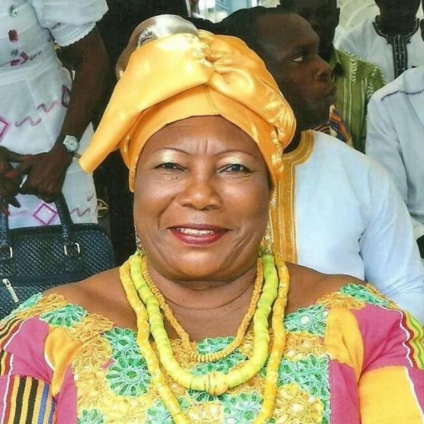
The President of the Greater Accra Markets Association, Madam Mercy Needjan on behalf of the group says funds earmarked as Covid-19 relief for its members have been very difficult to access.
She explained that as a result of the cumbersome application process, many members of the association have been unable to benefit from the intervention.
The funds were disbursed by the National Board for Small Scale Industries (NBSSI) as part of the government's effort to ease the financial struggle existing in small scale industries in a time of Covid-19.
“We were expected to fill and submit forms online to access the funds. As you can imagine many of our members who are not literate were unable to fill and submit the forms on time, even when they found other people to help them”.
Mrs Needjan in her submission called on the NBSSI to release the rest of the loans to traders who have applied but are yet to receive their pay-out.
Madam Needjan was speaking at a webinar organized by the Centre for Social Justice under the theme Celebrating Women in Leadership in a Pandemic.
Other speakers at the webinar included Deputy Chairperson of the National Commission for Civic Education, Kathleen Addy, Obstetrician and Gynaecologist, Dr. Hawa Malechi, President of the Greater Accra Markets Association, Mercy Needjan, lawyer and politician, Joyce Bawah Mogtari and CSJ Council member and Fellow for Gender and Social Inclusion, Bashiratu Kamal Muslim.
Madam Needjan said that the leadership of her association had gone to great lengths to educate its members on social distancing and other safety protocols.
She identified overcrowding in the markets as one of the greatest challenges in fighting the pandemic.
Speaking at the webinar was lawyer and politician, Joyce Bawah Mogtari. In her presentation, she stressed that women account for about 70% of the health and social workforce, which puts them at higher risk than men and yet they are less represented at the decision-making table.
She enumerated various ways in which women have borne the greater part of the effects of the pandemic. She however noted that women in leadership have proven to be better at handling the pandemic.
“They have a higher responsibility because they are more concerned with the health situation at home and must also carry their organizations along” she said.
Latest Stories
-
Haruna Iddrisu calls for limits on annual university accommodation fee increases
32 minutes -
Today’s front pages: Tuesday, October 13, 2026
1 hour -
Wealth Over Water: How Galamsey Is Threatening Ghana’s Water Security
2 hours -
LA 2028: Black Queens pumped up for second leg of Mauritius tie
2 hours -
LA 2028: Black Queens hold final training session ahead of second leg against Mauritius
3 hours -
Standards are not Seasonal: What the EC appointments teach both sides
3 hours -
King Mohammed VI urges private sector to create youth jobs and spread benefits of growth
3 hours -
KGL U17 Colts 2026: Greater Accra win title after penalties win over Western Region
3 hours -
UK Investment Roadshow opens in London to advance UK-Ghana growth partnership
3 hours -
Assemblies of God requires pastors to resign before entering partisan politics – Rev. Wengam
3 hours -
Ghana targets 20% annual reduction in maternal deaths – Health Minister
3 hours -
Cyber attacks in Africa grow faster than global rate, report finds
3 hours -
Ghana signs UAE deal to create 5,000 overseas jobs
3 hours -
One Million Coders Programme targets 100,000 digital jobs in two years – Sam George
3 hours -
John Jinapor, Italian Ambassador explore opportunities for energy sector investment
4 hours