

Audio By Carbonatix
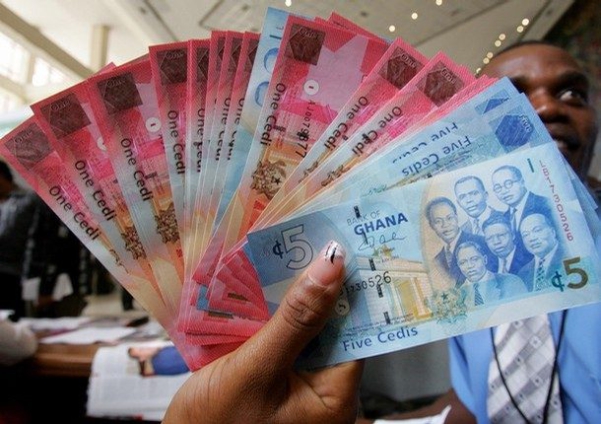
Currency outside banks grew stronger in the first four months of this year than the same period last year when covid-19 pandemic emerged, data from the Bank of Ghana has shown.
This meant more notes and coins were in circulation, amongst household and business consumers, to stimulate spending and subsequently economic growth.
It grew by 46.3% in January 2021, 45.2% in February 2021, 41.6% in March 2021, 38.0% in April 2021 respectively.
The numbers for the last quarter of last year when the Presidential elections took place were no different from the first four months of this year. The currency in circulation grew by 43.7% in September 2021, 44.0% in October 2021, 46.4% in November 2021 and 45.5% in December 2021 respectively.
However, it comes as a bit of a surprise because of the tight low spending budget for this year.
But the increase in money supply will help fast track the country’s post covid-19 economic recovery. That could also facilitate spending in the various sub-sectors of the economy and as a result increase in the total value of goods and services.
Furthermore, this could also indicate that the economy is liquid, contrary to the recent under subscription of Treasury bills sale which was as a result of tightened liquidity on the interbank market. Demand deposits, usually current and call accounts witnessed growth in the first four months of this year, better than same period last year. It grew by 36.0%, 28.0%, 28.3% and 22.0% in January 2021, February 2021, March 2021 and April 2021 respectively.
Banks prioritized demand deposits because it comes virtually with no cost but rather support profitability of the financial institutions.
For Savings & Time Deposits, it also witnessed significant growth, far better than last year.
BoG cuts Policy Rate to 13.5%
The Monetary Policy Committee of Bank of Ghana cut its key lending rate to commercial Banks by 100 basis points to 13.50% on Monday, the first time Since November 2019.
According to the Governor of the Bank of Ghana, Dr. Ernest Addison, the move was influenced by a pick-up in economic activities and recovery towards pre-pandemic levels.
The move is expected to impact on the cost of credit in the next two months and stimulate economic growth.
Latest Stories
-
AFCON 2027Q: Alexander Djiku ruled out of Gambia game with injury
5 minutes -
AFCON 2027Q: The god of football is results – Carlos Queiroz
7 minutes -
Africa will not be forced to choose sides in global power rivalry – Ablakwa
10 minutes -
NPP demands review of GH¢2,650 cocoa price, questions statutory calculation
12 minutes -
AFCON 2027Q: ‘Better to stay home if you’re coming to complain about absent players’ – Carlos Queiroz
13 minutes -
First Deputy Minority Whip files private members’ motion for inquiry into Ghana-linked narcotics seizures
14 minutes -
KMA spearheads construction of new Kumasi Central Divisional Police Headquarters, seeks support for relocation
16 minutes -
Photos: GAF begins documentation and physical screening for 2026/27 enlistment
16 minutes -
Three arrested over alleged kidnapping and murder of 33-year-old in Accra
18 minutes -
Alan Kyerematen calls for end to political ‘duopoly’ ahead of 2028 election
19 minutes -
Wrestler Benjamin Satterley, known as Pac, dies aged 40
19 minutes -
AFCON 2027Q: There’s no problem with the Black Stars – Carlos Queiroz
24 minutes -
Ghana hotels see revenue per room fall by 19% between November 2024 and January 2025 – GSS
30 minutes -
Apple ordered to pay $5.7bn after losing vibration tech patent suit
32 minutes -
Hostels outperform hotels as accommodation demand shifts to lower-cost options – GSS
36 minutes