


Audio By Carbonatix
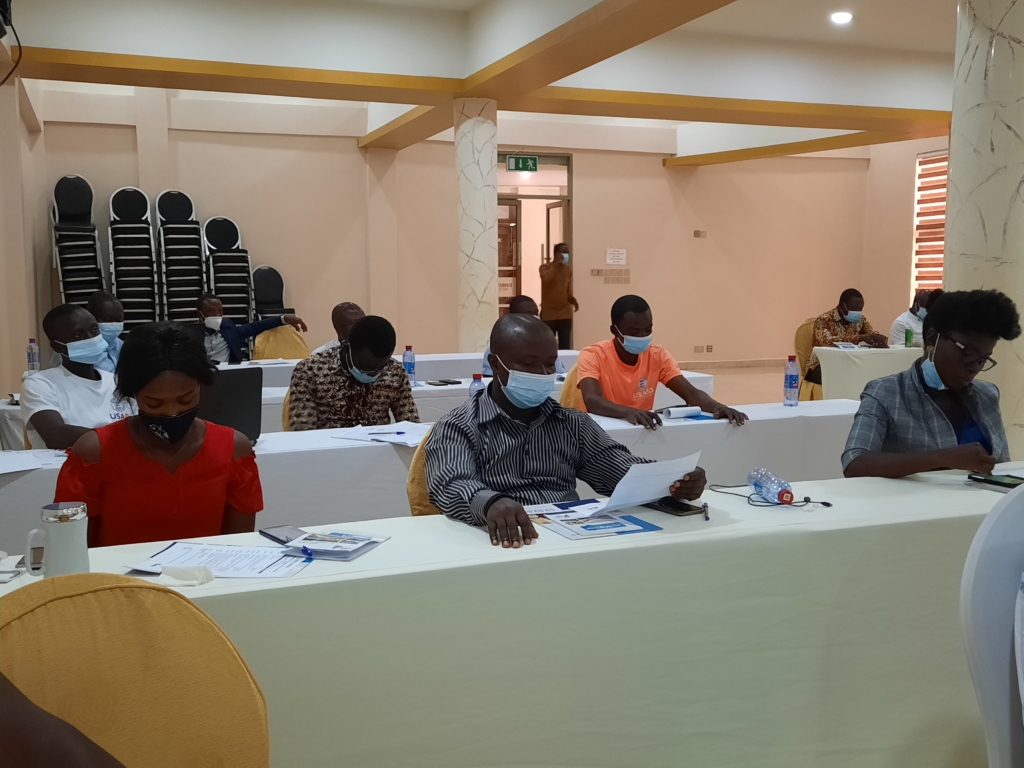
Participants at Ghana Strengthening Accountability Mechanism (GSAM) capacity strengthening workshop have bemoaned the lack of resources as a major hindrance to citizen's participation in the monitoring of the social services delivery projects.
Planning officers and other stakeholders drawn from the Municipal and District Assemblies in the Bono, Bono East, and Ahafo Regional Zones insist the Assembly's inability to resource officers to move to the communities to engage members, denies them the chance to ensure social accountability of projects meant to serve them.
The GSAM activity, funded by USAID and implemented by Care International in Ghana and ISODEC with a consortium of partners, is expected to strengthen the capacity of Civil Society Organizations (CSOs) and Citizen Groups to assess the quality-of-service delivery in GSAM’s 50 operational Districts and Municipalities.
GSAM has so far monitored about 381 capital projects in Health, Education, Water and Sanitation (WATSAN) in 100 districts in the country in the first two phases of the project.
About 60% of the government’s allocated money to the Assemblies is spent on these Capital projects. But oftentimes, they are characterized by corruption, shoddy works, and projects that fail to serve the intended purpose.
Bernard Anaba, Public Policy, and Advocacy Specialist at GSAM, said they build the capacity of stakeholders, such as the District Assembly and members of the various Community Development Monitors (CDMs), who monitored the projects.
This, he said, helped the assemblies to be responsive and had the right information for the communities while the communities also knew how to approach the district assemblies, asked, and demanded the right answers to achieve social accountability.
Bernard Anaba revealed that with USAID extending funding for 18-months, the third phase of the GSAM project in the operational districts is to monitor the service deliveries of the capital projects they have monitored in Basic Schools, CHPS Compounds, and WATSAN, and how beneficial they are to the community.

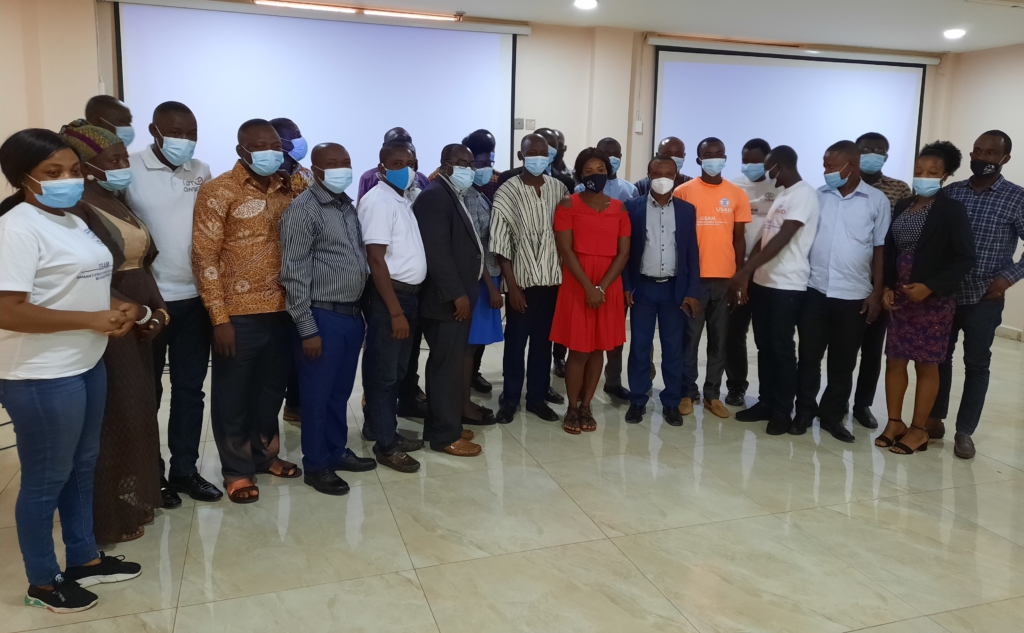
Because of this, a training workshop for the focal persons, including District Assembly's planning and project officers, and CSOs have been organized in Sunyani to build their capacities on the service delivery standards expected.
Experts from the Regional Coordinating Council, Education, Health, and Water sectors guided on the issues in the sectors and equipped participants with the right information to help them to know the standards and also impact the acquired knowledge at the district levels to the CDMs.
But some participants said it is a challenge for District Chief Executives (DCEs) to release resources to aid their efforts to get citizens in the communities to participate, especially when common funds have still not been released to the Assembly's.
"So many communities, how do you organize public forums there to get their input and build their capacities? Lack of funds and the inability of DCEs to prioritize community participation is affecting the planning process", Emmanuel Anyimadu, a planning officer at Banda District, lamented.
To address the challenge affecting citizen’s participation at the district level, Anyimadu urged "the CSOs and other stakeholders to do more to help them go to the communities and organize forums to build their capacities in the service delivery standards".
Kofi Twumasi, a representative of the Bono Regional health directorate noted, “Availability, accessibility, and quality of health services and infrastructure, cleanliness and safety of the facility, availability of medicines, home visits by health staffs, and compassionate care are some quality service delivery indicators citizens should look out for at a CHPS Compound”.
On his part, Rev. Asante Wiafe, Principal Development Planning Officer at the Bono Regional Coordinating Council said there is much legislation that enjoins the Assembly to create opportunities for citizen’s participation in the governance and development process.
He said, “Act 2003 (Act 656) sets out performance standards within which the Assemblies shall carry out their functions, with the service delivery standards, namely; Participation, Client Focus, Accountability, and Transparency at the core of citizen’s involvement and satisfaction in the Assembly's operations”.
He explained that aside from complying with the legal provisions and embracing all views, the process of public participation also engender trust and citizens support and approval for policies, efficient implementation of programs, prudent management and equitable distribution of resources, rekindling communal spirit, and an enhancement of their knowledge on governance, leadership, and resource management to ensure rapid development of the communities and the socio-economic wellbeing of all.
He noted the citizen participation could be in the form of town hall meetings, mass media platforms such as radio and religious ceremonies.
Latest Stories
-
GACL to hold full-scale emergency simulation exercise on October 15
39 minutes -
327 entries submitted for 30th GJA Media Awards
53 minutes -
Mahama proposes rent-to-own scheme for unfinished houses
55 minutes -
Mahama wants banks to introduce affordable housing loans within six months
56 minutes -
Photos from National Conference on Housing Finance
60 minutes -
Italy, Ghana unite 40 artists for ‘Beyond Creation’ exhibition at Accra Art Centre
1 hour -
Premature to call for Sports Minister’s removal while CID probe is ongoing – Ernest Norgbey
2 hours -
NPP mourns Samuel Arthur Odoi-Sykes
2 hours -
Stay out of World Cup visa probe to avoid interfering with CID investigations – Ernest Norgbey to politicians
2 hours -
Bono East Minister inspects ‘Big Push’ roads; contractor on Tankor-Fiema-Busunya road ahead of schedule
2 hours -
Scrutiny is not disloyalty – Chief of Staff defends serious journalism at 30th GJA Awards launch
2 hours -
Abuse case: Nana Akua’s husband Harold unable to appear in court after hospital admission – Police
2 hours -
Mahmud Kabore picks NDC Ashanti Regional Communication Officer nomination forms
3 hours -
KNUST Career Services pioneer Selina Doe Angmor named among 2026 40 Under 40 honourees
3 hours -
Nana Akua domestic abuse case: Police to arraign husband after hospital discharge
3 hours