

Audio By Carbonatix
Cocoa Abrabopa Association (CAA), Alfred Ritter GmbH & Co KG, Fuchs & Hoffmann and Ascot Amsterdam are collaborating on setting up an economically viable and resilient cocoa production system that will improve the lives of cocoa farmers and their households.
The 3-year sustainability project seeks to target about 526 members and their households and will be implemented in Daboase, Aboso and Bogoso in the Western Region of Ghana.
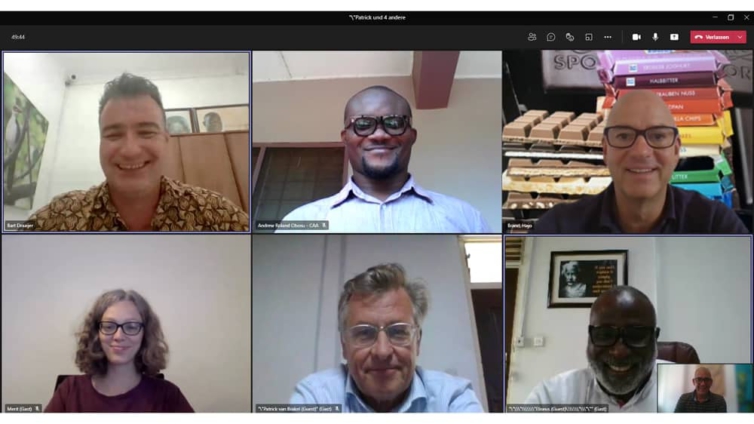
The program was kicked off during an online meeting where representatives of each of the organisations participated.
According to the partners, the main components of the joint program include Training members and field staff with the innovative Farmer Business Schools (FBS) approach; the implementation of an integrated and supportive Child Labour Monitoring and Remediation System (CLMRS); boosting the household income from cocoa and other agricultural products and Enhanced shade trees seedling planting and monitoring program.
They explained that the FBS training will build members and their spouses' capacity to take advantage of the skills and knowledge learned to improve their incomes and food supplies sustainably.

The staff of CAA will be trained by external trainers to strengthen the service delivery of the CAA field team with new and refreshed knowledge and skills which goes beyond the technical content.
“Regarding the CLMRS component, existing child labour cases and families at risk of child labour and school attendance will be identified, child labour risk assessment consisting of household surveys, community profiling and awareness-raising will be done at the start of the program.
Data gathered in the first year will be used to develop the model further for subsequent years with a remediation plan and members categorised into a low and high risk to child labour.
This should lead to an increase in the percentage of children of CAA members and their sharecroppers attending school over a period of three years,” they said.
They also explained that the Living Income component is split into two elements where a study will be carried out to identify the status quo, develop targeted activities and measures the progress towards a living income.
“It will establish a household income baseline for the targeted member households and provide suggestions for cost-effective monitoring of the household income in the following years.
The study will also provide recommendations on improving the household income which includes from cocoa farming and from other agriculture-based livelihoods particularly for women” they mentioned.
Latest Stories
-
Salomey Baffoe detention is a facade to divert attention from cocaine scandal – Weija-Gbawe MP
14 minutes -
Francis-Xavier Sosu is doing well after GIMPA incident – Office
19 minutes -
Deputy Minority Leader appeals to First Lady, Vice President over Salomey Baffoe’s detention
23 minutes -
Ecobank Group commits US$2.6bn to women-led businesses and agribusinesses across Africa
35 minutes -
Ghana to host high-level conference on scaling education initiatives in emergencies
59 minutes -
Democracy must not be for sale: Who pays for Ghana’s politics, and how do we confront money, influence and accountability?
1 hour -
Aburi Amanfrom landowners appeal for government support for Atwapim development project
1 hour -
Cargill Ghana and International Cocoa Initiative celebrate 111 young graduates building skills for the future
2 hours -
Video: Madina MP Francis-Xavier Sosu collapses while addressing students at GIMPA
2 hours -
Hunnyboy reveals how social media landed him Shatta Wale feature
2 hours -
I am a perfectionist – Actor William Lamptey
2 hours -
No room for another false start as Ghana begin AFCON qualifying campaign
2 hours -
“We are grateful for what you have achieved” – AGI President tells Finance Minister
2 hours -
“No Nation is Inferior”: Mahama champions human dignity and security council reform at the UN
3 hours -
Manhyia South residents, NPP executives fume over botched EOCO arrest of MP
3 hours