

Audio By Carbonatix
Cal Bank offered the cheapest lending rate of 15.97% in the banking industry, according to the Average Lending Rates of universal banks, published by the Bank of Ghana as of the end of July this year.
The listed bank per the figures from the Bank of Ghana offers lending rate lower than the regulator’s Reference Rate.
However, credit worthy clients will enjoy cost of credit lower than the 15.97%, but those considered as high risk will pay more interest for the loans acquired from the bank.
In 2nd place is Guaranty Trust Bank with an average cost of credit of 16.97%. Closely following GT Bank in third position is Bank of Africa with lending rate of 17.19%.
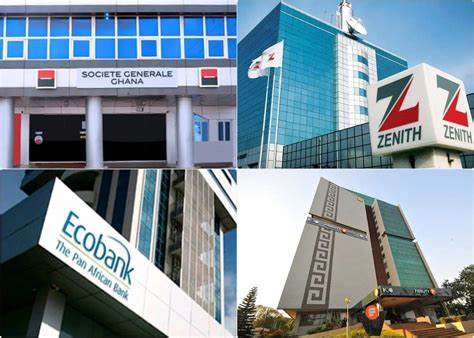
OmniBSIC and Ecobank Ghana were ranked 4th and 5th respectively with average lending rates of 17.95% and 18.41% respectively.
The Bank of Ghana’s policy rate presently stands at 14.5%. So these banks offered interest rates on loans of between 1.47 and 3.91 percentage points higher than the Central Bank’s base lending rate.
This means the spread between the policy rate and their average lending rates make reasonable sense. 14 out of the 23 banks offered lending rates of more than 20%.
Agricultural Development Bank rate of 24.89% was the highest in the banking industry.
It is followed by Societe Generale and Absa Bank with average lending rates of 23.61% and 23.59% respectively.
In conclusion, the Bank of Ghana said the publication of the rates is to help promote transparency in the pricing of loans by the universal banks.
Cost of loans fall further, as average lending rate pegged at 20.61% – BoG
Cost of loans continued to fall but marginally, as average lending rate stood at 20.61% per annum in June this year.
This was equivalent to 1.72% interest on loans per month.
However, the average lending rate varied among the banks and the respective sectors.
For instance, some banks offered loans as low as 17% per annum, whilst others charge rates as high as 27%. Overall, it depends on the risk profile of the customers.
Also, lending to the agriculture sector is considered riskier than the manufacturing sector, and therefore credit to the agriculture sector will be higher.
Latest Stories
-
One million coders programme records 141,954 registrations, 27,782 active learners
4 minutes -
Gov’t moves to upgrade rural 2G, 3G networks to 4G – Sam George
5 minutes -
Akaa Assembly Member appeals for telecom mast over poor network coverage
10 minutes -
Cybersecurity Authority responds to 3,363 incidents in six months – Sam George
11 minutes -
Ghanaians now get more data for less money- Sam George
12 minutes -
MTN commits US$1.1bn to Ghana network expansion after 5G reforms – Communications Minister
14 minutes -
Ahafo Clergy call for stronger action against galamsey and Tano river pollution
15 minutes -
GMSA calls for protection of Muslim students’ religious rights in mission schools
18 minutes -
MTN cuts 100 Mbps fibre package from GH¢987 to GH¢299 – Sam George
19 minutes -
Sam George touts lower data costs, enhanced DStv value under Mahama
21 minutes -
Women’s Football: Sharon Sampson, Evelyn Badu and top performers from the weekend
21 minutes -
NACOC warns of rising cannabis addiction among children in Volta through toffees, soft drinks
22 minutes -
3,372 BECE candidates without results to get second chance to resit exam
22 minutes -
Elsie Appau-Klu calls for Cosmetology Council, formalisation of beauty and wellness sector
27 minutes -
Government to deploy sovereign virtual platform for secure high-level meetings – Nana Oye Bampoe Addo
27 minutes