

Audio By Carbonatix
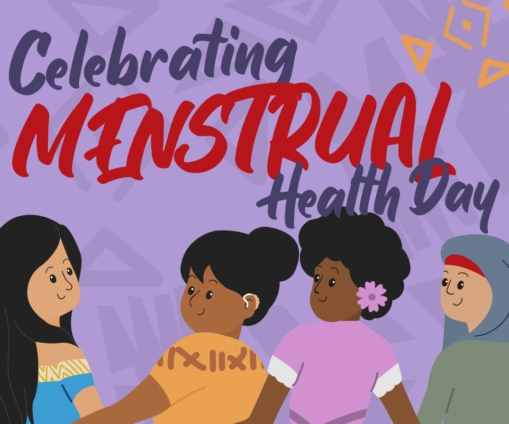
Days for Girls Ghana, a non-governmental organisation (NGO), has reiterated the call for tax exemptions on menstrual hygiene products to make them affordable for girls.
Ms. Sandra Boakye, the Country Director of the NGO, said inadequate government commitment in supporting access to menstrual hygiene products had led to an increase in prices due to the 20 percent luxury tax.
This has made it difficult for adolescent girls, who do not have the means to buy them during menstruation, to practice healthy protocols.
Ms. Boakye said this at a capacity-building workshop her office organised for the media on menstrual health.
She said Menstrual Hygiene and Health Management was a key component of education for girls towards achieving academic excellence and career goals and needed the support of all.
"We at Days for Girls (DFG) are passionate about reaching every girl everywhere during their menstruation by providing sustainable menstrual products (DFG washable kit or reusable pads) and creating awareness on it through working with diverse stakeholders in schools and communities," she said.
Ms. Boakye said, however, that essential materials for reusable pads were not easily accessible due to high importation cost for the flannel and the lack of standards for certification of reusable pads in Ghana.
That raised concerns about the safety and efficiency of the product, she said.
Data had shown that 21.3 percent of women and girls living in rural areas used cloths during their menstruation with about 4.2 percent doing the same in urban areas, she said.
Also, 35 percent of women and girls reported they did not have the resources to manage their menstruation hence the need for reusable pads.
Ms. Boakye said hygienic, durable and environmentally friendly locally produced pads had a three-year lifespan thus a good replacement for the regular disposable sanitary pads.
She said disposable pads were expensive in Ghana and that the ordinary schoolgirl, every month, must budget six cedis or more to buy pads for menstruation.
“But the reusable pad is very easy to use, less expensive, comfortable, and professionally designed,” she said.
She said the NGO had produced reusable pads in a rag-like form and nicely packaged and that all one needed to do was to wash and dry them in sunlight after use.
Ms. Boakye urged the media to raise awareness on issues concerning Water, Sanitation, and Hygiene (WASH), Sexual and Reproductive Health, and menstrual hygiene management (MHM) to constantly keep those matters high on the public agenda.
The training was mainly on women's health, MHM situation in Ghana and the sustainable interventions, and the role of the media in menstrual hygiene management.
Latest Stories
-
GHIPO moves to secure global protection for Ghana’s Akpeteshie
8 minutes -
Zjili: Ghanaian Dagbani-language film premieres at Toronto International Film Festival
14 minutes -
Concerned Citizens of Yendi commend Farouk Aliu Mahama for supporting medical student
17 minutes -
NDC Youth Organiser aspirant Odarteifio pledges to tackle Northern Ghana’s irrigation crisis
18 minutes -
Daily Insight for CEOs: Attracting and retaining critical talent
28 minutes -
Ghana launches initiative to cut maternal deaths by 20% annually
44 minutes -
Examination malpractice is rising, not declining – EduWatch
1 hour -
Credit Unions encouraged to use technology to improve service
1 hour -
GBA President calls for reasonable, proportionate bail conditions
1 hour -
NAGRAT calls for end to political influence on WAEC results
1 hour -
GBA to announce position on Tribunals Law soon – GBA President
1 hour -
WAFU B U-17 Girls Cup: Joe Nana Adarkwa eyes title defence with Black Maidens
1 hour -
GFA opens disciplinary case against GoldStars CEO Kwasi Adu
1 hour -
Education Ministry welcomes Catholic Bishops’ call for CSSPS review
1 hour -
2026 Women’s Super Cup set for September 23 to September 29 in Prampram
2 hours