

Audio By Carbonatix
Ghana imports more than $400 million worth of rice annually to supplement local production.
To reduce rice importation, the Soil Research Institute of the Council for Scientific and Industrial Research is educating farmers on a new technology to increase rice yields and cultivation in Ghana.
Rice consumption in Ghana has increased from 38 to 63 kg per person between 2008 and 2018. However, the current rice production meets less than 40% of the consumption requirement in Ghana.
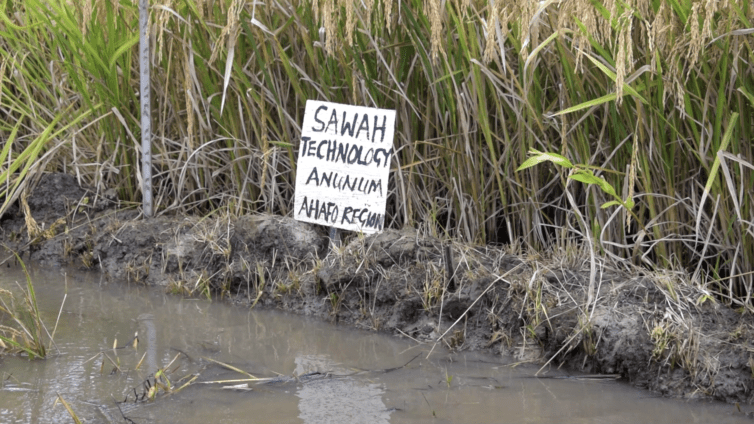
The introduction of the SAWAH technology by the CSIR-SRI will increase rice production at Asutifi South District in the Ahafo region.
Research scientist at the Soil Research Institute, Dr Ephraim Sekyi-Annan, said, “The low grain yield is due to multiple constraints including poor land management, inappropriate water management, ineffective fertilizer management, post-harvest losses and rainfall variability due to climate change.”

He continued that, “To increase productivity, reverse the pattern of production of low rice yields and subsequently the high annual rice importation, there is the need to boost rice production in Ghana by adopting the SAWAH technology.”
The SAWAH technology is the integrated management of land, water and fertilizer for increased rice production. The adoption of the technology leads to the production of more paddy rice.
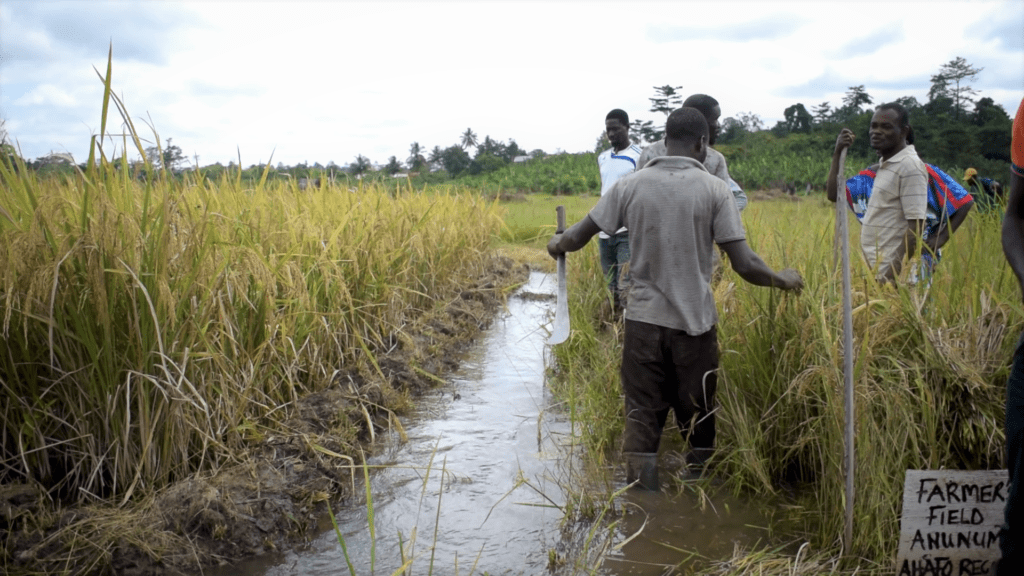
The research scientist believes “Ghana has the potential to become rice sufficient if the technology is used efficiently.
“We have about 700,000 hectares of low lands in Ghana where we can produce rice,” he emphasized.
The Modernizing Agriculture in Ghana (MAG) initiative improves food security and makes the agricultural sector modern, equitable, and sustainable.
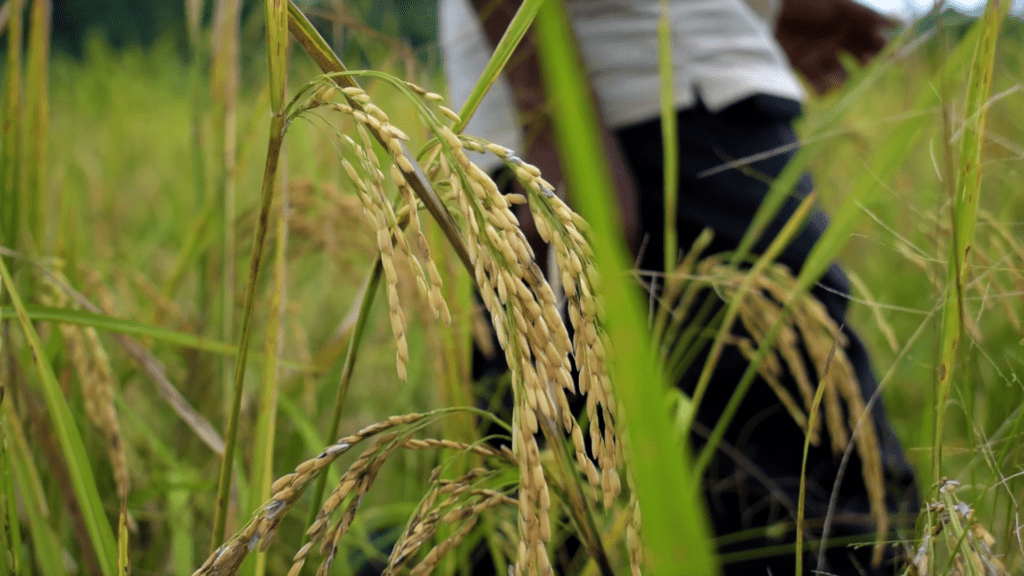
The Regional Director of Agriculture, Kingsford Nyame, promised to provide machinery to support farmers in the Ahafo region to increase rice yields.
“Rice is an emerging crop; that is why we are encouraging farmers to adopt the technology. We have an Agric Mechanization Center where farmers can hire machines for farming operations, but the government will support them with more machines,” he said.
Some farmers who benefitted from the project lauded the institution for the technology.
“After the verification demonstration on the SAWAH technology was done on my farm, I have noticed that it has increased my rice yields,” Mr Boafo noted.
Latest Stories
-
Photos: National Youth Authority Festival
10 minutes -
Bawumia commissions St Jude’s Catholic Church he funded to completion at Weija
25 minutes -
Government defends new beer exercise rates; sliding scale has not been abolished
26 minutes -
Bolgatanga Assembly denies blanket ban on events beyond 8pm
39 minutes -
Photos: Ghana Immigration Service removes 1,055 street beggars from Accra, Kumasi streets
40 minutes -
‘He always comes to our aid’ – Fr. Campbell recounts Bawumia’s support for Church, poor
50 minutes -
Remittances drop marginally year-on-year to US$3.65bn in half-year 2026
1 hour -
T-bills: Government exceeds target by 139%, interest rates tumble
1 hour -
Why Chelsea need more than a new goalkeeper to be title challengers
1 hour -
Outlook of Ghana’s external sector remains positive for second-half of 2026 – BoG
1 hour -
Prisoners freed early are returning to jail at rapid rate, governors tell BBC
1 hour -
Two charged after €2.3 million worth of drugs seized in Dublin
1 hour -
Head teacher evacuated 900 children minutes before Nepal floods hit school
1 hour -
Chelsea beat Brithon in seven-goal thriller to maintain perfect start
2 hours -
Fernandes hat-trick helps Man Utd recover to beat Ipswich
2 hours