

Audio By Carbonatix
A former Finance Minister, Dr Kwabena Duffuor has described as problematic, government’s decision to introduce an electronic transaction levy (E-levy) as an innovative way to replace the scraped road toll.
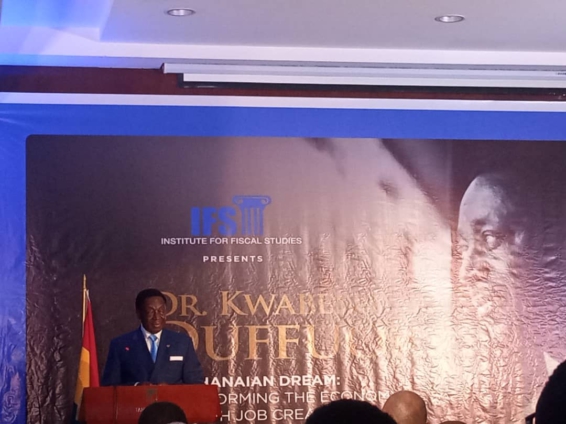
Speaking at a lecture themed, "Ghanaian Dream: Transforming the Economy through the Creation of Jobs and Opportunities for All," the former Governor of the Bank of Ghana explained that e-transaction is a mode of payment, thus, imposing the tax is unrealistic.
He further added that it will lead to double taxation, since the underlying income would have normally been taxed already.
“It should be noted that taxes/levies are imposed on income, gifts, consumption and held properties or assets. Electronic transfers and payments are none of these.
“This makes the proposed E-levy problematic because it could be fraught with serious implementation challenges. This tax could undermine the Ghanaian Digital Economy,” he said.
The incumbent Finance Minister, Ken Ofori-Atta while delivering the 2022 budget proposed that a 1.75% levy on all electronic transactions effective January 1, 2022.
However, a section of Ghanaians including the Minority in Parliament and some economists have kicked against this proposal.
The opposers argue that the move will intensify the hardships of the average Ghanaian.
But government insists that the new form of taxation will stimulate the growth of the economy and create more jobs.
Dr. Duffuor used the lecture, which also focused on job creation, to suggest key measures that can be adopted by government to bridge the gap.
According to him, the government must invest in Technical and Vocational Education (TVET).
He stated that a country cannot tackle joblessness without priortising education, thus, Ghana must place vocational and technical training at the center of its educational system.
Citing countries like USA, China and Germany, Dr. Duffour said these nations have developed strong manpower through TVET that is continuously growing their economies.
“Vocational education and training-which includes training offered in institutions as well as on the job through apprenticeship-widens the options for skills acquisition by young people and meets and needs of those not suited for traditional education,” he said.
Latest Stories
-
Stakeholders demand action against foreign-led illegal mining in Ahafo Region
1 hour -
Ghana handed tricky draw at 2026 Amputee World Cup
1 hour -
2024 Nyankpala election violence: Youth group petitions authorities over slow probe
1 hour -
Ghana, UNICEF strengthen partnership to advance child protection
2 hours -
Day Two of 3rd Republic Bank-JoyNews Habitat Fair ends with great homeownership offers and financing solutions
2 hours -
Guinness Ghana DJ Awards 2026 Pub Fest celebrates Ghana’s DJ culture as Accra turns up the energy
2 hours -
10th woman found dead in South Africa’s string of killings
2 hours -
French Embassy trains Ghana Police CTU in counter-terrorism operations
3 hours -
UPSA uncovers mass results manipulation involving 178 students, over 500 results compromised
3 hours -
ECG announces planned power outages in parts of Tema from Sept. 29 to October 1
4 hours -
Sylvester Mensah urges Latenu FM to promote trade, export opportunities in Ga
4 hours -
Ga language under threat of decline as children shy away from speaking it – Sylvester Mensah
4 hours -
‘Let every Ga child you raise know the Ga language and story’ – Sylvester Mensah
4 hours -
‘We are not deterred’ – Ablakwa responds to backlash over South Africa evacuation
4 hours -
Day Two: Republic Bank-JoyNews Habitat Fair gains momentum at Junction Mall
5 hours