

Audio By Carbonatix
Power is intoxicating. It amplifies influence, opens doors, commands attention, and creates the illusion of permanence. Yet history, ancient and modern, teaches us one uncomfortable truth: power is temporary, but relationships are enduring. When power fades, only character and human connections remain.
The recent reflections by Professor Kingsley Moghalu, former Deputy Governor of the Central Bank of Nigeria, in relation to Ghana’s former Finance Minister, Ken Ofori-Atta, provide a sobering lesson not just for politicians, but for all who find themselves in positions of authority.
At the heart of Prof. Moghalu’s reflection is not merely corruption, arrest, or extradition. It is something deeper and more troubling: the loneliness of power when it is not used to uplift others.
One of the gravest mistakes people in authority make is believing that power alone is enough. Titles, security convoys, protocol, and wealth can create a false sense of invincibility. But power without people is fragile. When authority is exercised without empathy, generosity, or inclusiveness, it builds walls instead of bridges.
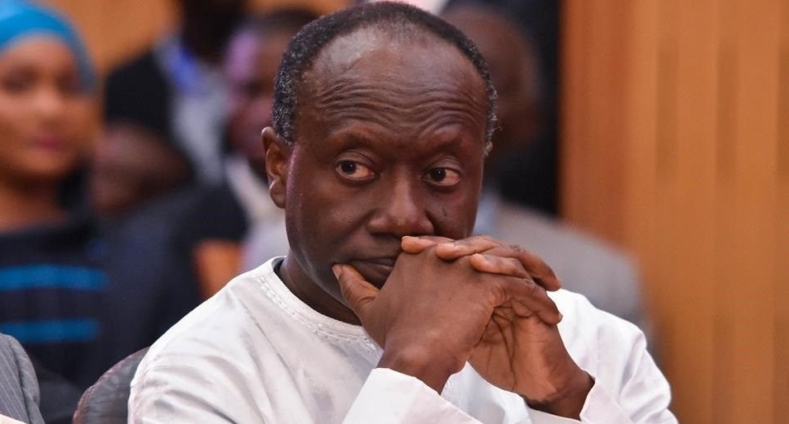
The story attributed to Ken Ofori-Atta raises uncomfortable but necessary questions. A man who occupied one of the most powerful ministerial positions in Ghana for over six years now appears isolated at his moment of greatest vulnerability. There are no loud public demonstrations of solidarity. No broad coalition of beneficiaries rising to say, “He stood for us.” Instead, only a handful of party loyalists, often fanatics rather than genuine stakeholders, attempt a weak defence.
This silence is loud. It forces us to ask, was power used to empower many, or to serve a few?
Was it merely a coincidence that MPs who called for the removal of Ken Ofori-Atta in 2023 over alleged complacency and economic mismanagement later lost their seats, or was it an act of vindictiveness from the powerful?
Leadership is not about accumulating wealth or consolidating influence within the immediate family and close circles. True leadership is about empowerment and lifting people irrespective of blood ties, political allegiance, or personal benefit. Empowerment is not charity; it is an investment in social capital.
When you empower 10 people genuinely, you may not expect all 10 to stand by you in difficult times. Human nature does not work that way. But even if four out of 10 defend your name, speak kindly of your legacy, or advocate fairness on your behalf, that is already a shield stronger than wealth or foreign citizenship.
Money can buy comfort, lawyers, and time but it cannot buy goodwill. And goodwill, once lost, is almost impossible to recover.
Perhaps the most striking element in this saga is the apparent indifference of the majority. For a man who was responsible for Ghana’s national income and expenditure for many years, the lack of public concern is telling. People are not angry. They are not defending him. They simply do not care.
Indifference is worse than criticism. Criticism means people were paying attention. Indifference means you never mattered to them in the first place.
This is the tragedy of leadership disconnected from the people. When policies hurt more than they help, when access is restricted to elites, when power is seen as arrogant rather than humane, the public quietly withdraws its emotional investment. And when trouble comes, silence follows.
Another uncomfortable question arises, Did Ken Ofori-Atta help people broadly within his party and society, or was support concentrated mainly within family and a narrow elite?
Leaders who confuse governance with family enterprise often mistake loyalty for love. Family loyalty is natural but it is not enough. Political power demands broader responsibility. A party thrives when opportunities circulate widely, when members feel seen, valued, and empowered. When that does not happen, party members may clap during your rise but disappear during your fall.
Today, not a single major press conference has been held in strong defence of Ken Ofori-Atta. That absence is not accidental. It reflects years of accumulated distance.
There is a dangerous lie many in power believe: “If I accumulate enough wealth while I can, I will be safe forever.” This is perhaps the greatest deception of power.
Money is important and almost everything, some would argue but it is not everything. Wealth cannot replace community. It cannot substitute trust. It cannot generate love. And it cannot buy a good name once it is lost.
Power does not last forever. Political tides change. Governments fall. Allies vanish. What remains is reputation and reputation is built not by how much you take, but by how much you give.
This is not just a lesson for politicians. It is a lesson for CEOs, pastors, traditional leaders, public servants, and anyone entrusted with authority.
Build bridges, not walls.
Empower people beyond your family and inner circle.
Return calls. Stay human. Remain accessible.
Use power to lift, not to intimidate.
Remember where you came from, because one day you may return there.
Power is borrowed. Office is temporary. Pride is expensive. But humility pays lifelong dividends.
In the end, Prof. Moghalu’s words echo an ancient truth: “Vanity of vanities, all is vanity.” When power fades, only relationships speak. And when you have empowered others, even in your darkest hour, you will not walk alone.
Let this be a lesson to all of us; build people while you build power, because when power leaves, only people remain.
By Evans Mawunyo Tsikata and Ebenezer Lartey
Latest Stories
-
2026 Amputee World Cup: We want to make the continent proud – Black Challenge coach
1 minute -
International Day of the Girl: Central Region Education Directorate calls for action to tackle child marriage, teenage pregnancy
7 minutes -
The Eyes of Ghana: iShowSpeed joins Obamas as producers of Chris Hesse documentary
18 minutes -
FirstBank Ghana pledges action on customer feedback at service week forum
49 minutes -
Sahara Group urges journalists to look beyond fuel prices in energy reporting
57 minutes -
Today’s front pages: Friday, October 16, 2026
1 hour -
Ashanti Region: ECG urges customer cooperation with franchise officers
1 hour -
Ghana’s research fund faces a test of turning funding promises into scientific breakthroughs
1 hour -
Dîner en Blanc Accra returns on December 28 for second edition
1 hour -
20% digital tax: Government hiding behind technicalities to cheat Ghanaians – Dr Boako
2 hours -
David Selassie Anthony declares bid for NDC Deputy National Organiser
3 hours -
Amin Adam proposes 13 measures to strengthen Ghana’s debt transparency and market confidence
3 hours -
Mahama announces $2bn annual investment to accelerate industrialisation
3 hours -
Amin Adam urges monthly disclosure of Sinking Fund as Ghana prepares for DDEP repayments
3 hours -
Stronger banks will fuel business growth and jobs – ADB MD
4 hours