

Audio By Carbonatix
The co-founder of the defunct Unique Trust (UT) Bank, Prince Kofi Amoabeng, has disclosed how he once took aggressive approaches to pursue loan defaulters to pay their debts.
According to him, most of the debtors failed to communicate their challenges to managers of the institution; hence, he used different means to force the defaulters to pay, a move he says helped the business to grow.
Whilst UT Bank was still in business, Kofi Amoabeng was criticised for the bank’s approach in getting defaulters to repay their loans. For critics, the approach was harassing.
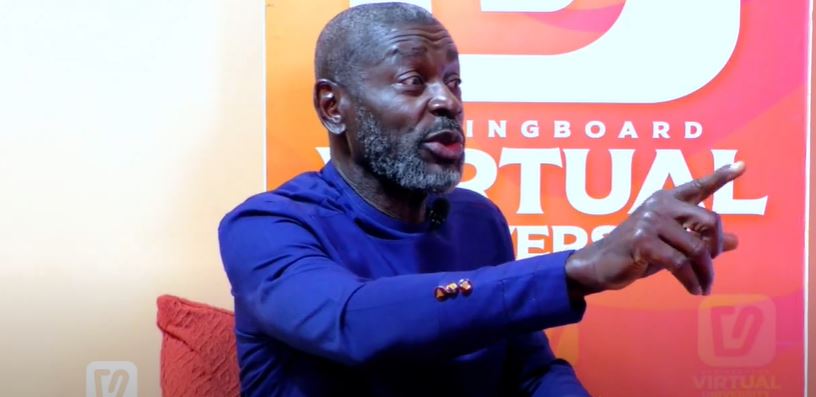
But speaking to Albert Ocran on Springboard Virtual University on Sunday, he explained that it was important to be forceful as repayment of loans was not on the priority list of debtors.
The ex-military officer recounted how he confronted a debtor during his late mother's funeral over his unwillingness to repay the loan.
He explained that, that action was necessary because "we went to people who believed in our dream to beg them for their savings and lifetime earnings and we had promised them we would pay their monies back plus interests on it."
"If you are owing, at the time, I will confront you. One client I couldn't find, when my mother died, came there because he thought that was when I was at my weakest point and he was greeting; I saw him coming so I got up and said 'you know you owe me, stay here'."
"I think the least you should expect these borrowers to do is if something should go wrong, they should come back or call you and to discuss the issue but it is quite annoying and disrespectful to say the least, when after you've done that [given them loans] and it's time for them to pay, they just don't bother and we have to now find time and look for them," he stated.
Kofi Amoabeng noted that most of the customers who were 'chased' to pay their loans later acknowledged him for instilling some discipline in them.
He, however, expressed dissatisfaction over the attitude of some persons who "walk (ed) into offices to take loans knowing that they don't want to pay."
"Interestingly enough, some of my clients said I disciplined them when it comes to money and managing their businesses," he added.
Latest Stories
-
AK24 Entertainment wins Event Promoter of the Year at Ghana Entertainment Awards USA 2026
12 seconds -
KNUST, UNCDF, host EU Ambassador to advance EU Pact for skills development initiative agenda
39 seconds -
Teachers’ strike: School in Wa turns ghost town; pupils forced onto ‘virtual holiday’
3 minutes -
Gov’t should not see bipartisan probe into 3.9-tonne cocaine haul as attack – Akuapem North MP
15 minutes -
The foundation of every boy’s upbringing is important – Kobby Kyei
17 minutes -
Middle East conflict pushed Ghana fuel prices higher in first half of 2026 – COMAC
23 minutes -
President Mahama puts mining firms on notice over 2030 raw mineral ore export ban
25 minutes -
Ghana’s fuel consumption rises 12.24% to 4.06 billion litres in first half of 2026
25 minutes -
Global oil shock tests Ghana’s shift towards domestic fuel production
29 minutes -
Roads Ministry threatens legal action against utility companies over excavation of completed roads
30 minutes -
Mammography available in only 5 regions, making breast cancer screening difficult – Radiologist
40 minutes -
Pastor Daniel Amoateng pays for release of 23 Nsawam prison inmates
42 minutes -
Government to equip health facilities with mammography, radiotherapy machines – Deputy Health Minister
44 minutes -
Floodwaters recede in Hohoe as residents begin returning home – NADMO
56 minutes -
Celine Dion kicks off Paris Fashion Week with surprise performance
56 minutes