

Audio By Carbonatix
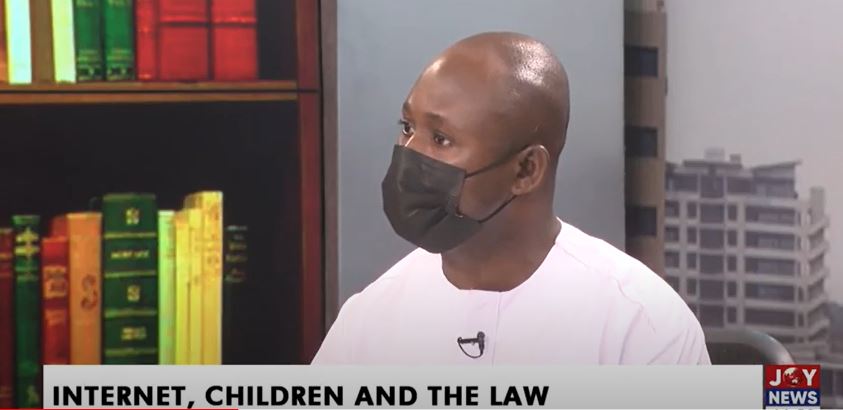
An Information Security Consultant, Alex Oppong, has disclosed that many social media platforms have exposed children between ages 9 and 17 years to pornographic contents.
He noted that in most instances, these children receive and send videos and photos to people they have not met before on social media, exposing them to cyber risks and dangers.
In an interview on JoyNews’ ‘The Law’, Sunday, Mr. Oppong made reference to a report by the United Nations Children’s Fund (UNICEF) which highlighted that averagely, 4 out of 10 children are not safe on the internet due to the inappropriate contents they are exposed to.
“2 out of 10 children between the ages 9 and 17 have received sexual images in words, pictures or videos through social networking sites. Your typical classroom is made up of 25 to 30 children. That means out of the 30 children, you’ve got at least 6 children who have seen these images so they are sitting in the classroom with all these weird images they’ve seen and you don’t know what is happening to them psychologically.”
“4 out of 10 have made contacts with someone on the internet they have never met before. People just receive requests of friendship without even checking to see who they are accepting it from. 2 out of 10 have met someone face-to-face that they first got to know on the internet. 4 out of 10 have seen sexual images, 5 out of 10 have experienced things that upset or bothered them online,” he added.
Need for parents to be tech-savvy
Alex Oppong says parents must strive to understand the types of technologies and online applications their children use in order to provide better surveillance and monitoring over what they do on such sites.
He explained that parents must endeavour to know the kinds of communications their children have with their peers and people they meet online to ensure they do not land cyber security troubles.
“If our children are seeing these images and vidoes, what controls do we have to put in place? There are a number of tools that you could use to basically protect your child and allow them to enjoy the online experience. Those tools are based a lot on parental controls.”
“What that means is as a parent, it’s our responsibility to be tech-savvy about these social media applications. If you are not savvy enough, how do you put your parental controls in place and protect your children from the kind of images they are seeing?” he quizzed.
What the Cybersecurity Act says
The Cybersecurity Act, 2020 (Act 1038) states that “a person shall not use a computer online service, an internet service, or a local internet bulletin board service or any other electronic device to compile, transmit, publish, reproduce, buy, sell, receive, exchange, or disseminate the name, telephone number, electronic mail address, residence address, picture, physical description, characteristics, or any other identifying information on a child in furtherance of an effort to arrange a meeting with the child for the purpose of engaging in sexual intercourse, sexually explicit conduct, or unlawful sexual activity.”
It continues to add that any person who goes against this provision “commits an offence and is liable on summary conviction to a term of imprisonment of not less than five years and not more than 15 years.”
Latest Stories
-
Power restoration fault suspected in Kumasi Central Market fire
2 hours -
The 7-foot giant of Ngleshie Amanfro: Seven-foot Ghanaian Ephraim Saawa dreams of joining the national basketball team
2 hours -
Government promises support for Kumasi Central Market fire victims
2 hours -
Vibes The Movie: Big Ghun’s Ghanaian film earns five nominations at 2026 REFFA
3 hours -
MamaCare CEO warns unresolved conflicts among health workers could undermine maternal and neonatal care
3 hours -
Health professionals urged to translate medical knowledge into practice to save mothers
3 hours -
Conflicts among care providers linked to maternal, neonatal deaths – Expert
5 hours -
GIS marks 10th TIME conference, champions improved teaching practices
5 hours -
BRICS Or Balance? What Ghana’s bid really means
5 hours -
GPRTU wants full TRAFFITECH-GH implementation to start in 2027
6 hours -
Mahama announces plans to import electric wheelchairs for PWDs
6 hours -
KGL U17 Colts 2026: Western beat Prempeh Elite Academy to set up final final with Greater Accra Region
6 hours -
Late Solanke strike salvages 10-man Spurs draw at Man United
6 hours -
Gender Ministry to monitor welfare of Nana Akua Addo’s children amid domestic violence case
6 hours -
Benedict Okyere Yeboah: Ghana’s football problem goes beyond sacking a coach
7 hours