

Audio By Carbonatix
This feels very much like the end of an era. In November 1989, when the Berlin Wall came down, we believed that the old division of the world into East versus West was just history.
Because the ideological conflict between capitalism and Communism had evaporated, there was a feeling that we were all basically on the same side.
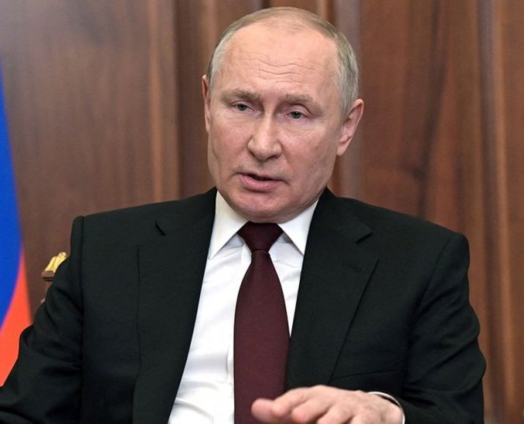
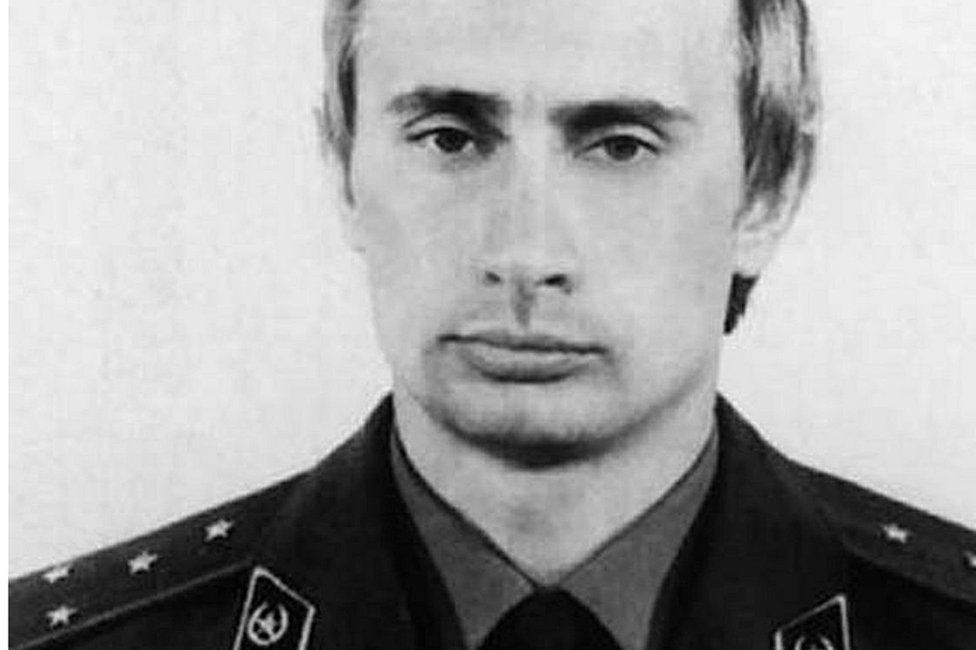
The trouble was, for Vladimir Putin, the one-time KGB officer based in East Germany, the collapse of the old Soviet Union seems to have morphed into a bitter personal resentment which grew worse as the years went by.
The fact that Ukraine, once a key part of the USSR, broke away from the Russian Federation was an insult to everything Putin believed in.
It didn't matter that Russia had signed an international agreement accepting the boundaries of the new Ukrainian state.
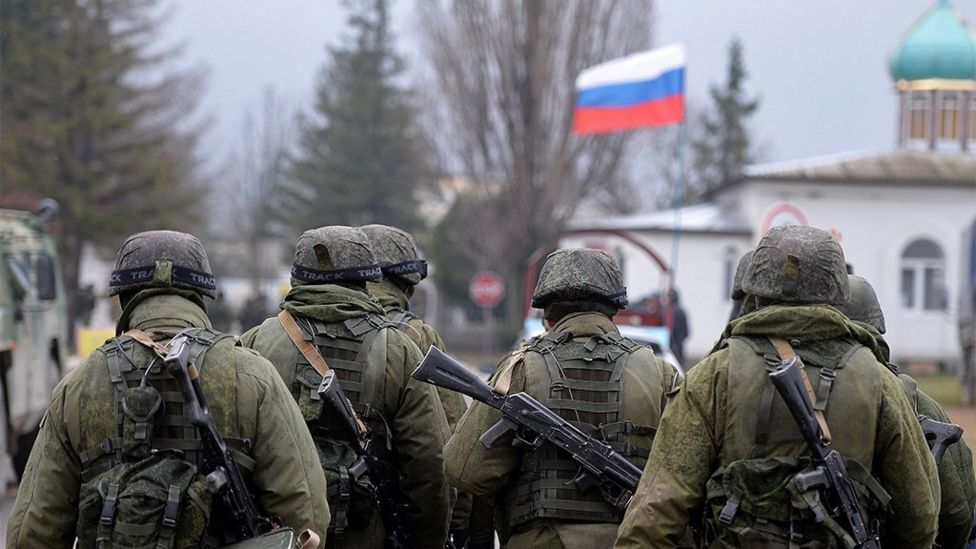
By 2014 President Putin had spotted a way of taking over Crimea, the most symbolically Russian part of Ukraine, by infiltrating his soldiers into the peninsula.
They blocked it off, and after holding a referendum of the mostly ethnic Russian population he turned it effectively into part of the Russian state. It was against international law, but the West still clung to the notion that it could do business with Putin's Russia.
There were speeches and sanctions, but nothing that made President Putin or his associates have serious second thoughts.
The same thing happened when Putin's enemies, or people the old KGB and its successor the FSB, regarded as traitors, were poisoned, shot or otherwise disposed of in Britain and Europe. The West issued warnings and imposed new sanctions, but Putin's Russia was prepared to live with them.
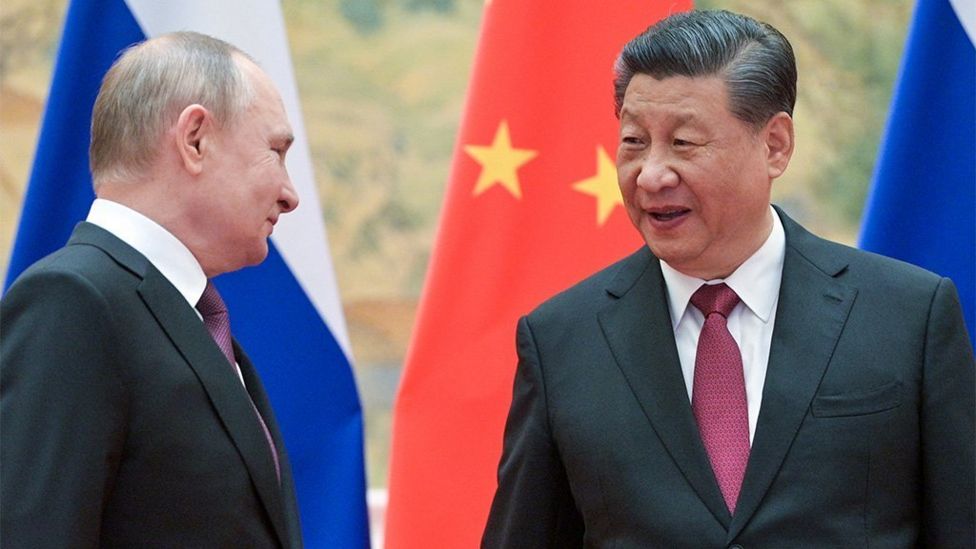
In the past 10 years, Russia started to form a new bloc with China - not necessarily hostile to the West, but providing support for each other in the face of Western criticism.
President Xi Jinping and President Putin created a mutual support group. Now China is refusing to condemn Russia for its actions in Ukraine, and people in Taiwan, the breakaway territory which Xi Jinping has always refused to say he won't invade, are starting to wonder if it could be their turn next.
Altogether, then, the world is a far more worrying place than it was a few years ago. By comparison, the old Cold War years were far simpler, and for the most part the rules were a lot more clear - if one side intruded into the other's space, there was the ever-present threat of all-out mutually assured destruction. So it never happened, even though war came uncomfortably close more than once.
But after the collapse of Communism, the old rule-book was torn up. Now the boundaries are so vague, no-one knows where the red lines run.
With hindsight, and there's starting to be a lot of that, some politicians and academics are saying that Nato should perhaps have changed its whole approach after the Berlin Wall came down - it should have avoided humiliating Moscow by taking its old satellites in Eastern Europe on board, and lining them up in a way that seemed to Putin's Russia to be confrontational.
The mere suggestion that Ukraine might one day join Nato (even though it has always been regarded as unlikely) enraged the Kremlin, and helped persuade President Putin that he must deal with Ukraine once and for all.
Everyone knows this is his policy, and his alone. Various Russian politicians and even some leading military figures came out beforehand against any invasion. But Putin wouldn't be deflected. Now it's got to succeed, and Russia has got to come out as the clear victor, if his throw of the dice is to win the game. But military adventures like this are notoriously capable of going wrong.
Putin did succeed in Crimea, eight years ago, and his position at home was greatly reinforced. Maybe he'll succeed again, carving through the Ukrainian armed forces, making some significant gains, then withdrawing quickly and holding a victory parade.
It's perfectly possible. But suppose it doesn't happen this way. If Russian soldiers start dying in sizeable numbers and the sanctions against Russia start to have an effect, then Putin's own position will suffer.
What will he do then? There is only one answer - he'll clamp down on any domestic criticism even harder than he already has, in the name of national security. Russia is, even now, a surprisingly open society compared with the past.
That, surely, would come to an end. The Russian economy would suffer, and Chinese help wouldn't make up for the loss.
So Vladimir Putin, who seems to have launched his attack on Ukraine because of his 30-year resentment over the collapse of the old Soviet empire, might turn Russia back to the days of the USSR. And the West, which has tried for so long to pretend that Russia is just another country we can do business with, might find that the old days had come right back with a vengeance.
Latest Stories
-
FDA warns against unauthorised chemicals for ripening plantain
29 seconds -
‘If you sell gold at a loss, you’re not a good trader’ – Afenyo-Markin jabs Sammy Gyamfi
4 minutes -
Dr. Bawumia meets new Greater Accra NPP executives; charges them to bring all talents on board
7 minutes -
Before the Next Jason: When seniority becomes a weapon against young academics
20 minutes -
For President Mahama, every mother must live. What about you?
29 minutes -
OMCs commence fuel price reviews; Star Oil sells petrol at GH¢14.97, diesel kept at GH¢16.97
1 hour -
Residents of Brekusu-Kwabenya-Kitase protest over deplorable roads
1 hour -
Genser Energy secures 456m euros to accelerate next phase of growth across West Africa
1 hour -
COKA visits Kokofu after Ashanti NPP win, calls for unity ahead of 2028
1 hour -
Bono East crowns Kintampo SHS, Gyarko Community Day SHS for national public speaking finals
2 hours -
GRIDCo completes initial repair works on Ashaiman transmission line
2 hours -
Egyapa Mercer donates hairdryers to graduating hairdressers in Sekondi
2 hours -
Health Ministry hands over 30 ambulances to National Security for refurbishment
2 hours -
Republic Bank deepens commitment to homeownership with nationwide JoyNews Habitat Fair partnership
2 hours -
Archbishop Duncan-Williams links galamsey to Ghana’s wider culture of indiscipline
2 hours