

Audio By Carbonatix
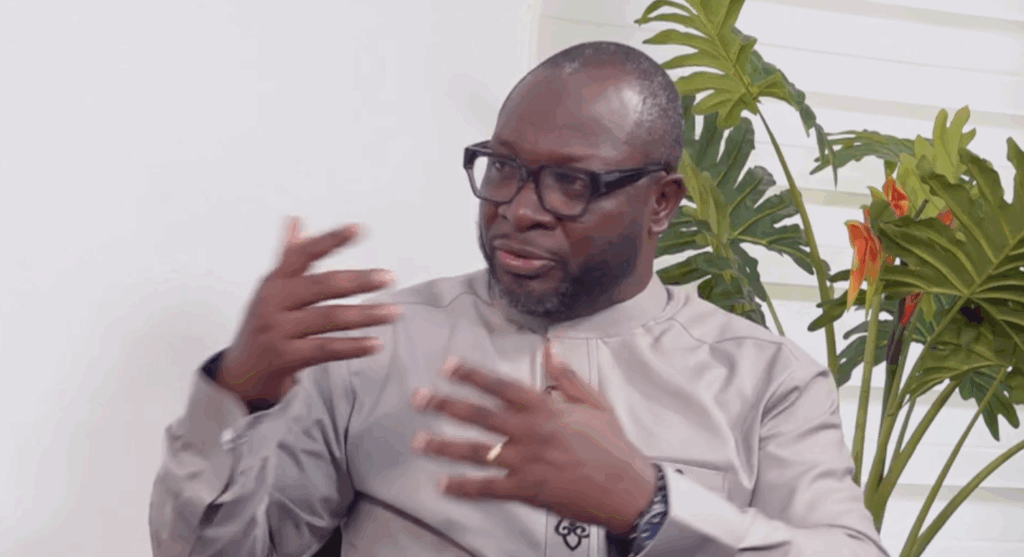
President of the Ghana Association of Banks, John Awuah, has blasted Ghana’s civil society organisations (CSOs), accusing them of misplacing priorities and failing to mount a credible, results-driven campaign against illegal mining.
In a strongly-worded article, Mr Awuah questioned why CSOs would invest energy in the debate over a possible name change for the Kotoka International Airport at a time when the country faces what he described as an existential threat from galamsey.
“I do not believe that we have a credible CSO community in Ghana. They have time to comment and make a case on the KIA name change at a time that we are all confronted with the existential threat of GALAMSEY,” he wrote.
He dismissed claims by some civil society groups that they have already done enough advocacy on the galamsey menace.
“I know they will say they have made enough noise on GALAMSEY. Nope! It’s been empty noise full of political patronage,” he said.
Mr Awuah argued that meaningful civil society intervention should deliver outcomes, not media activity.
“An active CSO intervention achieves results; not press conferences,” he wrote, adding that CSOs must “push and say truth to power and not bow to gimmicks in the name of GALAMSEY fight.”
He questioned the impact of Ghana’s civil society efforts to date, demanding evidence of progress.
“Where is the evidence of any success in the fight? Yet our CSOs are busy touting contributions to the change of the name of the airport,” he stated.
The bank's chief also broadened his criticism to include several national institutions and religious bodies, questioning their silence amid worsening environmental destruction.
“Where are the Peace Council, National House of Chiefs, National Development Planning Commission, Pastors, Imams and our Independent CSOs?” he asked.
Mr Awuah singled out journalist Erastus Asare Donkor, describing him as a rare credible voice in the national conversation on illegal mining.
“Whenever I listen to Erastus Asare Donkor, who is perhaps the only credible voice left in the GALAMSEY discussions, I cringe,” he said.
He warned that the country’s focus on gold export revenues is dangerously misplaced if the health and survival of citizens are being threatened.
“How can we be toying with our present and future, and our leaders are focused on how much Gold we exported and the revenues that accrued to the country last year?” he questioned.
He added that economic gains mean little if the population is left exposed to severe health risks.
“What will increased Gold revenues do if half of the population is threatened with heightened chronic and acute diseases resulting from the extraction of Gold?” he asked.
In one of the article’s sharpest lines, Mr Awuah challenged the logic of celebrating growth while communities face deadly consequences.
“Will the growth in Dollars raise the DEAD?” he wrote.
He called for sustained national outrage and continuous pressure against illegal mining.
“We must put our hands to the plough and raise our voices to the obvious dangers of GALAMSEY without ceasing,” he urged.
He also commended the Multimedia Group for what he described as leadership in developmental journalism.
“And here, I commend the Managers of The Multimedia Group for the demonstration of leadership in developmental journalism,” he said.
Mr Awuah further criticised government’s repeated creation of taskforces and committees, arguing that they have produced little more than slogans.
“Politicians are good at coining jargons that achieve next to nothing,” he wrote, listing several interventions including Operation Vanguard, Operation Halt Galamsey, the Blue Water Guards, and the Inter-Ministerial Committee on Illegal Mining.
He said the sheer number of task forces created to address a single problem only highlights the failure of the national response.
“How can we have this number of Task force to tackle one problem and fail woefully?” he asked.
He concluded that the initiatives appear designed to signal concern, rather than deliver real outcomes.
“Except to say that they were and continue to be Political creations to send a message of attention to the phenomenon without real intent to achieve any positive outcome,” he wrote.
Latest Stories
-
Power restoration fault suspected in Kumasi Central Market fire
5 hours -
The 7-foot giant of Ngleshie Amanfro: Seven-foot Ghanaian Ephraim Saawa dreams of joining the national basketball team
5 hours -
Government promises support for Kumasi Central Market fire victims
5 hours -
Vibes The Movie: Big Ghun’s Ghanaian film earns five nominations at 2026 REFFA
6 hours -
MamaCare CEO warns unresolved conflicts among health workers could undermine maternal and neonatal care
6 hours -
Health professionals urged to translate medical knowledge into practice to save mothers
6 hours -
Retired judge Justice Francis Korbieh charges 1,568 new lawyers to uphold integrity
8 hours -
Conflicts among care providers linked to maternal, neonatal deaths – Expert
8 hours -
GIS marks 10th TIME conference, champions improved teaching practices
8 hours -
BRICS Or Balance? What Ghana’s bid really means
9 hours -
GPRTU wants full TRAFFITECH-GH implementation to start in 2027
9 hours -
How 10-mile walks for basic education birthed a 50-year legal career for Justice Korbieh
9 hours -
Mahama announces plans to import electric wheelchairs for PWDs
9 hours -
KGL U17 Colts 2026: Western beat Prempeh Elite Academy to set up final final with Greater Accra Region
9 hours -
Late Solanke strike salvages 10-man Spurs draw at Man United
9 hours