

Audio By Carbonatix
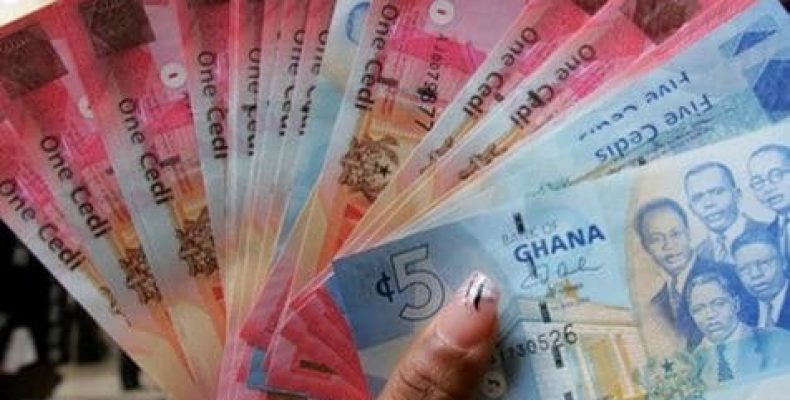
Head of Economics Department at the University of Ghana, Professor William Baah Boateng says increasing exports is not the solution to Ghana’s financial woes as the cedi depreciates.
According to him, that is merely a textbook solution which takes years to solve a problem.
What Ghana needs, he says, is an immediate solution to the rapidly depreciating cedi and the consequent ailing economy.
“Well I think it’s funny. It’s funny when we begin to look at just one side of the problem. And since I was a student in secondary school from 1984 coming to sixth form in 1989 to 1991, we’ve heard increasing exports and reducing imports and so on.
“And I think we need to look at the current situation and not go to the textbook and continue to quote. The situation that we are finding ourselves is not linked to export and import,’ he said.
Speaking on JoyNews’ PM Express Business Edition, he stated that Ghana’s problem would have to do with its capital account.
According to him, the country fares poorly at generating foreign exchange thus creating too much pressure on the economy when it is time to pay back debts.
“So we look at the balance of payment. I think we’ve had some positive trade balance, not as much as we expect, and of course, we also have the current account which is not doing badly. But when you go to the capital account that is where the problem is.
“Because having gone to the Euro market to borrow, it will get to a time where the debt will mature and we’ll need to pay back. So paying back if you’re not able to generate enough foreign exchange and also revenue, then you’re going to have a challenge in paying back,” he said.
He explained that why the currency depreciation is being felt most strongly now is due to the government’s inability to go borrow on the Euro market due to the several downgrades it has been hit with by international rating agencies.
“I can tell you if Ghana had not been rated downwards, you know the rating agencies had rated us downwards and that has put us in a situation where we cannot borrow at a competitive rate. So if we had not gone there perhaps the situation that we find ourselves we could have gone to the Euro market to borrow to be able to tame the exchange rate.
“But here we are unfortunately we cannot go and if we have to go it will be at a very high rate and that is the challenge we find ourselves currently. So it is not as we say exports and imports per se, but we need to look at the capital market. When you want to look at exports as the way we need to solve our exchange rate problem, it is a long term kind of solution you’re prescribing because there is export elasticity. I mean if we want to increase our exports of cocoa, it doesn’t take a day or two. It takes years,” he said.
Latest Stories
-
Ghana’s mining deaths fall sharply, but Chamber insists ‘three deaths are too many’
24 minutes -
Tatale Sanguli officials destroy expired food products, warn traders
30 minutes -
Police arrest two watchmen over alleged defilement of 14-year-old student
36 minutes -
The woman behind General Mosquito: Could Ghana be meeting its next First Lady?
37 minutes -
Court remands man over alleged Labone bank robbery attempt
41 minutes -
Supreme Court to rule today on challenge to legal vacation warrants
47 minutes -
Tamale Metropolitan Assembly distributes 10,000 bags of fertiliser to farmers
52 minutes -
TUSAAG suspends strike, resumes work after renewed talks with government
56 minutes -
PIAC marks 15 years of oil revenue accountability and transparency
1 hour -
Adongo calls for non-political interference in $1.46bn Heritage Fund review
1 hour -
FDA records GH¢70m surplus in 2025 amid concerns over ageing lab equipment
1 hour -
Arise Ghana demands stronger commitment to end galamsey
1 hour -
96% of Ghanaian pensioners willing to work beyond retirement age – Study
1 hour -
Ghana gets nuclear power plant simulator
1 hour -
Temporary Akosombo power control facility to be ready by September – Energy Ministry
1 hour