

Audio By Carbonatix
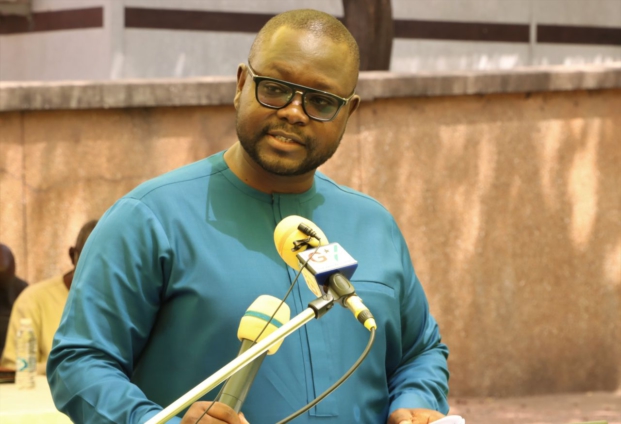
The Housing Minister, Francis Asenso-Boakye, says government is undertaking a comprehensive review of the Rent Act, the Real Estate Agency Act and others in a move to deal with money laundering in the country.
He indicated that the Cabinet is currently going through the laws for onward submission to Parliament for the necessary amendments to be approved.
This comes after the European Commission removed Ghana from the EU Blacklist in January 2022.
The Commission acknowledged that Ghana no longer has strategic deficiencies in its Anti-Money Laundering and Counter-Terrorist Financing regimes.
To tighten the laws and ensure real estate are not used by criminals to defraud people, Mr Asenso-Boakye noted the government is pursuing some rigorous reforms sanitise real estates’ transactions.
“If you talk about the housing authority, it’s currently before the Cabinet seeking policy approval so that we take the necessary steps afterwards. The National Housing Policy that was adopted in 2015 seriously recommends a housing authority to manage the provision of social housing delivery.”
“Cabinet has given the policy approval for the review of the Rent Act, the Real Estate Agency Act that is supposed to sanitise real estates’ transactions; so, it’s an area that is very important because these issues of money laundering in the Ghanaian sector is very much hinged on real estates’ transactions,” he said.
He also indicated there are ongoing plans to licence artisans in the country before they can undertake any works.
“In Ghana today, many developers prefer to use artisans from our neighbouring countries Togo, Benin, Cote D’Ivoire and most of the French countries surrounding Ghana all because they have a very robust licencing regime.”
“All their artisans now come to Ghana to practice and most developers prefer to use them as against our own. It is important that we strengthen our licencing regime and it’s an area that you have my fullest support,” he assured.
Background
The European Commission listed Ghana and 11 other countries for having lapses in their Anti-Money Laundering and Counter-Terrorist Financing regimes in May 2020.
According to the Commission, the situation exposed the European Union’s financial system to significant threats.
The inclusion of Ghana in the blacklist meant that financial transactions from Ghana into the EU and vice versa received extra scrutiny to ensure that they did not escape the “deficiencies” identified to the benefit of money launderers and terrorist financiers.
A similar action was taken in Ghana in 2019.
Latest Stories
-
Eric Tinkler motivated by challenge of improving Kotoko
12 minutes -
Today’s front pages: Wednesday, August 19, 2026
22 minutes -
‘You can’t improve players on pitches like this’ – Kotoko coach Tinkler
25 minutes -
Petroleum Commission says regulatory reviews have saved Ghana US$2.2bn
27 minutes -
Prosecution of former NPP appointees not political persecution – Mustapha Gbande
31 minutes -
Revised Ghana Card fees approved by Parliament, not unilaterally introduced – NIA
32 minutes -
NIA says Labone Prestige Centre is optional, district offices remain operational
37 minutes -
Three-month-old baby girl found abandoned in Ada bush
38 minutes -
Boakye Agyarko vows to rebuild NPP into a winning force ahead of 2028
43 minutes -
One seriously injured as four vehicles crash on Ofankor–Pokuase stretch days after fatal accident
52 minutes -
GES denies GH¢1,500 Free SHS payment directive, urges parents to ignore viral claim
2 hours -
The losses were necessary – Manteaw defends GoldBod’s costly push to win Ghana’s gold market
3 hours -
We are concerned about inflation outlook when it comes to MPC decisions – BoG Governor
3 hours -
GoldBod had to ‘pay more’ to beat Indians, Chinese in Ghana’s gold market – Manteaw
3 hours -
Gov’t pays GH¢10.8bn DDEP Coupon in full and on schedule
3 hours