

Audio By Carbonatix
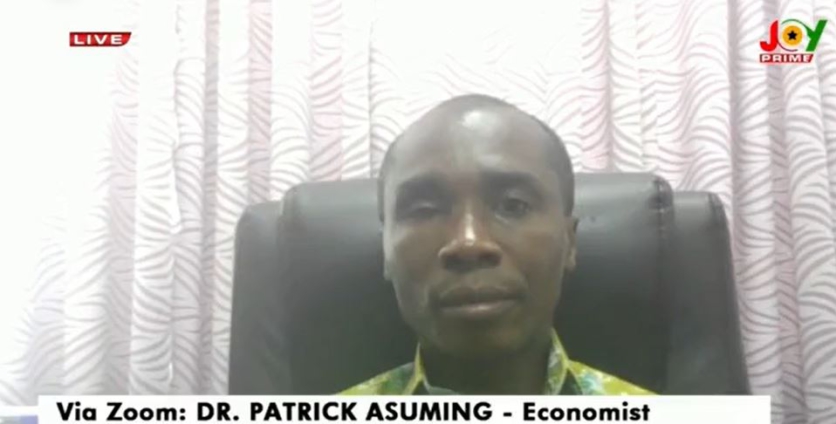
A Senior Lecturer at the University of Ghana Business School (UGBS), Dr. Patrick Asuming, has said the ineffective nature of the country’s educational system and policies have caused a decline in the quality of education.
While acknowledging efforts by government to expand access to education, he urged policy makers not to pride themselves in the number of people trained.
In an interview on Prime Morning on Joy Prime, Thursday, Dr. Asuming observed that second-cycle education appears to be overly centred on quantity than on quality, which he says is gradually eroding gains made over the years.
“I think any attempt to expand access to education should be lauded, but I don’t think we should do that at the expense of making sure that we are getting the quality. One reason for this is that the political system that we run, we seem more interested in counting numbers and sometimes the wrong kind of numbers.
“The current government has been criticised a lot by the previous government, always asking ‘how many new schools have you built?’ When it comes to education, this quality-quantity debate is a big issue and is an important one. It’s obvious the President believes in expanding access, sometimes at the expense of the quality,’ he argued.
Delivering the 2022 State of the Nation Address in Parliament, President Akufo-Addo hinted at commissioning 34 refurbished National Vocational and Technical Institutes (NVTIs) across the country.
He also noted that the TVET institutions are being upgraded and equipped to enable them train the increased numbers of students enrolled.
But Dr. Asuming insists government should reconsider its policies to ensure the schools do not only produce quantity but quality students as well.
“We shouldn’t just expand without paying proper attention to the quality. This is really an equity issue; should we ensure that everybody has a minimum base rather than simply building stronger and higher quality for a relatively few? For me, I think we have to do both at the same time.
“Sometimes, they feel compelled to build more so that they can count the numbers, because when you do things to increase the quality, sometimes, it’s not readily countable. That aspect of how we have funded our education probably hasn’t helped in terms of our focus on the quality-quantity trade-offs,” he said.
Latest Stories
-
Ghana has 48 legitimate entry points but over 300 illegal crossing points – Interior Minister
5 minutes -
Ghana is much safer now than in 2025 – Muntaka
20 minutes -
Bawku has gone 150 days without gunfire – Interior Minister
25 minutes -
It still surprises me GAUA is on strike after signing MoU – Fair Wages CEO
44 minutes -
Kumasi Hospital removes 880-gram bladder stone in rare surgical case
51 minutes -
Ghana lacks sufficient power generation redundancy – Energy Minister
1 hour -
CPA assures consumers of safety of registered sanitary towels on the Ghanaian market after complaints
1 hour -
‘They all point decisively to guilt’ – AG urges court to reject Adu Boahene’s no-case submission
2 hours -
Documents falsified to evade tax on Abramovich’s wealth, BBC finds
2 hours -
Today’s front pages: Monday, October 12, 2026
2 hours -
BoG proposes new rules to ensure banks can always pay customers when they need their Money
3 hours -
Hotline Documentary: ‘Silent Football’ to air on JoyPrime and JoyNews today
4 hours -
NDPC examines how evidence shapes Ghana’s development planning and policy decisions
4 hours -
Education Ministry calls urgent talks to break GAUA strike deadlock
4 hours -
NCCE engages women in North East Gonja on rule of law, anti-corruption
4 hours