

Audio By Carbonatix
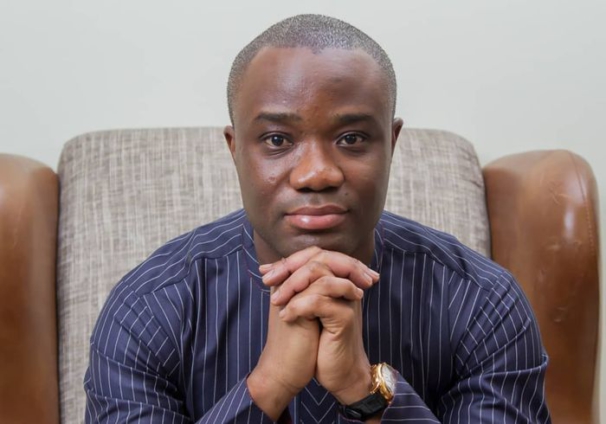
Former Deputy Minister for Information, Felix Kwakye Ofosu has said that Ghana currently has the worst credit rating ever in 20 years.
Speaking in an interview on NewsNight on Thursday, he said with this data, he does not understand why Ghanaians would be told that the economy “today is better than in the past.”
“Today, our public debt as of the end of the first quarter in the light of the recent cedi depreciation, is GHC400 billion. Our public debt in 2016 was GHC120 billion the debt to GDP ratio in our estimation is around 85% as we speak. In 2016, it was 66%, the fiscal deficit for 2021 was 12% in 2016, it was 6%. As we speak, we have the worst credit ratings ever in 20 years since the rating started,” he said.
Mr. Kwakye Ofosu made these comments in reaction to the speech delivered by Vice President Dr. Mahamadu Bawumia on the state of economy at a forum organised by the NPP’s National Youth Wing on Thursday.
Dr. Bawumia during his address, stated that, “after a period of sluggish and declining growth, real GDP growth picked up from 3.4% in 2016 to an average of 6.9% between 2017 and 2019. The onset of COVID-19 in 2020 however, resulted in a sharp decline in GDP growth to 0.4% (many countries in the world recorded negative growth).”
He said “the resilience of the economy manifested in 2021 with a pick up of real GDP growth from 0.4% in 2020 to a projected 5.3% in 2021, with the non-oil sector projected to grow at 6.9% in 2021. The average rate of GDP growth for 2017-2021 (including COVID-19 period) was 5.3% compared to an average rate of growth of 3.0% between 2013 and 2016. Therefore, even with COVID-19, the growth of the economy is fundamentally stronger than it was in the 2013-2016 period.”
In response, Mr. Kwakye Fosu said, “what has happened is that they have attempted to blame Covid and then the 6 weeks old Ukrainian-Russian conflict for the economic mess we’ve seen in the last 2 to 3 weeks.”
According to him, the economy has already been mismanaged long before the outbreak of Covid-19.
“They were hiding the true extent of our budget deficit and so increasingly they began to cause disaffection in the international bond and financial market.
“Indeed when the budget was read, just a day after the budget was read, the yields on our bond were increased by bondholders because they did not trust the assumptions and financial calculation that has been done, they saw that this was a government that was claiming that they will increase revenue by as much as 40%. The investors looked at the figures and saw that it will not add up, so they increased their yield just after the budget was read,” he said.
Latest Stories
-
“We are one house – let’s settle this at home” – Atomaase Royal family calls for unity, rallies behind Twafohene
13 minutes -
The Missing Middle and the Overlooked Small: Why Ghana Must Serve Both the ‘S’ and ‘M’ in MSME’s
26 minutes -
Mahama returns from Angola after AU extraordinary summit
55 minutes -
Ghana qualifies for quarterfinals of Africa Volleyball Nations Cup after beating Zambia
1 hour -
WAFU B WCLQ: Ampem Darkoa Ladies come from behind to beat Edo Queens
1 hour -
Photos: National Youth Authority Festival
2 hours -
Bawumia commissions St Jude’s Catholic Church he funded to completion at Weija
2 hours -
Government defends new beer exercise rates; sliding scale has not been abolished
2 hours -
Bolgatanga Assembly denies blanket ban on events beyond 8pm
2 hours -
Photos: Ghana Immigration Service removes 1,055 street beggars from Accra, Kumasi streets
2 hours -
‘He always comes to our aid’ – Fr. Campbell recounts Bawumia’s support for Church, poor
2 hours -
Remittances drop marginally year-on-year to US$3.65bn in half-year 2026
3 hours -
T-bills: Government exceeds target by 139%, interest rates tumble
3 hours -
Why Chelsea need more than a new goalkeeper to be title challengers
3 hours -
Outlook of Ghana’s external sector remains positive for second-half of 2026 – BoG
3 hours