

Audio By Carbonatix
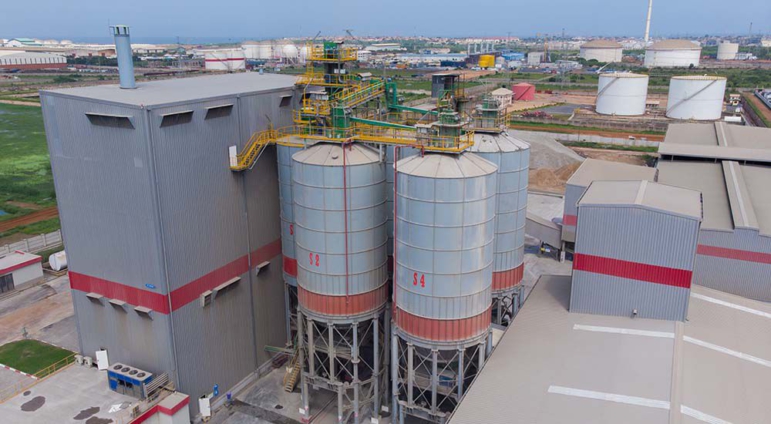
CBI Ghana Limited, producers of Supacem Cement, has signed an $80million contract to construct the world’s largest Calcined Clay Cement plant, a 405,000-ton-per-annum plant at the Tema Free Zones Enclave.
The plant will use new technology to substitute 20% of clinker, the raw material used to make cement, with environmentally-friendly clay from Ghana.
The operation of the Calcined Clay Cement plant will have a profound impact on the Ghanaian economy.
By partially substituting imported clinker for Ghanaian clay, CBI will improve the value-for-money of its cement products for its customers by exceeding Ghanaian cement quality standards, while lowering raw material, energy, and fuel costs.
Lower imports will also translate to reduced local demand for US dollars and help decrease pressure on US dollar exchange rates.
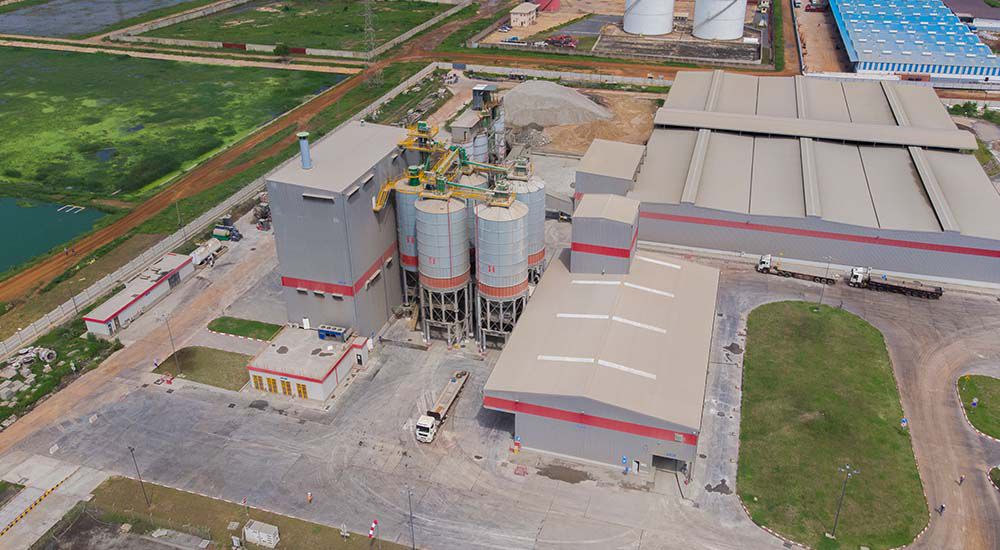
In addition, the two-year construction period and the long-term operation of the Calcined Clay Cement plant will create hundreds of low- and high-skilled jobs for Ghanaians.
Substituting clinker with calcined clay in cement production will have immense environmental benefits.
Globally, cement production accounts for about 7.5% of CO2 emissions. Using calcined clay to minimise the need for traditional, carbon-intensive clinker is a major advancement toward eliminating the negative environmental footprint of cement production.
“Ghana is the perfect location for using clay as an environmentally-friendly alternative to clinker,” said Frédéric Albrecht, CEO of CBI Ghana Ltd.
“West Africa is traditionally a clinker- and cement-importing region due to the lack of suitable limestone reserves. Developing countries, with their young populations and a growing need for infrastructure and housing, represent the future in cement consumption. Calcined clay cement are the most sustainable alternative to traditional clinker-based cement.”
CBI Ghana’s $80-million investment into its Calcined Clay Cement plant brings the company’s investments in the Ghanaian cement industry to $130 million.
The new project is financed by an international consortium including its parent company F. Scott, Société Générale, Norfund, the Norwegian Investment Fund for Developing Countries, IFU, the Danish Investment Fund for Developing Countries, and EKF Denmark, with equipment supplied by FLSmidth, the world leader in cement manufacturing equipment.
Latest Stories
-
T-bills auction: Government exceeds target marginally; yield on 91-day bill remains unchanged
2 hours -
GPL 2026/27: 10-man Aduana hand Kotoko defeat in Kumasi
2 hours -
GPL 2026/27: Medeama ease past Basake Holy Stars
3 hours -
Appiah Adomako writes: Why DVLA must stop treating every expired licence holder as delinquent
3 hours -
Localization must transfer decision-making power, not just project responsibilities
3 hours -
Modernising Ghana’s traditional markets through the 24-Hour Economy markets initiative
3 hours -
New economy will boost local production and create jobs – Finance Minister
3 hours -
Real-Time VAT on cross-border digital services – not a new tax and does not violate double taxation principle
4 hours -
Digitalisation, AI key to Ghana’s tourism transformation – GHATOF
4 hours -
Stronger GTA-private sector partnership needed to grow tourism – GHATOF
4 hours -
Amazon eyes Ghana for broadband expansion after talks with Mahama
5 hours -
National Investment Quiz 2026: Six schools qualify for quarter-finals
5 hours -
‘Do not let Russia pay for its madness with lives of your people’ – Zelensky to Ghana, 46 other countries
6 hours -
6,079 promotion cases fully processed and paid – CAGD says amid nationwide teachers’ strike
6 hours -
Teacher unions to meet government Monday over nationwide strike
6 hours