

Audio By Carbonatix
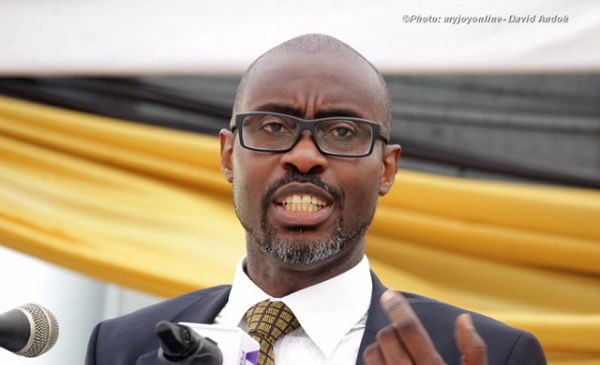
Private legal practitioner Ace Ankomah has issued a call for the Ghanaian government to transform the nation’s scientific landscape by making technology and innovation both financially rewarding and socially prestigious.
Addressing the closing session of the three-day African Prosperity Dialogues in Accra, Mr Ankomah lamented a systemic failure to implement homegrown research, which he argued allows preventable problems to persist indefinitely.
The crux of the crisis, according to Mr Ankomah, lies in the burial of revolutionary ideas within tertiary institutions.
He contended that while Ghanaian students are consistently generating answers to the country’s most pressing engineering and technological hurdles, these solutions rarely move beyond the library shelves.
“I believe that the solutions to most of our science, technology, and engineering problems already exist, generated and germinated by our brilliant students, but buried in university archives in theses and research projects that identified real challenges and proposed workable answers,” Mr Ankomah asserted.
To bridge the chasm between academia and industry, Mr Ankomah proposed a rigorous policy shift that moves away from traditional grant-based research towards a commercially viable enterprise model.
He urged the government to transition from a mere observer to an active facilitator of innovation.
The proposed solution for innovation includes:
- Campus-Based Incubators: Establishing dedicated hubs on every university campus to serve as the primary link between student researchers, industrial players, and venture capital.
- Intellectual Property Protection: A nationwide drive to patent local innovations, ensuring that Ghanaian intellectual property is legally shielded and commercially exploitable.
- Industrial Alignment: Directing policy to ensure that state and private sectors are mandated to look first to local research for engineering solutions.
- Institutional Equipping: Providing state-of-the-art laboratory and digital infrastructure to science-based institutions to prevent "brain drain" and foster local talent.
Mr Ankomah’s intervention arrives at a critical juncture as Ghana seeks to reduce its "triple dependency" on external actors for security, social systems, and raw material processing.
By patenting and commercialising university research, the state could create a self-sustaining cycle of wealth creation that reduces the reliance on imported technology.
“Governments must act as facilitators, creating incubators on every campus, linking students, industry, capital, and policy. Protect intellectual property, patent innovations, turn research into enterprise, and make science and engineering attractive, respected, and rewarded,” he concluded.
The call for reform has resonated with participants at the African Prosperity Dialogues, who noted that Africa’s industrialisation under the AfCFTA framework depends heavily on the continent's ability to protect its own scientific advancements.
Latest Stories
-
Children among 109 dead after boat capsizes off Djibouti, UN says
59 seconds -
OmniBSIC Bank’s 11th health walk promotes fitness and business growth
10 minutes -
2026 World Maritime Day: Danish Embassy organises “The Gulf of Guinea Speaks”
32 minutes -
New Economy will tackle unemployment and restore hope – Ato Forson
38 minutes -
IMMILAC president recounts personal losses as security women lead breast cancer awareness campaign in Wa
45 minutes -
University of Ghana postpones October 12 reopening as GAUA strike persists
60 minutes -
Bahass Foundation launches vocational skills training to support mental health recovery in Wa
2 hours -
NPP orders parliamentary aspirants and their supporters to suspend campaign activities
2 hours -
Techiman unites against child marriage: Joy Impact Makers Awardee leads charge on International Day of the Girl Child
2 hours -
Ghana Psychological Association calls for greater involvement of people with lived experience in mental health care
3 hours -
Ablakwa says Ghana could evacuate more citizens from South Africa if the situation worsens
4 hours -
Violence against girls must be tackled through individual responsibility – Gender advocate
4 hours -
Ghana’s BRICS bid must be guided by national interest – International Affairs Analyst
4 hours -
Journalists look back on a decade of breast cancer reporting in Ghana
5 hours -
President Mahama ends Resetting Ghana tour of Ahafo Region
7 hours