

Audio By Carbonatix
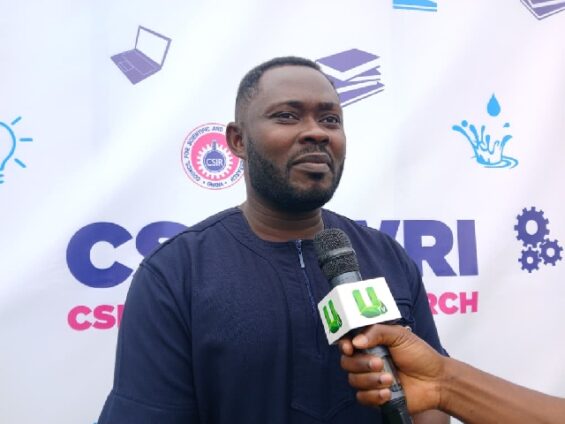
About 60 per cent of Ghana’s water bodies are polluted, a senior scientist at the CSIR-Water Research Institute (CSIR-WRI), Dr Franco Enobrenaco, has warned.
Dr Enobrenaco, of the Groundwater and Geoscience Division, said the situation was largely driven by illegal mining, popularly known as galamsey, which continues to contaminate the country’s rivers and groundwater.
He warned that the remaining 40 per cent of relatively unpolluted water bodies could also come under threat as the population grows and mining activities continue.
Speaking during a presentation at the CSIR-WRI Mid-Year Review 2026 on the theme, *“Can Ghana Heal Her Waters? Toward Sustainable Remediation of Polluted Water Bodies,”* he cautioned that Ghana could eventually be forced to import water if urgent measures were not taken to protect its water resources.
“If we have 100% and 60% of our water bodies polluted, the rest is 40%... We are going to import water. I know that some people are already importing water,” he said.
Dr Enobrenaco called for a two-pronged approach involving the reduction or elimination of illegal mining, the provision of alternative livelihoods for affected miners and strict enforcement of mining laws.
He said efforts to restore polluted water bodies would remain ineffective if the sources of pollution were not addressed.
He also urged authorities to adopt integrated remediation methods rather than relying on a single technology. According to him, polluted water poses serious risks to public health, agriculture, industry and energy generation, while treating contaminated water also comes at a significant economic cost.
Citing the restoration of the Thames River in the United Kingdom as evidence that polluted water bodies can be recovered, he said Ghana could restore its rivers through sustained, coordinated action involving government, researchers, communities and other stakeholders.
Latest Stories
-
Power restoration fault suspected in Kumasi Central Market fire
4 hours -
The 7-foot giant of Ngleshie Amanfro: Seven-foot Ghanaian Ephraim Saawa dreams of joining the national basketball team
5 hours -
Government promises support for Kumasi Central Market fire victims
5 hours -
Vibes The Movie: Big Ghun’s Ghanaian film earns five nominations at 2026 REFFA
5 hours -
MamaCare CEO warns unresolved conflicts among health workers could undermine maternal and neonatal care
6 hours -
Health professionals urged to translate medical knowledge into practice to save mothers
6 hours -
Conflicts among care providers linked to maternal, neonatal deaths – Expert
7 hours -
GIS marks 10th TIME conference, champions improved teaching practices
7 hours -
BRICS Or Balance? What Ghana’s bid really means
8 hours -
GPRTU wants full TRAFFITECH-GH implementation to start in 2027
8 hours -
How 10-mile walks for basic education birthed a 50-year legal career for Justice Korbieh
8 hours -
Mahama announces plans to import electric wheelchairs for PWDs
8 hours -
KGL U17 Colts 2026: Western beat Prempeh Elite Academy to set up final final with Greater Accra Region
9 hours -
Late Solanke strike salvages 10-man Spurs draw at Man United
9 hours -
Gender Ministry to monitor welfare of Nana Akua Addo’s children amid domestic violence case
9 hours