

Audio By Carbonatix
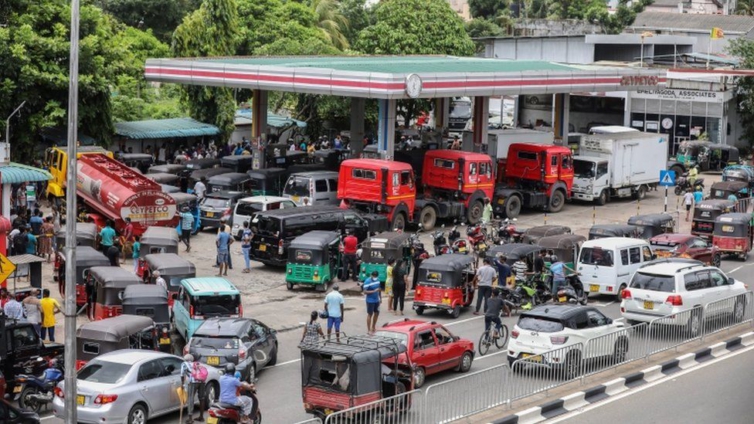
Sri Lanka's new prime minister says the country is down to its last day of petrol as it faces its worst economic crisis in more than 70 years.
In a televised address, Ranil Wickremesinghe said the nation urgently needs $75m (£60.8m) of foreign currency in the next few days to pay for essential imports.
He said the central bank will have to print money to pay government wages.
Mr Wickremesinghe also said state-owned Sri Lankan Airlines may be privatised.
The island nation's economy has been hit hard by the pandemic, rising energy prices, and populist tax cuts. A chronic shortage of foreign currency and soaring inflation had led to a severe shortage of medicines, fuel and other essentials.
In the capital Colombo, auto rickshaws, the most popular means of transport in the city, and other vehicles have been queuing at petrol stations.
"At the moment, we only have petrol stocks for a single day. The next couple of months will be the most difficult ones of our lives," said Mr Wickremesinghe, who was appointed prime minister on Thursday.
However, shipments of petrol and diesel using a credit line with India could provide fuel supplies in the next few days, he added.
Mr Wickremesinghe said the country's central bank would have to print money to help meet the government's wage bill and other commitments.
"Against my own wishes, I am compelled to permit printing money in order to pay state-sector employees and to pay for essential goods and services. However, we must remember that printing money leads to the depreciation of the rupee," he said.
He also proposed selling off Sri Lankan Airlines as part of efforts to stabilise the nation's finances. The carrier lost 45 billion Sri Lankan rupees ($129.5m; £105m) in the year ending March 2021.
In recent weeks, there have been large, sometimes violent, protests against President Gotabaya Rajapaksa and his family.
Last week, the president's elder brother Mahinda resigned as prime minister after government supporters clashed with protesters. Nine people died and more than 300 were wounded in the violence.
On Friday, Mr Wickremesinghe told the BBC, that the economic crisis is "going to get worse before it gets better".
In his first interview since taking office, he also pledged to ensure families would get three meals a day.
Appealing to the world for more financial help, he said "there won't be a hunger crisis, we will find food".
Latest Stories
-
Catholic Bishops pressure gov’t to sign long-delayed mission schools agreement
6 minutes -
Cedi under fresh pressure as Christmas import demand drives dollar surge
21 minutes -
Ato Forson eyes first-week November for 2027 Budget, promises jobs and major infrastructure push
30 minutes -
SHS placement crisis deepens as Catholic Bishops demand probe into ‘protocol’ admissions
38 minutes -
SHS placement: Catholic Bishops demand probe into alleged payments for school places
55 minutes -
Facts about Nigeria’s Dangote oil refinery Initial Public Offering
1 hour -
Trump says AI safety fears a ‘hoax’ as he rejects calls for greater safeguards
2 hours -
Oil climbs as Saudi pipeline outage, fresh attacks heighten supply concerns
2 hours -
Donald Trump Jr and Bettina Trump say Putin ally paid for some wedding festivities as a ‘gift’
2 hours -
EU is set to propose ban on social media and AI chatbots for under-15s
2 hours -
No SHS space shortage – GES says 800,000 places available for just over 600,000 students
2 hours -
Emmys 2026: The winners and nominees in full
2 hours -
African banks’ foreign subsidiary contributions increasing; Access Bank records fastest cross-border growth
3 hours -
Food prices in Ghana remain largely stable – AGRA report
3 hours -
Fiscal economy to remain firm despite execution risks – Databank Research
3 hours