

Audio By Carbonatix
For the first time in the country's history, Sri Lanka's presidential election has gone into a second round of counting after no single candidate won the 50% plus one vote needed to be declared the winner.
The election commission will now count voters' second and third choices for president - people were asked to mark up to three candidates in order of preference during the election.
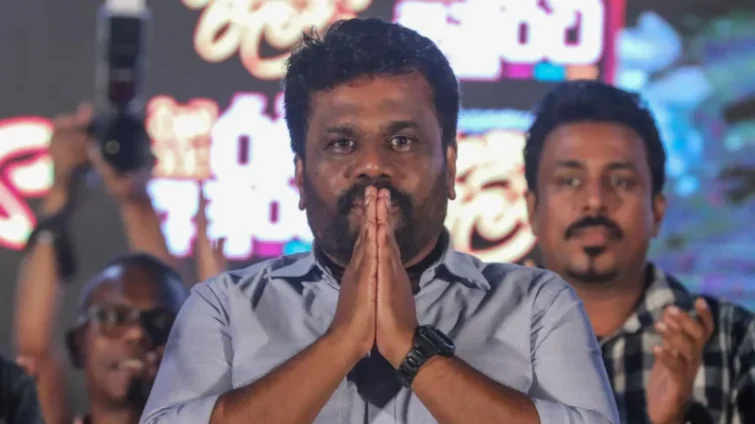
The first round, which saw the counting of people's primary choice of candidate, had Anura Kumara Dissanayake, a leftist politician in the lead. Opposition leader Sajith Premadasa is in second place.
However, the full results of the first round of counting are yet to be released to the public.
In a press conference, the election commission said that all other candidates apart from Dissanayake and Premadasa have been eliminated.
The eliminated candidates' ballots will now be checked to see if secondary or third preferential votes were given to the two frontrunners.
The election on Saturday was the first to be held since mass protests unseated the country's leader, Gotabaya Rajapaksa, in 2022 after the country suffered its worst economic crisis.
All of Sri Lanka's eight presidential elections since 1982 have seen the winner emerge during the first round of counting. This poll has been described as one of the closest in the country's history.
Seventeen million Sri Lankans were eligible to vote on Saturday and the country's elections commission said it was the most peaceful in the country's history.
Still, police announced a curfew late Saturday night citing "public safety. It was lifted at noon local time (06:30 GMT).
Dissanayake promised voters tough anti-corruption measures and good governance - messages that resonated strongly with voters who have been clamouring for systematic change since the crisis.
Early results showed him rocketing to the lead, prompting several high profile figures - including the country's foreign minister - to congratulate him.
But the latest numbers have shown him losing ground to Premadasa.
Incumbent president Ranil Wickremesinghe won 17% of the vote, putting him in third place in the polling.
Economic meltdown
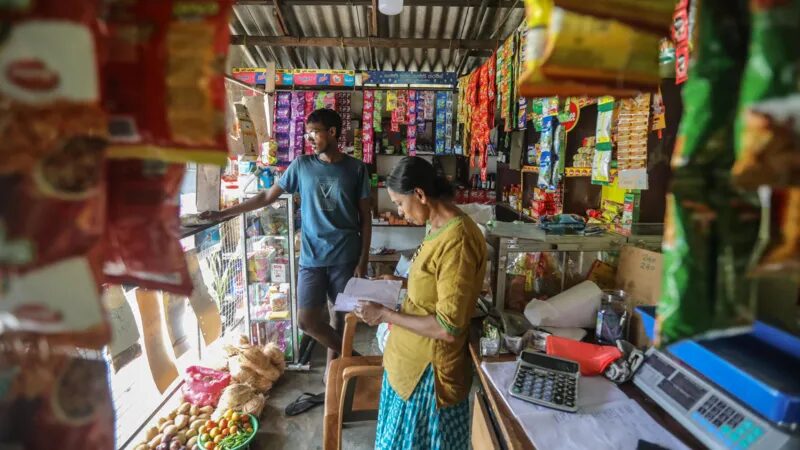
The country's new president will be faced with the twin tasks of reviving the economy and lifting millions from crushing poverty.
An economic meltdown fueled the "Aragalaya" (struggle) uprising that unseated Rajapaksa from the presidential palace in 2022.
At that time, Sri Lanka's foreign currency reserves had dried up, leaving the country unable to import essentials such as fuel. Public debt had ballooned to $83bn while inflation zoomed to 70%.
This made basics like food and medicine unaffordable to to ordinary people.
The country's economic misery has been blamed on major policy errors, weak exports and years of under-taxation. This was exacerbated by the Covid-19 pandemic, which choked tourism, a key economic driver.
But many people have also blamed corruption and mismanagement, fuelling anger against Rajapaksa and his family, who collectively ruled Sri Lanka for more than 10 years.
"The most serious challenge is how to restore this economy," said Dr. Athulasiri Samarakoon, a political scientist at the Open University of Sri Lanka, told the BBC Sinhala Service.
During his term,Wickremesinghe had secured a $2.9bn lifeline from the International Monetary Fund (IMF), which is crucial to opening additional funding channels, but comes with strict economic and governance policy reforms.
Sri Lanka is restructuring the terms of its debt payments with foreign and domestic lenders, as mandated by the IMF. The main focus has been the country's $36bn in foreign debt, of which $7bn is owed to China, its largest bilateral creditor.
Dissanayake has promised to develop the manufacturing, agriculture and IT sectors. He has also committed to revising tax rates and widening the tax base.
Premadasa has also pushed for IT as well as the establishment of 25 new industrial zones. He said tourism should be supported so that it becomes the country's top foreign currency earner.
Wickremesinghe during the campaign said he would double tourist arrivals and establish a national wealth fund as well as new economic zones to increase growth.
Latest Stories
-
Power restoration fault suspected in Kumasi Central Market fire
4 hours -
The 7-foot giant of Ngleshie Amanfro: Seven-foot Ghanaian Ephraim Saawa dreams of joining the national basketball team
5 hours -
Government promises support for Kumasi Central Market fire victims
5 hours -
Vibes The Movie: Big Ghun’s Ghanaian film earns five nominations at 2026 REFFA
6 hours -
MamaCare CEO warns unresolved conflicts among health workers could undermine maternal and neonatal care
6 hours -
Health professionals urged to translate medical knowledge into practice to save mothers
6 hours -
Conflicts among care providers linked to maternal, neonatal deaths – Expert
8 hours -
GIS marks 10th TIME conference, champions improved teaching practices
8 hours -
BRICS Or Balance? What Ghana’s bid really means
8 hours -
GPRTU wants full TRAFFITECH-GH implementation to start in 2027
9 hours -
How 10-mile walks for basic education birthed a 50-year legal career for Justice Korbieh
9 hours -
Mahama announces plans to import electric wheelchairs for PWDs
9 hours -
KGL U17 Colts 2026: Western beat Prempeh Elite Academy to set up final final with Greater Accra Region
9 hours -
Late Solanke strike salvages 10-man Spurs draw at Man United
9 hours -
Gender Ministry to monitor welfare of Nana Akua Addo’s children amid domestic violence case
9 hours