

Audio By Carbonatix
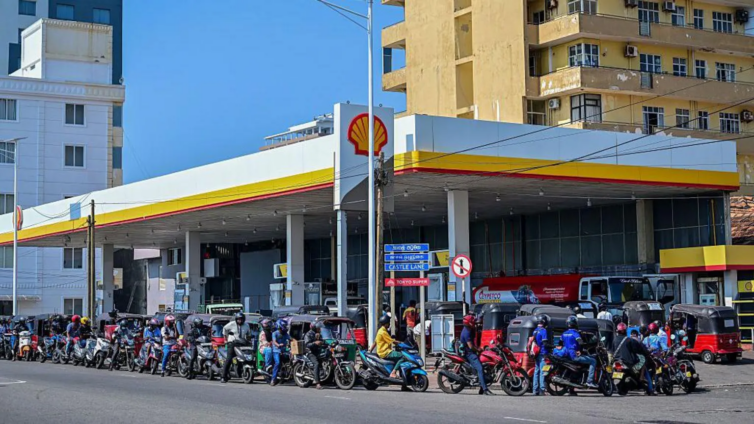
Sri Lanka has declared every Wednesday a public holiday to conserve fuel as the island nation grapples with possible shortages in the wake of the US and Israel's war with Iran.
"We must prepare for the worst, but hope for the best," President Anura Kumara Dissanayake said at an emergency meeting with senior officials on Monday.
This is the latest in a series of belt-tightening measures undertaken by Asian countries since the war hocked off the Strait of Hormuz, which used to carry millions of barrels of oil from the Gulf into the region.
Nearly 90% of all oil and gas flowing through the strait last year was bound for Asia, the world's largest oil-importing region.
What are other Asian countries doing?
Elsewhere in Asia, authorities have resorted to a variety of austerity measures.
In Thailand, for example, the government is urging people to swap suits for short-sleeved tees to reduce reliance on air conditioning, while in Myanmar, private vehicles are allowed only to operate on alternate days depending on their licence plate numbers.
Bangladesh has brought forward the Ramadan holidays at universities and introduced planned blackouts nationwide to conserve energy.
In the Philippines, some government offices have mandated that staff work from home at least one day a week, while President Ferdinand Marcos Jr has banned non-essential travel in the public sector.
And Vietnam is strongly encouraging citizens to stay at home more to conserve fuel. The government also called on people to "ride bicycles, carpool, use public transport, and "restrict personal vehicle use when unnecessary."
What else is Sri Lanka doing?
Sri Lanka's new four-day week will also apply to schools and universities, but it will not affect state institutions providing essential services, such as the health and immigration authorities, officials say.
Authorities picked Wednesday instead of Friday as the additional off day so that government offices would not be closed for three days in a row, they added.
Motorists are also now required to register for a National Fuel Pass which rations the amount of fuel that people can buy.
This has sparked some unhappiness among some Sri Lankans who feel that the fuel quotas - 15 litres for private cars and five litres for motorcycles - are too low.
The rationing mechanism was first implemented in 2022, during the country's worst economic crisis, when it ran out of foreign reserves and was unable to import essential items or buy enough fuel.
Oil prices have soared since the US and Israel started bombarding Iran late last month, and is currently hovering at around $100 a barrel.
Latest Stories
-
Go back to the hand washing days – Ghanaians told
51 seconds -
GoldBod commits GH¢35m to reclaim galamsey-damaged Tano Nimri Forest Reserve
6 minutes -
Afenyo-Markin reflects on loneliness of public service, says survival is largely spiritual
13 minutes -
Achimota Court designated to handle petroleum diversion cases – NPA CEO
21 minutes -
Bekwai court jails mine worker 14 years for defiling 8-year-old girl
26 minutes -
CHASS conference calls for collective action to tackle indiscipline in schools
30 minutes -
Oil edges down as investors weigh possible US sanctions on ‘shadow fleet’
43 minutes -
Netflix names former Disney executive Peter Rice as new content chief as Bajaria departs
53 minutes -
India’s ‘cockroach’ protesters set to return despite police crackdown
1 hour -
Porn showing choking or incest to be banned from early November, government says
1 hour -
Russell Brand accuser says he turned ‘monster-like’ before alleged rape
1 hour -
US police identify remains of man found in barrel in shrinking reservoir
2 hours -
My uncle told me I will never make it in music – Lojay
2 hours -
Martinez apologises for outburst and fined by Man Utd
2 hours -
Infantino apologises to FIFA Council – but told he is still not fit to lead
2 hours