

Audio By Carbonatix
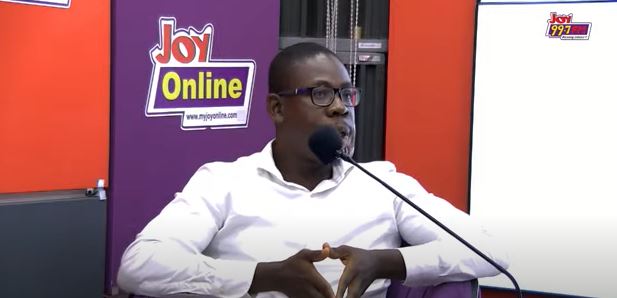
An Associate Professor of Finance at the University of Ghana Business School, Elikplimi Komla Agbloyor, has highlighted a number of factors that have consistently driven the country to the International Monetary Fund (IMF).
According to him, high unemployment and high lending interest rates are among the key factors driving the country to the IMF on a regular basis.
He was speaking on Joy FM’s Super Morning Show, in relation to the country’s decision to seek an IMF bailout.
Government has been blaming the current development on the Covid-19 pandemic and the Russia-Ukraine war.
The Professor, who has developed a module that helps to predict whether or not a country will go to the IMF, says otherwise.
According to him, Ghana's economic woes predate the Russian-Ukraine war and the outbreak of the Covid-19 pandemic.
"We were likely to go to the IMF again as far back as 2017," he stressed.
He acknowledged that the Russia-Ukraine war and the Covid-19, have contributed immensely to the decision, however, the propensity of the country to seek support from the IMF prior to the war was very high due to the aforementioned factors.
“The module identifies traditional factors such as the debt ratio, exchange rate, level of domestic savings, are key predicting factors dragging the country to the IMF,” he added.
That notwithstanding, he called for prudent measures to be adopted to avert the situation.
He believes one way to do that is by changing the structure of Ghana’s economy.
He noted that Ghana can actualise its dream of becoming a wealthy country by changing the structure of the economy, rather than seeking an IMF bailout.
“For me what the IMF programme does for us is to provide for us some space and time to be able to put our house in order. So that gives us time in the short to medium term to be able to implement the necessary policies to ensure that the economy is stronger,” he said on Joy FM’s Super Morning Show.
He was contributing to discussions that centered on the country’s decision to seek an IMF bailout as part of measures to cushion the economy, and how the country can do away with this development.
During the discourse which also sought to provide solutions to the country’s endless economic woes, he emphasised that until Ghana is able to change the structure of the economy, the country will continue to frequent the IMF.
Latest Stories
-
‘Keep off the arena of politics and allow us politicians to play there’ – Tampuli to CJ
1 minute -
Putin cites chance of peace deal, Ukraine sees ‘new dynamic’
4 minutes -
Thousands flood Kumasi streets to give Asantehene rousing welcome from USA
7 minutes -
GPRTU, GRTCC request review of public transport fares
13 minutes -
Up to 10% of places in top SHSs reserved for protocol – CSSPS
30 minutes -
Sekondi Prisons trains officers in Ghanaian Sign Language
37 minutes -
GTP, Woodin enter new era as TexStyles Ghana comes under local ownership
46 minutes -
NSMQ 2026: St. Augustine’s College march into third straight final, beat Prempeh and Pope John
47 minutes -
Sharpeville massacre survivors start legal fight for justice in South Africa
49 minutes -
Chief Justice has ‘worn a political jersey’ – Tampuli calls for resignation
1 hour -
Local Government Service partners Celltel to accelerate digital transformation
1 hour -
CJ’s role includes building working relationships with state institutions — NDC’s Hamza Suhuyini
1 hour -
Police intercept vehicle carrying suspected contraband at Jema
1 hour -
BOSTenergies pays first-ever GH¢34.2m dividend to government
1 hour -
Accra–Kumasi Expressway: 170km of corridor cleared, only 6km remains – GAF
1 hour