

Audio By Carbonatix
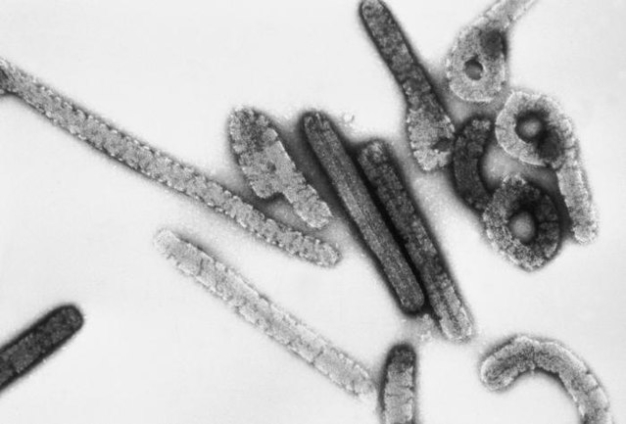
A Global Health Expert and Health Adviser at the Tony Blair Institute for Global Change, Dr. Banda Khalifa, says the transmission of Marburg virus is normally done through close direct contact with infected surfaces and materials other than through the air like Covid-19.
According to him, one is most likely to contact Marburg by touching or getting into contact with an infected person’s bodily fluids like blood, urine, saliva, rather than by just sitting across them at a table, for instance.
Speaking on JoyNews’ PM Express, he said “Classically we don’t say it’s airborne. So Marburg, Ebola and the other haemorrhagic fevers are not classically airborne infections. So the probability of you getting it if you’re sitting across it is very unlikely.
“The mode of transmission is such that you’d have to be in direct contact with someone who is infected. Direct contact means that you coming in close proximity with substances that are infectious. So you’d have to be in direct contact with fluids that are known to contain the virulent agent.
“So for example, if somebody is bleeding, there’s blood, if you touch the blood and you have exposed skin surfaces you can get infected. If somebody, let’s say urine, or saliva and in some cases even through semen; these are when you come directly in contact with them.
“Then the materials that the person might have used, maybe the bed sheets and all those things, if there are fluids on it and you touch it it’s most likely you’ll get infected. But until you get directly in contact with those things you’re not at risk."
On July 8, two positive cases were reported in the Ashanti Region.
The first case was a 26-year-old male who checked into a hospital on June 26 and died on June 27. The second was a 51-year-old male who went to the hospital on June 28 and died the same day.
The two patients had reported at the same hospital with symptoms including diarrhea, fever, nausea and vomiting, before dying.
Meanwhile, health experts have advised frequent washing of hands with soap and water as a good way to avoid infection.
Latest Stories
-
Ghana needs a law to sustain constitutional reforms – CDD-Ghana
26 minutes -
COVID fumigation audit: Auditor-General has a lot of questions to answer – Akwatia MP
26 minutes -
Stranded Ghanaian medical graduates in Cuba appeal to Mahama for immediate return
34 minutes -
GNFS contains fire outbreak at Teshie Lekma Road near Lekma Hospital
7 hours -
Samia Nkrumah rejects the narrative that Ghanaians were happy after Nkrumah’s overthrow
8 hours -
A Mother’s pain: Tribute by Ivan Baidoo’s mother
8 hours -
‘Forgive us for staying away’ — Samia Nkrumah leads family back to Nkroful, pledges to preserve Nkrumah’s legacy
8 hours -
Ernest Nuamah scores twice as Lyon beat Rennes
8 hours -
‘My dear Ivan’ – A father’s tribute to a son tragically killed
8 hours -
GNPC Explorco advances Voltaian Basin drilling preparations with 13.5km access road
9 hours -
Cabinet approves facility manager for Borteyman Sports Complex – Kofi Adams
9 hours -
Sanitation is improving; critics may be ‘living in another world’ – Salaga South MP replies Bekwai MP
9 hours -
Government must do more to tackle sanitation crisis – Bekwai MP
10 hours -
World Cleanup Day: GFF begins sanitation education in local communities
10 hours -
EU Ambassador, IGP discuss stronger cooperation on policing and security
10 hours