

Audio By Carbonatix
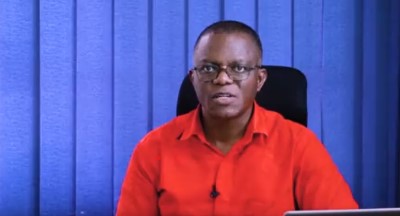
Director of Research and Corporate Affairs at the Public Utilities Regulatory Commission (PURC), Dr. Eric Kofi Obutey, says the Commission was very mindful of the prevailing harsh economic conditions in the country when coming up with the new utility tariffs.
The PURC had on Monday announced new tariffs for electricity and water.
Utility consumers will pay 27.15 per cent more for electricity and 21.55 per cent more for water effective September 1.
However, this announcement has received some pushback from the public particularly the Minority in Parliament who say that the new tariffs will further exacerbate the already high cost of living for Ghanaians.
The Ranking Member on Parliament’s Mines and Energy Committee, John Jinapor in a press statement released on Monday said the increase will also “worsen the plight of the already impoverished Ghanaian.”
Reacting to concerns about the increment, Dr. Obutey explained that the harsh economic conditions being complained of by consumers is also dealing a heavy blow to utility providers, hence the need to adjust the tariffs.
“We took all of those things into consideration. We know inflation is on the ascendency, exchange rate is depreciating, it’s affecting the utilities as well as affecting consumers. So we took all those factors into consideration before we came out with this tariff,” he said.
He also took the opportunity to justify the need for the reduction of the lifeline consumer tariff band from 0 to 50 kilowatt per hour to 0 to 30 kilowatt per hour.
According to him, this has to do with the influx of energy saving bulbs and equipment, and the need to capture those that indeed were poor.
“When we had the 0 to 50 kilowatt per hour, we were then using the incandescent bulbs, the onion type of bulbs, those round bulbs. And those ones were not energy efficient. So if somebody has one of that and is using let’s say a small radio and a small black and white TV, we considered that it would have come in the range of 0 to 50 kilowatt per hour, that’s the poor. And it was based on a study that the energy commission did.
“Now we have energy saving bulbs, energy saving equipment, so we don’t need that huge 0 to 50 tariff band again to be able to operate. So the poorest of the poor can make do with 0 to 30 kilowatt hours and that accounts for the reduction in tariff band from 0 to 50 down to 0 to 30, that’s what accounted for it,” he explained.
Meanwhile, Dr. Obutey has reiterated the PURC’s claim that the new tariffs are geared towards fostering economic development.
He stated that increasing the cost of residential utility use against that of industrial utility use is to encourage Ghanaians to go into production and subsequently create employment.
“What we are trying to do is to realign the tariff in such a way that we’ll get people to use the electricity for productive use and not just for social activities. So we try to encourage production, we try to encourage employment, for which reason we try to lower the tariffs for industrial class as compared to residential class,” he said.
Latest Stories
-
Ghana seeks long-term mining investments that benefit local communities – Armah-Kofi Buah
5 minutes -
Ghana’s Ambassador to China, Kojo Bonsu, presents credentials to Nepalese President
18 minutes -
Fairtrade Africa’s Cocoa Hubs Project strengthens rural service centres in cocoa-growing communities
23 minutes -
SEC cautions investors against fraudulent investment schemes
25 minutes -
Land Ministry urges rCOMSDEP operators to reserve earnings for land reclamation
28 minutes -
Commercial drivers give authorities one week to clear traders from lorry terminals, bus stops
32 minutes -
Nana B denies claims that Kojo Bamba was his driver and bodyguard
60 minutes -
Engage Now Africa to construct a 10-unit classroom block for struggling Navrongo Vocational Training Centre
1 hour -
One digital financial breach could expose linked accounts to fraud – Financial Crimes Manager
1 hour -
Ghana Russia Centre signs ICT cooperation agreement with Moscow University
1 hour -
The powerhouses of the village: Honouring Ghana’s rural women on International Rural Women’s Day
1 hour -
Vincent Assafuah petitions CHRAJ to investigate alleged irregularities in 2026 World Cup visa arrangements
1 hour -
12-year-old boy found dead in muddy pit at Opeikuma
1 hour -
GHS begins Yellow Fever vaccination campaign in three Upper West districts
1 hour -
Organised Labour pushes for higher 2027 base pay despite slowing inflation
1 hour