

Audio By Carbonatix
The Institute for Fiscal Studies (IFS) has described the 2022 Mid-Year budget as not addressing the country’s true economic challenges.
According to the IFS, the solutions presented by government do not address the fundamental challenges affecting the economy, hence the recent rapid depreciation of the cedi, rising inflation rate and growing debt stock.
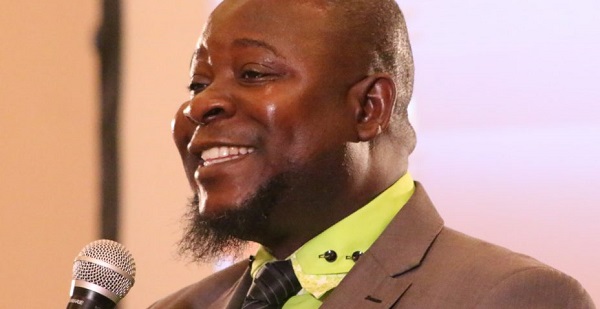
Speaking at a press conference, Senior Economist with the IFS, Dr. Said Boakye said government must admit it needs help and consult all stakeholders for assistance including Civil Society Organisations (CSOs).
“Why is the government pursuing such a weak fiscal consolidation strategy in the face of the rapidly rising macroeconomic instability in the country? We believe that this stems from the fact that the government has wrongly diagnosed the main cause of the instability”.
Dr. Boakye argued that government’s assertion that the current macroeconomic condition is influenced by Russia invasion of Ukraine is misplaced.
“Clearly, with this thinking, the government does not see why it should significantly alter the fiscal path it has been on for some time now, hence the weak fiscal response to the rising macroeconomic instability”.
He added that aside the issue of misdirecting expenditure cuts to capital expenditure as one of the low-hanging fruits, government’s fiscal consolidation efforts are weak.
“Why would the government review total expenditure downwards by only 1.3 percent despite revising total revenue and grants downwards by 3.7 percent”.
Providing some recommendations, Dr. Said urged government to be bold and get all stakeholders on board to ensure the success of the fiscal consolidation strategy.
“To succeed, the support and buy-in by all stakeholders and socioeconomic constituencies are critical. The people of Ghana should therefore be made aware of the true fundamental causes and enormity of the fiscal challenges the country is facing “.
Dr. Boakye further urged the government to take the initiative to build adequate political consensus for the fiscal consolidation process.
“In this regard honest dealings and full flow of information about what is happening are essential. The political leaders, both in power and opposition, should recognize that failure to put a halt to the worsening macro environment will lead to enormous economic pains for all”, he warned.
Dr. Boakye added that there is the need to improve revenue performance by generating more revenue from the extractive sector.
He maintained that the government must think outside the box and find ways to raise more revenue to bring the country in line with its peers in terms of total revenue to GDP ratio, while making sure that the private sector is not overburdened.
This, he observed will help create some fiscal space and improve the country’s fiscal outcomes to help address the degrading macro environment.
“Even though IFS supports the government in its digitization drive to improve revenue collection from the informal sector and property tax, we want to reemphasize that the government should pay attention to revenue generation from the country’s extractive sector”.
Dr. Boakye stated several that the extractive sector holds a lot of prospects in terms of revenue generation.
“Comparatively, too little revenue that is far below the country’s potential is raised by the government from the country’s extractive sector. For instance, from 2015 to 2018, US$22.72 billion worth of minerals were produced in Ghana. Out of this, only US$1.48 billion, representing only 6.5% of the total value produced, was paid as revenue to the government of Ghana”, he said.
He explained that the private producers in the mining sector, exploiting publicly endowed resources from God, took US$21.24 billion, representing as large as 93.5% of the total value of minerals produced during the period.
Put differently, out of the total super normal profit of US$14.14 billion that accrued to mineral production in Ghana from 2015 to 2018, the government of Ghana received only 10.5% as its revenue from the mining sector, while 89.5% of the supernormal profit went to the private producers. Yet, it is a common understanding that governments are supposed to receive the entire super normal profits (profits above normal profit) from their extractive sectors”.
Citing the case Botswana to defend his argument, Dr. Boakye said contrary, the government of Botswana, for instance, is able to take in as revenue about 52% of the total value of minerals produced in Botswana and about 95% of the supernormal profit accrued to mineral production in Botswana.
He disclosed that the government of Botswana earns that much through active participation in the mining sector.
“The government of Ghana should, therefore, take lessons from this and generate more revenue from the country’s extractive sector to help create more fiscal space and successfully consolidate the country’s fiscal position”.
Latest Stories
-
Ampem Darkoa Ladies miss out on CAF Champions League qualification after penalty shootout loss
1 hour -
Herbal Medicine: Less than 15% practitioners registered
4 hours -
Road inspections not a witch-hunt against contractors — Agbodza
4 hours -
HTU clinic upgraded to primary hospital after HeFRA inspection
4 hours -
“When I am gone, just like Kwame Nkrumah people will appreciate me” – Kurt Okraku
5 hours -
“I love people who are not only critical but constructive” – Kurt Okraku
5 hours -
TECNO’s Modular Phone and TAURUS win gold at IFA 2026, recognising breakthroughs in mobile and gaming technology
5 hours -
Youth Forum in Accra calls for debt cancellation, reparations and African economic independence
5 hours -
Dr Abu Sakara urges African youth to seize global upheaval for economic emancipation
5 hours -
Fulham booed off after third defeat in a row
5 hours -
Joy FM Back-to-School Fair 2026 ends in massive success after two days of discounts and one-stop shopping
5 hours -
Man City maintain 100% start with win over Coventry
6 hours -
Kwesi Pratt urges African youth to reject ‘Gen Z revolution’, reclaim Africa’s resources
6 hours -
Forest and Tottenham both still looking for first win after scrappy draw
6 hours -
Inter Milan mount stunning comeback to beat Napoli
6 hours