

Audio By Carbonatix
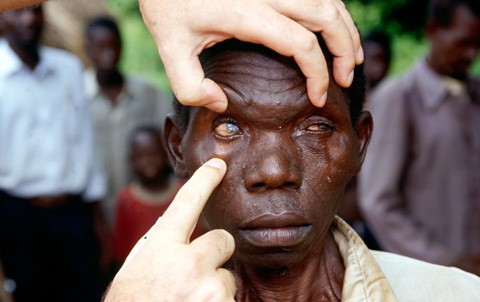
River blindness is known to have a serious socioeconomic impact on affected communities.
However, recent reports indicate control measures have been successful with a significant decrease in prevalence.
Though Mass Drug Administration has been crucial in this direction, a new study has found 63.9 percent of Ghanaians are not aware of this intervention.
The findings, which are published in the journal of Parasite Epidemiol Control, were made known during a research dissemination programme in the district.
Onchocerciasis, commonly known as “river blindness”, is a neglected tropical disease caused by the worm Onchocerca volvulus.
It is transmitted to humans through exposure to repeated bites of infected blackflies. The black flies are found at the banks of fast flowing rivers.
Symptoms include severe itching, disfiguring skin conditions, and visual impairment, including permanent blindness.
More than 99% of infected people live in 31 African countries.
Population-based treatment with Ivermectin also known as mass drug administration or MDA is the current core strategy to eliminate river blindness.
Ivermectin kills the larvae and prevents them from causing damage but it does not kill the adults.
“If more people take the drugs, whenever the blackfly bites one, it cannot transmit the parasite which causes the disease. By so doing, it breaks the transmission pathway,” said Dr. Francis Adjei Osei, the lead researcher.
The study wanted to find out the extent and predictors of Ivermectin MDA coverage and uptake from the individual and health care provider perspectives in the Ashanti Region.
The community-based survey involved 2008 respondents who lived in the Atwima Nwabiagya North district.
The researchers found that more than half the respondents were not aware of the drug distribution.
They however found that people readily accepted to take the drugs in places where drugs were made known as compared to where they are not aware of the drugs existence.
“Give out the relevant information, offer the relevant supervision, and motivate the people who are doing the work. Persons in the intervention communities will benefit more from those in the controlled communities,” he explained.
They again found that the fear of side effects deterred people from taking the drugs, and 20 percent had trust issues with drug distributors.
The scientists are therefore charging the Ghana Health Service to roll out programmes to increase awareness.
“With the Ghana Health service it’s our expectations that they’ll implement the methodologies so that other areas will benefit.
“To the academic communities, this was done in one area, so it’s recommended, it will be replicated in other areas,” said Dr. Osei.
Latest Stories
-
Maximus Attah writes: Vacancies that never hire
3 minutes -
‘When the time comes, I will speak’ – Kurt on third-term GFA presidential bid
33 minutes -
UMB S.P.E.E.D. Stars lift Bankers Football Gala trophy
44 minutes -
MMFL makes strong showing at JoySports Invitational 2026
1 hour -
MTN Media Republic, Ghana Wildlife Society embark on bird, butterfly walk
1 hour -
Fuel Prices: Star Oil holds petrol at GH¢14.97, raises diesel to GH¢16.97
1 hour -
DR Congo Ebola outbreak surges past 6000 cases as death toll nears 3000
1 hour -
Telecel Ghana CEO urges mining industry to build agile people for tech-driven future
1 hour -
Ghana Digital Centres’ loss nearly triples to GH¢6.06m as revenue falls
1 hour -
The private school teacher crisis: A silent exodus
1 hour -
NPC Ghana congratulates Farida Iddriss on Africa Aquatics Zone II leadership role
1 hour -
Zanetor pledges to protect Ghana’s natural resources for future generations
1 hour -
2024 defeat was due to demoralised base, poor preparation – Boakye Agyarko
2 hours -
Ghana welcomes UN report backing reparations for transatlantic slavery
2 hours -
Fidelity Bank convenes debt capital markets conference to turn Ghana’s recovery into long-term growth
2 hours