

Audio By Carbonatix
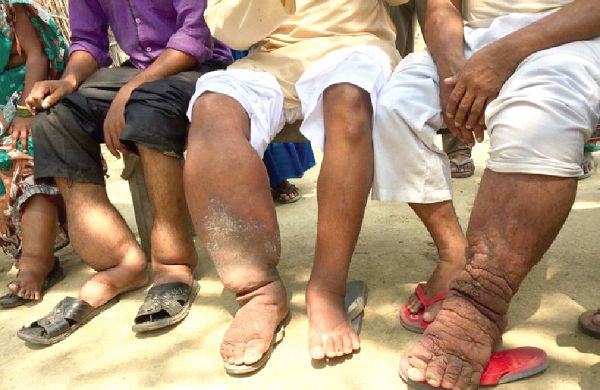
Today, the 30th day of January, we come together with people around the world to observe World Neglected Tropical Diseases (NTDs) Day, a special day to raise awareness, strengthen our commitment, and resolve to end the suffering caused by NTDs. NTDs are a group of diseases that affect over 1 billion people worldwide, mostly the poorest and most vulnerable communities who often lack access to clean water, proper sanitation, reliable healthcare and basic social services. These diseases, including lymphatic filariasis, schistosomiasis, onchocerciasis, trachoma, soil-transmitted helminths, and many others, take away health, hope and a sense of dignity from those affected.
When we discuss NTDs, a question that often goes unasked is: what truly is neglected? Is it the diseases themselves or the people who live with these diseases day after day?
At their core, NTDs are not just about pathogens; they are diseases of neglect because they affect populations that have long been neglected, communities already pushed to the margins by poverty, geography, weak health systems and limited political voice. If wealthier people were affected by these same diseases, they most probably would not be considered “neglected” at all.
This understanding contributed to a truly significant milestone in the fight against NTDs: The London Declaration on Neglected Tropical Diseases in 2012. That declaration marked a turning point. For the first time, governments, donors, pharmaceutical companies, researchers, and global health agencies joined hands with a shared hope to control, eliminate and/ eradicate several NTDs by the year 2020 and beyond. These collective efforts yielded good results. Let's pause for a while to celebrate and reflect on what these collective actions achieved.
Since the London Declaration, billions of treatments have been donated and delivered, bringing hope and relief to many. Several countries are now proud to have eliminated at least one NTD, with diseases like Guinea worm at the brink of eradication. Mass Drug Administration (MDA) has become one of the most cost-effective public health approaches ever seen. Community health workers, often unsung heroes, have shown that even the hardest-to-reach populations can also be served, making a real difference in so many lives.
We must, however, also be truthful to ourselves, that not all targets have been met. Some NTDs proved more stubborn than expected. Conflicts, weak health systems, climate change and the COVID-19 pandemic disrupted progress. Elimination timelines slipped, surveillance gaps persisted, and in some settings, gains stalled or were even reversed. These missed targets are not failures of science but are gentle reminders that achieving health goals cannot be met without strong systems, sustained funding and firm political commitment.
This brings us to a hard but very necessary reflection: the progress against NTDs is fragile. In recent times, we have seen how cuts in funding, global grants and changing donor priorities have begun to threaten the wonderful progress made in the fight against NTDs. When funding decreases, efforts like mass drug administration slow down, surveillance may become less frequent, and community engagement suffers. Research activities and initiatives may pause, but it’s important to remember that when attention fades, neglected diseases can sneak back and sometimes, even be more resilient than before. NTDs thrive in silence and scarcity. Cutting resources now risks undoing decades of progress and sending a troubling message that the lives most impacted by NTDs are once again negotiable. This is why governments must step up with genuine political will. Eliminating NTDS cannot remain donor dependent. It requires domestic financing, strong Water, Sanitation and Hygiene (WASH) investments, and national ownership of elimination goals. Political will is not expressed in speeches; it is shown in budgets, policies and programs, and sustained action.
Ending NTDs is not an act of charity, it's an act of JUSTICE!
As we mark World NTD Day this year, the challenge before us is clear. Will we allow the neglect to persist, or will we choose solidarity over silence? The tools exist, and knowledge is available. What remains is the courage! The courage to UNITE, ACT and ELIMINATE!
NTDS have never been about neglected diseases but neglected populations.
Latest Stories
-
Kumasi Hospital removes 880-gram bladder stone in rare surgical case
3 minutes -
Ghana lacks sufficient power generation redundancy – Energy Minister
22 minutes -
CPA assures consumers of safety of registered sanitary towels on the Ghanaian market after complaints
34 minutes -
‘They all point decisively to guilt’ – AG urges court to reject Adu Boahene’s no-case submission
43 minutes -
Documents falsified to evade tax on Abramovich’s wealth, BBC finds
53 minutes -
Today’s front pages: Monday, October 12, 2026
1 hour -
BoG proposes new rules to ensure banks can always pay customers when they need their Money
2 hours -
Hotline Documentary: ‘Silent Football’ to air on JoyPrime and JoyNews today
3 hours -
NDPC examines how evidence shapes Ghana’s development planning and policy decisions
3 hours -
Education Ministry calls urgent talks to break GAUA strike deadlock
3 hours -
NCCE engages women in North East Gonja on rule of law, anti-corruption
3 hours -
NDPC reviews 2004 planning guidelines to reflect changes in decentralised system
3 hours -
Trade Ministry commends Prisons Service for using art to drive inmate rehabilitation
3 hours -
Books, brushes and second chances: Dr Abena Asomaning launches three titles to support prison outreach
3 hours -
Treasury bill auction oversubscribed by 53.5% as yields fall across maturities
3 hours