

Audio By Carbonatix
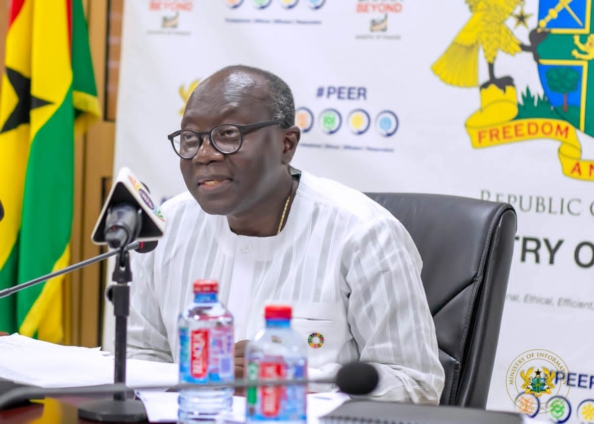
Finance Minister, Ken Ofori-Atta has expressed disappointment with the recent downgrading of the country’s Long-Term Local – and Foreign-Currency Issuer Default Ratings (IDRs) from ‘CCC’ to ‘CC’.
This is the second time in 2022 that the rating agency has downgraded Ghana’s creditworthiness.
The Minister in an address on the country’s economic status on Wednesday reacted to the recent downgrade and said it is unfortunate for the country’s economy as the country would lose foreign investors in that regard.
“The issue of Fitch downgrade is unfortunate. In their email to us, they referred to the Bloomberg article that influenced their decision. It sort of further depresses the bonds on the international market and results in additional losses to investors.”
Ken Ofori-Atta is, however, optimistic that the ratings will compel the government to initiate economic programmes that would enable the economy bounce back and return to some positive ratings.
“Once we got downgraded to triple C, we are also expecting that economic programme that is being worked on which will be the basis for the IMF discussions would help us to come back to some strong matrices so that we will be able to get some ratings revised over that period.
“We are confident that returning some sort of access to the capital markets is going to take some time, two to three years and so during that period we will work on our ratings also to be able to get back,” he said.
It could be recalled that on September 23, Rating agency, Fitch downgraded Ghana’s credit worthiness.
The downgrade, Fitch said, reflects the increased likelihood that Ghana will pursue a debt restructuring given mounting financing stress, with surging interest costs on domestic debt and a prolonged lack of access to Eurobond markets.
“There is a high likelihood that the International Monetary Fund support programme currently being negotiated will require some form of debt treatment due to the climbing interest costs and structurally low revenue as a percentage of Gross Domestic Product”.
“We believe this will be in the form of a debt exchange and will qualify as a distressed debt exchange under our criteria”, it explained.
“However, we believe there could be an incentive to spread a debt restructuring burden across domestic and external creditors and therefore do not have a strong basis to differentiate between Foreign- and Local-Currency ratings at this time,” it concluded.
Latest Stories
-
USTED dean warns GAUA strike could disrupt Ghana’s restored academic calendar
4 minutes -
Bechem meat processing factory 50% complete, set for March 2027 completion – Kwakye Ofosu
18 minutes -
Titus Glover criticises Mahama’s appointment of Afi Agbenyo as EC Deputy Chairperson
23 minutes -
GoldBod initiative has created over 1,300 public and private sector jobs – Sammy Gyamfi
26 minutes -
Financial wellness key to retaining Ghana’s skilled workforce – Merban Capital CEO, Benjamin Ackah-Nyamike
28 minutes -
Sidney Nii Oko Bampoe & Isaac Akuetteh Addo
35 minutes -
Haruna Iddrisu calls for ‘Big Push’ investment in health, education, sports and agriculture
36 minutes -
Ghanaian youngster Prince Amoako Jnr reaches new milestone with FC Nordsjælland
38 minutes -
Ho Teaching Hospital to get cardiology centre under Ghana Medical Trust Fund
41 minutes -
PAC pushes for effective use of GH¢25m by Tree Crops Development Authority
43 minutes -
UK MEET Fellowship challenges journalists to look beyond AI hype
45 minutes -
Kurt Okraku’s regime has ‘failed to perform’ – Kudjoe Fianoo demands resignation of GFA Executive Council
45 minutes -
Afenyo-Markin’s influence is limited by minority numbers in Parliament – Haruna Iddrisu
48 minutes -
Police administration is doing a yeoman’s job – President Mahama
51 minutes -
GoldBod tells PAC Bank of Ghana authorised its foreign exchange transactions
51 minutes